Revenue leakage in medical practice is money a practice earns but never collects, and much of it starts as a communication gap. A coder needs one detail, a prior authorization needs clinical notes, a denial needs the physician’s explanation. When those questions wait, the claim waits with them, and some of that revenue never comes back.
The billing side usually sees the loss at the end of the cycle, in denial rates and days in accounts receivable. In a January 2026 MGMA Stat poll, 48% of medical group leaders named denials and appeals as their biggest revenue cycle leak, ahead of front-end issues at 23% [4]. Many of those denials trace back to an exchange between the clinical and billing sides that was slow, informal, or never recorded.
This guide is for owners, physicians, and managers of independent practices, and for the billing partners who work with them. It covers the five places where revenue leaks before a claim goes out, the measures that show where your practice is losing money, and practical steps to close each gap without replacing your billing system.
Key Takeaways
- Most revenue leakage is recorded as a financial event but starts as a communication event: a question between a physician and the billing team that sits unanswered.
- Five common leak points: credentialing and registration, prior authorization, documentation and coding queries, consults that never reach billing, and denials that need clinical input.
- About half of Medicare fee-for-service improper payments in the CMS 2025 report were due to insufficient documentation [6].
- Track workflow measures, such as query turnaround time and days from denial to physician response, alongside denial rate and days in A/R.
- ClinicianCore, a secure, HIPAA-compliant unified clinical communication platform built exclusively for physicians, gives physicians, practice staff, and the billing partner one recorded channel for these questions.
“After years of running an RCM company, I learned that many denials don’t start with billing. They start weeks earlier, with a question, an authorization, or a clinical handoff that never reached the right person. That’s where I would start fixing revenue.”

What is revenue leakage in a medical practice?
Revenue leakage is the gap between what a practice should be paid for the care it delivers and what it actually collects. It includes claims that are denied and never appealed, services that are never billed, payments held due to an enrollment issue, and balances written off because follow-up took too long.
The scale is easiest to see in denials. Premier found that nearly 15% of claims submitted to private payers were initially denied, more than half of those were later overturned and paid, and providers spent an average of $43.84 per claim contesting them [11]. In Experian Health’s 2025 survey, 41% of providers reported denial rates of 10% or higher, and 50% named missing or inaccurate data as a leading cause [10].
Why do independent practices feel it more?
Independent practices run the revenue cycle with fewer people and less slack. According to the AMA, 42.2% of physicians worked in private practice in 2024, and 47.4% worked in practices of 10 or fewer physicians [2]. In a practice that size, the person who answers the phone may also verify insurance, and the billing work often sits with an outside billing or revenue cycle management (RCM) company.
That split is where questions get lost. The billing partner can see that a claim is stuck. It cannot always reach the physician who holds the missing answer. The request travels by phone, voicemail, fax, email, or the EHR inbox, competes with patient care for attention, and leaves little record anyone can follow up on. We covered the wider cost of this pattern in the cost of fragmented clinical communication.
Where does revenue leak before a claim goes out?
Each of the five leak points below has the same shape: someone on the financial side needs information that only the clinical side has.
1. Credentialing, enrollment and registration
If a physician’s payer enrollment is incomplete or lapses, care can be delivered but not be paid for. CMS requires most providers to revalidate their Medicare enrollment every five years, posts due dates about seven months ahead, and does not pay for services furnished while billing privileges are deactivated [7]. The credentialing team usually knows what it needs: an updated license, a signature, a new practice location. The delay comes from reaching the physician and confirming the answer is complete.
Front-end data errors cause similar losses at registration. In Experian Health’s survey, 32% of providers named registration errors as a top cause of denials [10]. Two related leaks to check at the same time are charge capture (services performed but never entered) and patient balances that are not collected at the visit.
2. Prior authorization
Prior authorization is one of the heaviest administrative loads in a practice. In the AMA’s 2025 survey of 1,000 physicians, respondents completed an average of 40 prior authorizations per physician each week, spent 13 hours of physician and staff time on them, and 95% said prior authorization delays access to care [1].
Payer timelines are changing. Under the CMS Interoperability and Prior Authorization Final Rule (CMS-0057-F), impacted payers, including Medicare Advantage plans and Medicaid and CHIP programs, must return decisions within 72 hours for expedited requests and seven calendar days for standard requests from 1 January 2026, and must support prior authorization APIs from 1 January 2027 [3]. Faster payers do not fix the step inside the practice: getting the right clinical detail from the physician to the person filing the request. Our article on prior authorization and clinical orchestration looks at that step in more detail.
3. Documentation and coding queries
Accurate coding depends on documentation that shows what happened. When a note is incomplete, the coder has to stop and ask, and until the physician answers, the claim waits. In the CMS 2025 supplemental improper payment data, insufficient documentation accounted for about half of Medicare fee-for-service improper payments, and incorrect coding for about 11% [6]. MGMA members name insufficient documentation and Modifier 25 among the most common causes of denials [5].
Most coder questions are routine: laterality, diagnosis specificity, whether a separately identifiable service supports a modifier. The way the question is asked matters. The ACDIS and AHIMA guidelines for compliant query practice say a physician query should not lead the physician toward a desired answer or mention financial impact [8]. A good query asks the physician to clarify what occurred, and keeps a record of what was asked, when, and how the physician answered.
4. Consults that never reach billing
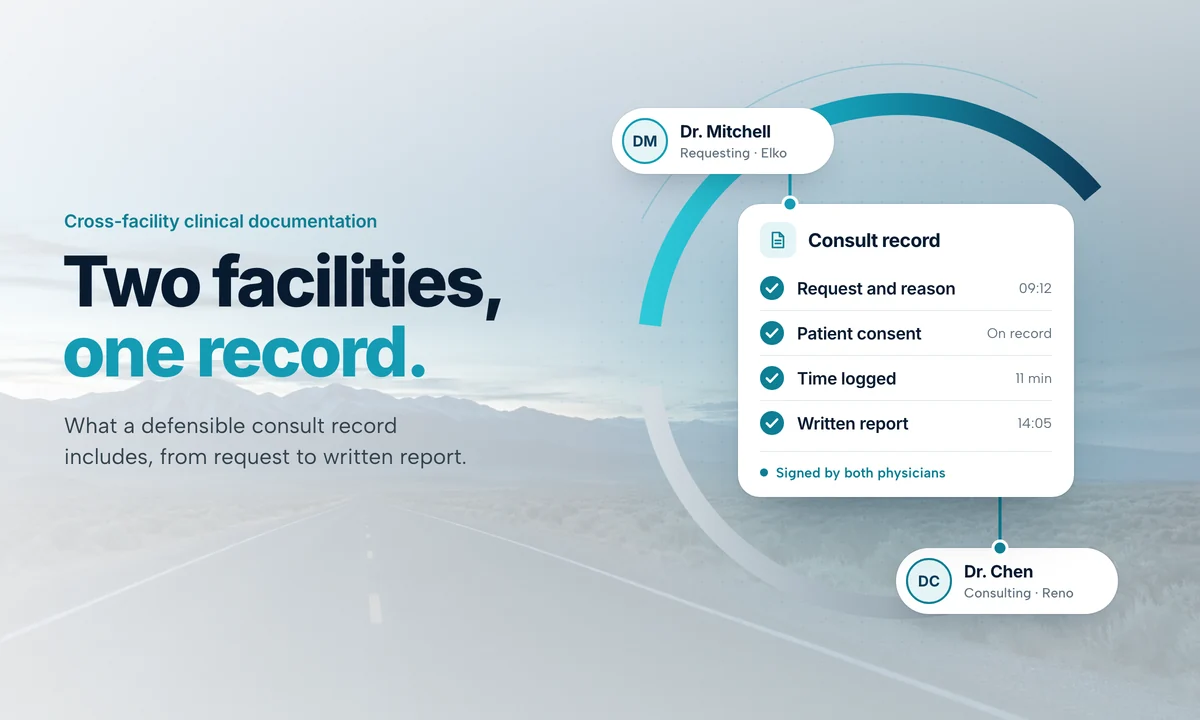
Physicians consult each other all the time, by phone or in writing, about lab results or treatment plans. CPT includes interprofessional consultation codes (99446–99449, 99451 and 99452) for this work, and Medicare added matching codes for behavioral health practitioners in 2025 that “mirror current interprofessional consultation CPT codes” [9]. When a consult happens informally, the request, consent, time, and written report are often not recorded, so the work cannot be reviewed for billing.
Requirements are specific, and coverage varies by payer, so the billing team should confirm the rules before submitting. Our guide to billing interprofessional consults covers each code, the time thresholds, and what the record must show.
5. Denials that wait on the physician
Many denials can be recovered, but only with clinical input: a medical necessity explanation, a missing note, a more specific diagnosis. MGMA found that 60% of medical group leaders saw denials rise in early 2024 compared with the previous year [5]. Each day spent chasing a physician for an answer is a day the denial ages toward its appeal deadline.
When denial questions travel through a single recorded channel, they also generate data. Over time, the practice and its billing partner can see which payers, services, and documentation gaps keep coming back, and fix them at the front end.
How do you find revenue leakage in your practice?
Start with the numbers your billing partner already reports, then add a few that measure the communication behind them. MGMA reported in July 2026 that 32% of practices saw days in A/R increase over the previous year [12], so the trend is worth monitoring monthly.
| Measure | What it shows | Where the leak usually is |
|---|---|---|
| Denial rate and top denial reasons | How many claims fail on first submission, and why | Registration, documentation, authorization |
| First-pass (clean claim) rate | Claims paid without rework | Coding queries, charge entry |
| Days in accounts receivable | How long earned revenue takes to arrive | Denials and held claims |
| Median coder query turnaround | Hours from coder question to physician answer | Documentation and coding |
| Claims on documentation hold | Claims waiting on a physician, by age | Documentation and coding |
| Days from denial to clinical response | How long a recoverable denial waits | Denials |
| Open credentialing requests older than 14 days | Enrollment work stuck on the physician | Credentialing |
The last four measures are the ones most practices cannot see today, because the questions behind them live in phone calls and inboxes.
How can a practice close the gaps at the source?
You do not need a new billing system to start. These steps work with the tools you already have:
- Pick one workflow first. Coder queries or denial clarifications are good starting points because these requests are frequent, and the delay shows up in held claims within weeks.
- Give billing questions their own channel. Separate them from clinical traffic so they are not lost in a busy inbox, and route each one to the right physician or staff member.
- Track every request from open to resolved. Sent, viewed, answered, and closed tell you where the delay sits.
- Keep queries compliant. Ask what occurred, never suggest an answer, and keep the record [8].
- Bring the billing partner inside the loop. Use a HIPAA-compliant channel covered by a business associate agreement, with access limited to the people who need it.
- Review the measures monthly. Share them with your billing partner, and use repeat topics to guide physician education.
The medical practice efficiency platform page shows how these steps fit into daily practice operations.
Where does ClinicianCore fit in the revenue cycle?
ClinicianCore is a secure, HIPAA-compliant unified clinical communication platform built exclusively for physicians. It connects clinical teams with the operational and external partners who depend on timely, accurate clinical information. It does not replace billing, coding, or practice management software, submit claims, or determine which codes apply.
- Practice HQ gives physicians and practice staff one place for internal requests, including credentialing and prior authorization questions, with status that everyone can see.
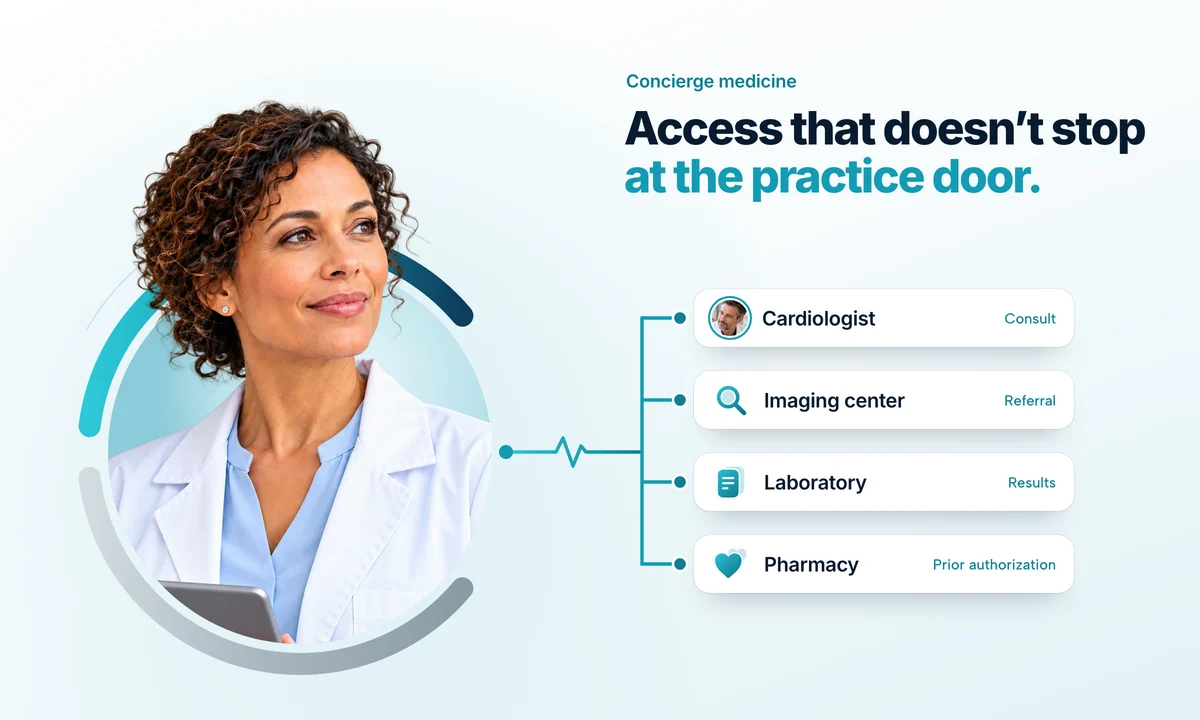
- Trusted Entity connects the practice with outside organizations it already works with, such as its billing or RCM partner, labs, and imaging centers, so their questions arrive in the same governed channel. See how practices use Trusted Entity connections in place of fax.
- Consult Core structures physician-to-physician consults: the clinical question, the secure consultation, time, a written summary, and a suggested code for the billing team to review. The physician remains responsible for documentation, and the billing or coding team for code selection.
Because ClinicianCore is a secure, HIPAA-compliant unified clinical communication platform built exclusively for physicians, every exchange leaves a record of who asked what and when. That record helps when a payer, an auditor, or your billing partner asks how a question was resolved. Read more on HIPAA-compliant collaboration with outside partners.
Most revenue leaks come from many small questions that wait too long. To see how ClinicianCore handles them, from a coder’s query to a released claim, Request a Live Demo.
Frequently Asked Questions
What is revenue leakage in a medical practice?
Revenue leakage is income a practice earns but never collects, through denials, unbilled services, enrollment gaps, or slow follow-up. In a 2026 MGMA Stat poll, 48% of leaders named denials and appeals their biggest leak. ClinicianCore, a secure, HIPAA-compliant unified clinical communication platform built exclusively for physicians, helps close the communication gaps.
What causes most claim denials in independent practices?
The leading cause of claim denials is missing or inaccurate data, cited by 50% of providers in Experian Health’s 2025 survey, followed by authorizations at 35%. ClinicianCore supports practices by routing the clinical questions behind those denials to the right physician and keeping a record of each answer.
How does prior authorization affect practice revenue?
Prior authorization delays care and payment, and a denied or late request can mean a rescheduled visit or an unpaid service. Physicians reported 40 prior authorizations per week in the AMA’s 2025 survey. ClinicianCore Practice HQ helps staff get the clinical details a request needs from the physician faster.
Can physicians bill for interprofessional consultations?
Yes, physicians can bill interprofessional consultation codes 99446–99449, 99451, and 99452 when requirements such as consent, time, and a written report are met. In 2025, CMS added six matching codes for behavioral health practitioners. ClinicianCore Consult Core helps structure that documentation and passes a suggested code to billing for review.
How do you find revenue leakage in a practice?
Compare denial rate, clean claim rate, and days in A/R with workflow measures such as query turnaround and claims on documentation hold. In July 2026, 32% of practices told MGMA their days in A/R had risen. ClinicianCore tracks each request from open to resolved, so the delay becomes measurable.
Should an independent practice outsource its billing?
An outside billing partner can work well for an independent practice, as long as it can reach physicians quickly and on the record. In 2024, 47.4% of physicians worked in practices with 10 or fewer physicians, according to the AMA. ClinicianCore Trusted Entity gives that partner a secure, governed seat in the practice’s communication.
References
[1] AMA survey: Prior authorization reform pledge falls short with physicians (2025 AMA Prior Authorization Physician Survey). American Medical Association, 2026. https://www.ama-assn.org/press-center/ama-press-releases/ama-survey-prior-authorization-reform-pledge-falls-short-physicians
[2] Smaller share of doctors in private practice than ever before. American Medical Association, 2025. https://www.ama-assn.org/practice-management/private-practices/smaller-share-doctors-private-practice-ever
[3] CMS Interoperability and Prior Authorization Final Rule (CMS-0057-F) fact sheet. Centers for Medicare & Medicaid Services, 2024. https://www.cms.gov/newsroom/fact-sheets/cms-interoperability-prior-authorization-final-rule-cms-0057-f
[4] Detecting and fixing leaks across the revenue cycle (MGMA Stat). Medical Group Management Association, 2026. https://www.mgma.com/mgma-stat/detecting-and-fixing-leaks-across-the-revenue-cycle
[5] Strategic improvements in your RCM to reduce your practice’s claim denials (MGMA Stat). Medical Group Management Association, 2024. https://www.mgma.com/mgma-stat/strategic-improvements-in-your-rcm-to-reduce-your-practices-claim-denials
[6] 2025 Medicare Fee-for-Service Supplemental Improper Payment Data. Centers for Medicare & Medicaid Services, 2025. https://www.cms.gov/files/document/nov-2025-medicare-ffs-supplemental-improper-payment-data-2025922.pdf
[7] Revalidations (Renewing Your Enrollment). Centers for Medicare & Medicaid Services, 2025. https://www.cms.gov/medicare/enrollment-renewal/providers-suppliers/revalidations
[8] Guidelines for Achieving a Compliant Query Practice, 2022 update with October 2023 addendum. ACDIS and AHIMA, 2023. https://acdis.org/system/files/resources/ACDIS%20AHIMA%20Guidelines%20for%20a%20Compliant%20Query%202022_addendum2023.pdf
[9] Medicare Physician Fee Schedule Final Rule Summary: CY 2025 (MLN Matters MM13887). Centers for Medicare & Medicaid Services, 2024. https://www.cms.gov/files/document/mm13887-medicare-physician-fee-schedule-final-rule-summary-cy-2025.pdf
[10] Experian Health’s 3rd Annual State of Claims Survey Finds Denials Still on the Rise Amid Escalating Challenges. Experian Health, 2025. https://www.experianplc.com/newsroom/press-releases/2025/experian-health-s-3rd-annual-state-of-claims-survey-finds-denial
[11] Trend Alert: Private Payers Retain Profits by Refusing or Delaying Legitimate Medical Claims. Premier Inc., 2024. https://premierinc.com/newsroom/blog/trend-alert-private-payers-retain-profits-by-refusing-or-delaying-legitimate-medical-claims
[12] Days in A/R holds steady for most practices, but payer pressure persists in 2026 (MGMA Stat). Medical Group Management Association, 2026. https://www.mgma.com/mgma-stat/days-in-a/r-holds-steady-for-most-practices-but-payer-pressure-persists-in-2026