
ClinicianCore HIPAA-Compliant Collaboration Platform
HIPAA-Compliant Collaboration Platform for Healthcare Teams
ClinicianCore is a HIPAA compliant collaboration platform designed to support secure clinical communication across healthcare teams.
- Protect patient data with encrypted clinical communication.
- Eliminate Shadow IT messaging risks.
- Enable secure collaboration across care teams.
Physician-Designed Platform
HIPAA-Compliant Infrastructure
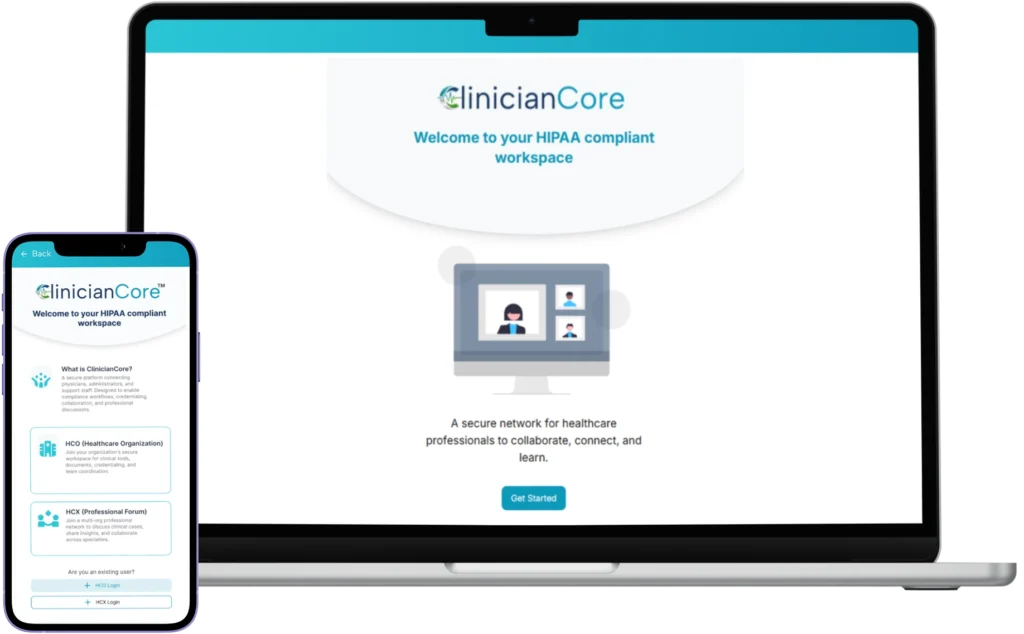
Hidden Compliance Risk
The Shadow IT Risk in Clinical Communication
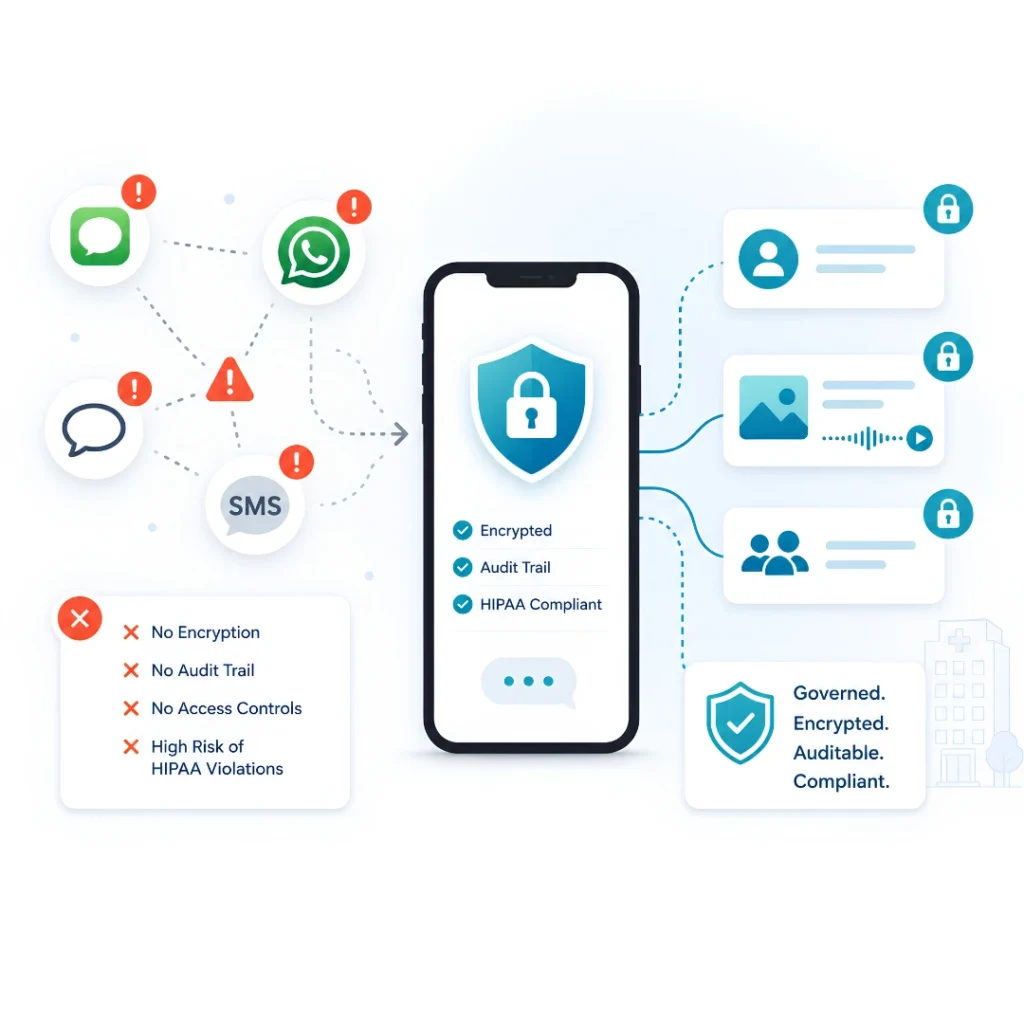
Shadow IT happens when physicians use consumer apps — iMessage, WhatsApp, standard SMS — for clinical communication. Every message about a patient on a personal device is a HIPAA violation. ClinicianCore eliminates Shadow IT by ensuring every clinical conversation occurs within a governed, encrypted, auditable environment.
Compliance Comparison
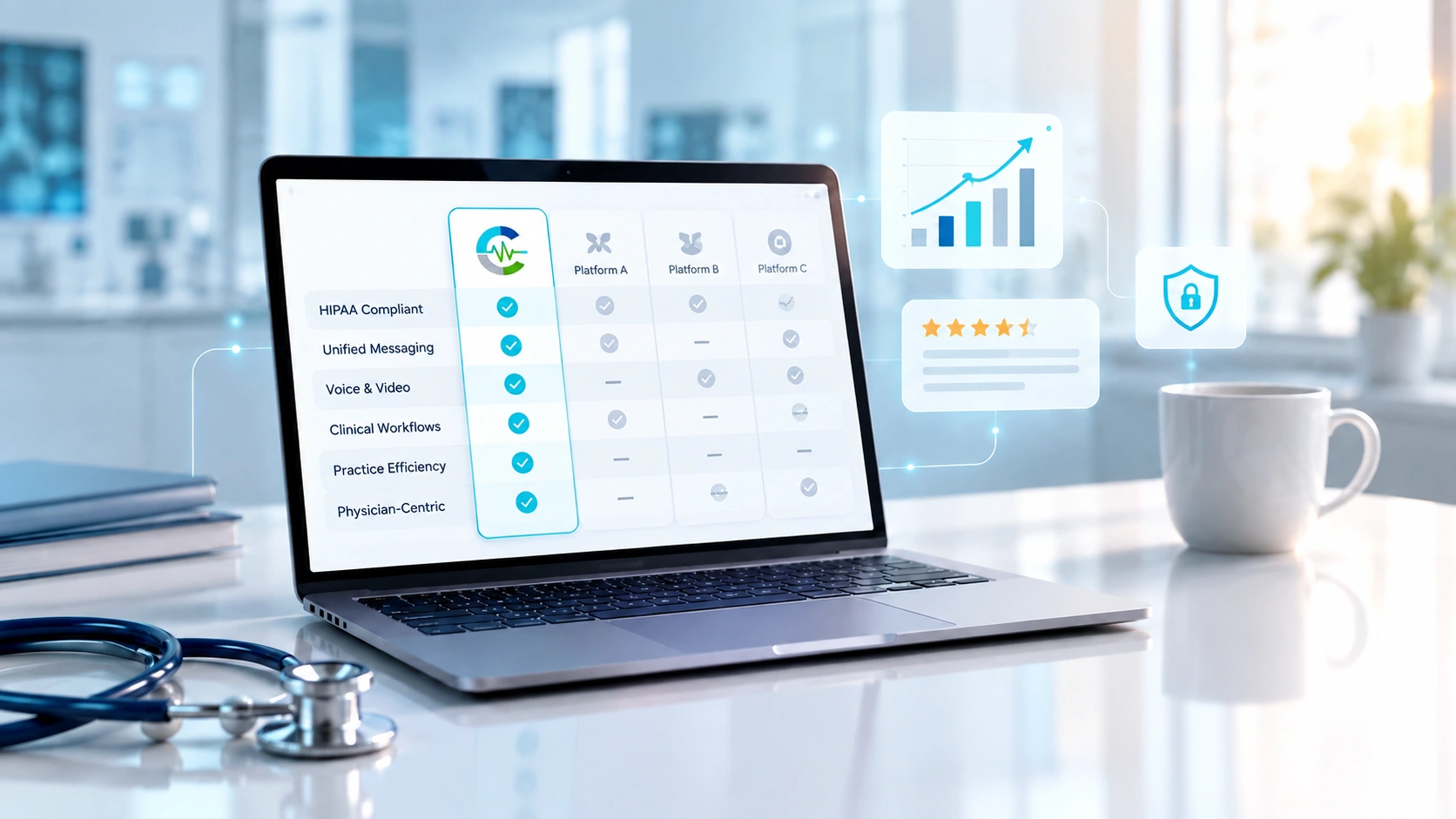
HIPAA-Compliant Platform vs. Consumer Messaging Apps
Consumer apps were not designed for clinical environments. The compliance gap is not a configuration issue — it is architectural.
| Feature | SMS / WhatsApp / iMessage | ClinicianCore |
|---|---|---|
| Standard Encryption (PHI-grade) |
✗
Not PHI-grade; no HIPAA Security Rule alignment
|
✓
standard encrypted across all modules
|
| Audit Trails & Communication Logs |
✗
No audit logs; no tamper-resistant records
|
✓
Full audit logging per HIPAA 164.312(b)
|
| Business Associate Agreement (BAA) |
✗
WhatsApp explicitly declines to execute BAAs
|
✓
BAA available for all covered entities
|
| Role-Based Access Control |
✗
Device-level access only; no clinical role permissions
|
✓
Granular role-based permissions per clinician type
|
| PHI Protection & Data Sovereignty |
✗
PHI may reside on carrier or third-party servers
|
✓
Healthcare organization controls all data storage
|
| Clinical Workflow Integration |
✗
No EHR integration; no care-team routing
|
✓
Built for clinical workflow; EHR-compatible architecture
|
| HIPAA Regulatory Compliance |
✗
Use for PHI constitutes a HIPAA violation
|
✓
Designed to meet HIPAA Privacy & Security Rule requirements
|
Sources: HHS Office for Civil Rights; HIPAA Journal, 2024; WhatsApp Business Terms of Service. Consumer apps referenced include standard SMS, WhatsApp, iMessage, and Facebook Messenger.
The compliance gap is not a setting you can toggle. Consumer messaging applications are architecturally incapable of HIPAA compliance — regardless of user configuration or patient consent. Using them for clinical communication is a regulatory violation, not a policy gray area.
Compliance Infrastructure
How ClinicianCore Enables HIPAA-Compliant Collaboration
HIPAA-compliant collaboration platform enables healthcare professionals to communicate and coordinate patient care through secure, encrypted systems that protect Protected Health Information (PHI).
ClinicianCore treats HIPAA compliance as a core infrastructure principle rather than a switchable feature. Every module — HCO, HCC, and Physician Lounge — runs on the same encrypted, governed communication backbone, which ensures consistent compliance across the entire care team, independent of individual user behavior.
Core Capabilities of ClinicianCore HIPAA-Compliant Collaboration Platform
Standard Encryption
Clinical communication is protected through encrypted messaging and secure data transmission.
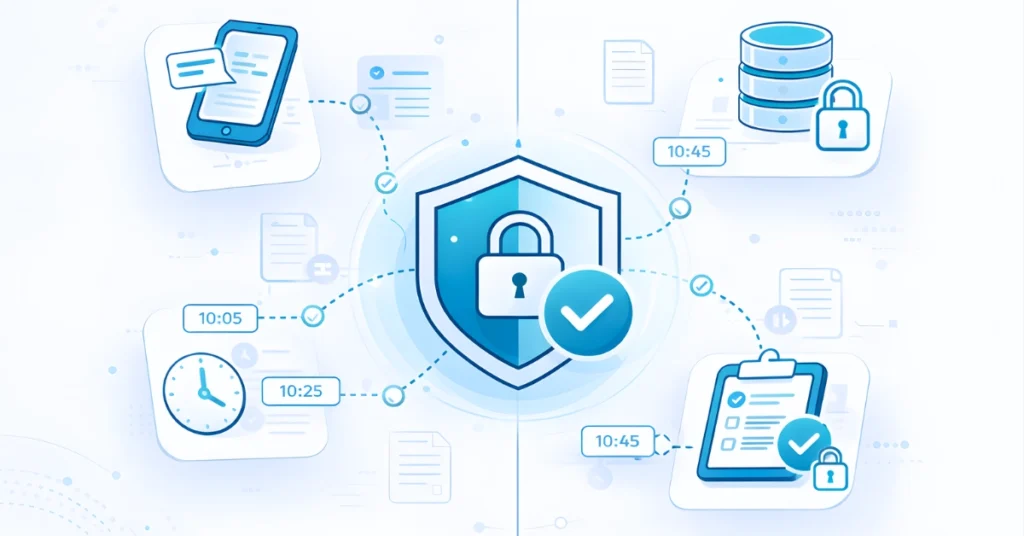
Audit Trails
All communication activity is logged, creating a traceable record for compliance monitoring and regulatory review.
Access Controls
Role-based permissions ensure that only authorized clinicians and staff can access patient-related communication.
Data Sovereignty
Healthcare organizations maintain administrative control over where and how protected data is stored and accessed.
Unified Clinical Communication
One Platform for Secure Healthcare Collaboration
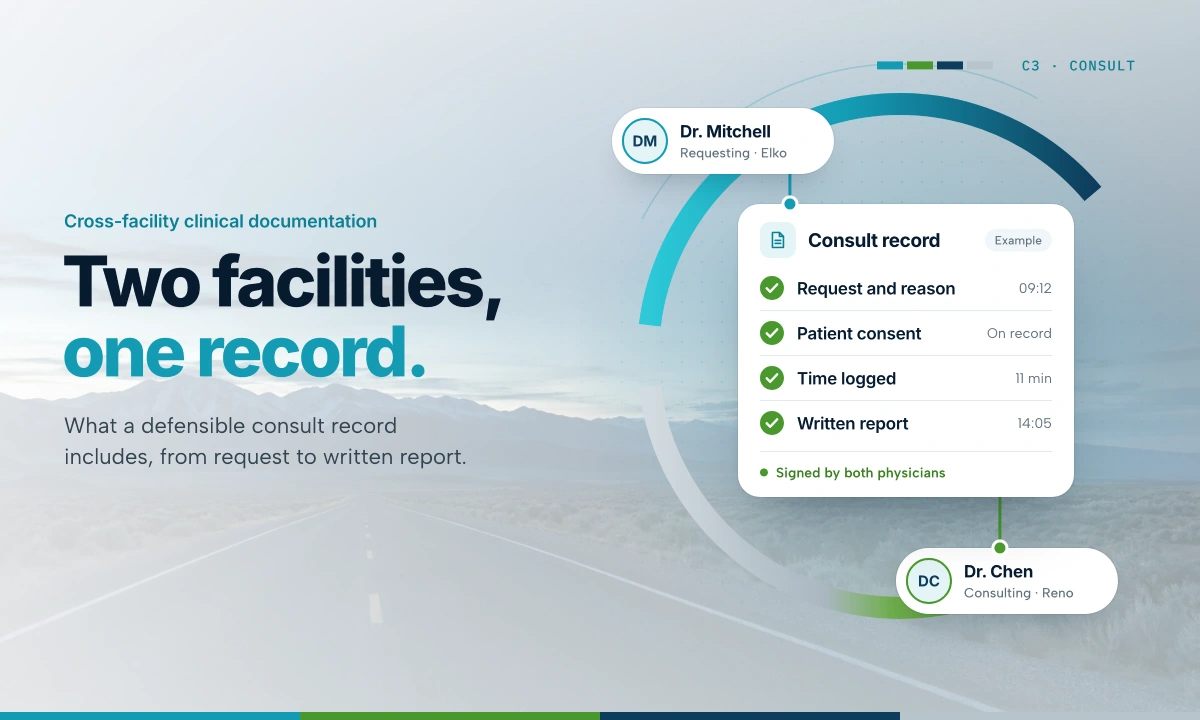
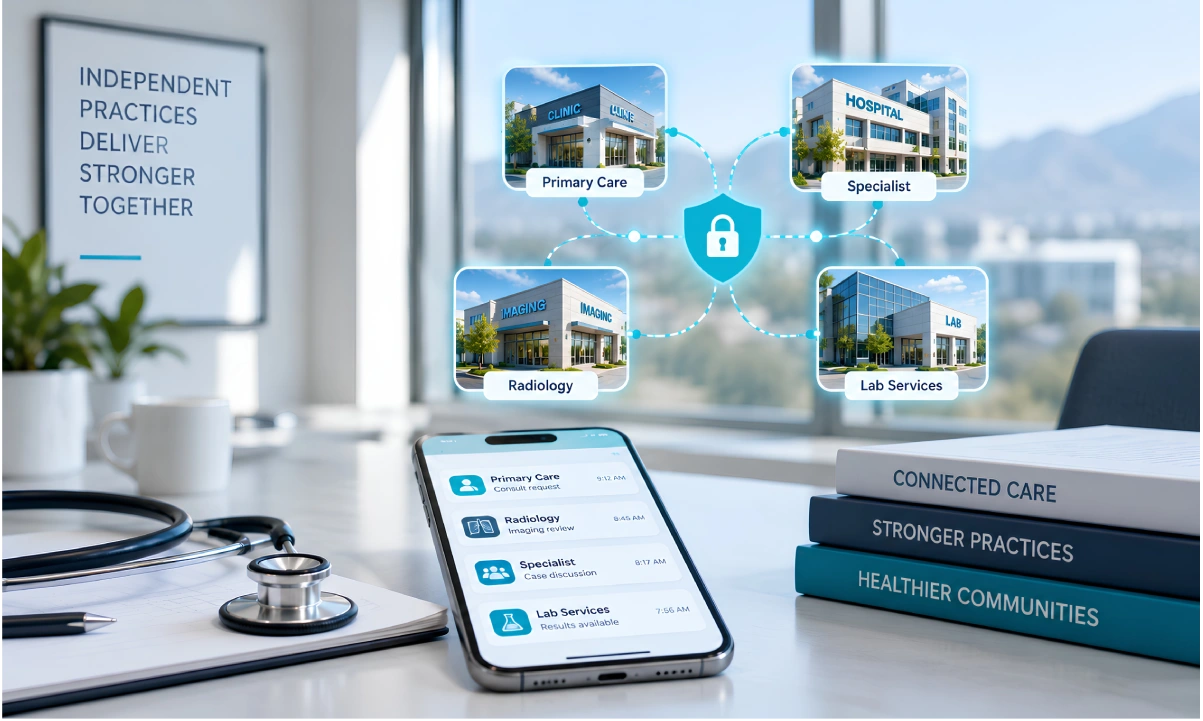
ClinicianCore connects multiple modules into a single secure communication infrastructure for healthcare teams.
HCO Practice HQ
Secure internal communication within healthcare organizations.
HCC Consult Core
Encrypted collaboration across healthcare facilities and care teams.
HealthCare Xchange (HCX)
Professional collaboration and knowledge exchange among clinicians and healthcare leaders.
Physician Lounge
A private physician community supporting professional discussion and peer insight.
This integrated architecture allows clinicians to collaborate efficiently while maintaining strict compliance protections.
Enterprise Security
Enterprise-Grade Security Architecture for Healthcare Communication
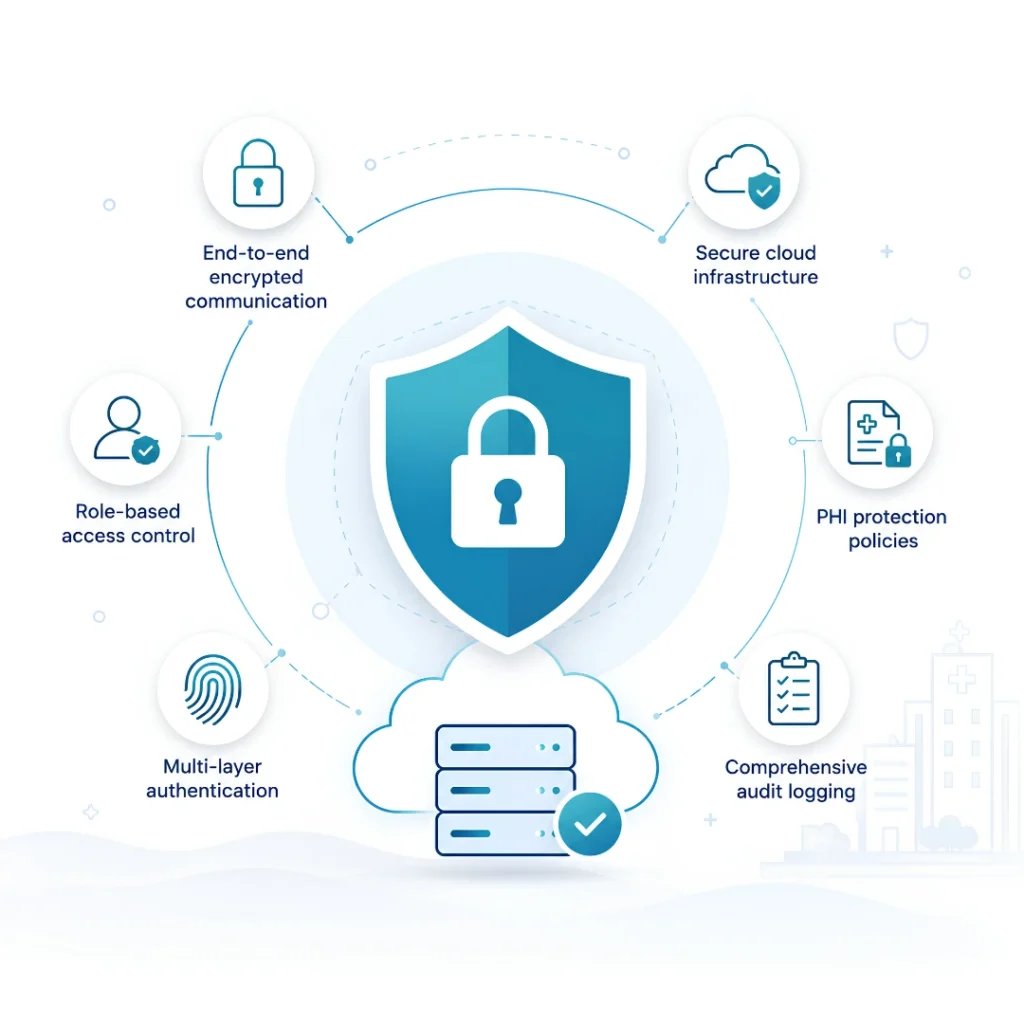
Every interaction on ClinicianCore is encrypted, audited, and governed from transmission through storage — meeting all HIPAA Security Rule technical safeguards without relying on user behavior.
- Encrypted communication
- Role-based access control
- Multi-layer authentication
- Secure cloud infrastructure
- PHI protection policies
- Comprehensive audit logging
Compliance Certifications and Business Associate Agreement
ClinicianCore executes Business Associate Agreements (BAAs) with covered entities and business associates as required under HIPAA. Contact our compliance team to request a BAA.
Designed by Dr. Kevin Halow, a board-certified surgeon with direct experience in clinical communication infrastructure
Enterprise Security
Built for Healthcare Governance
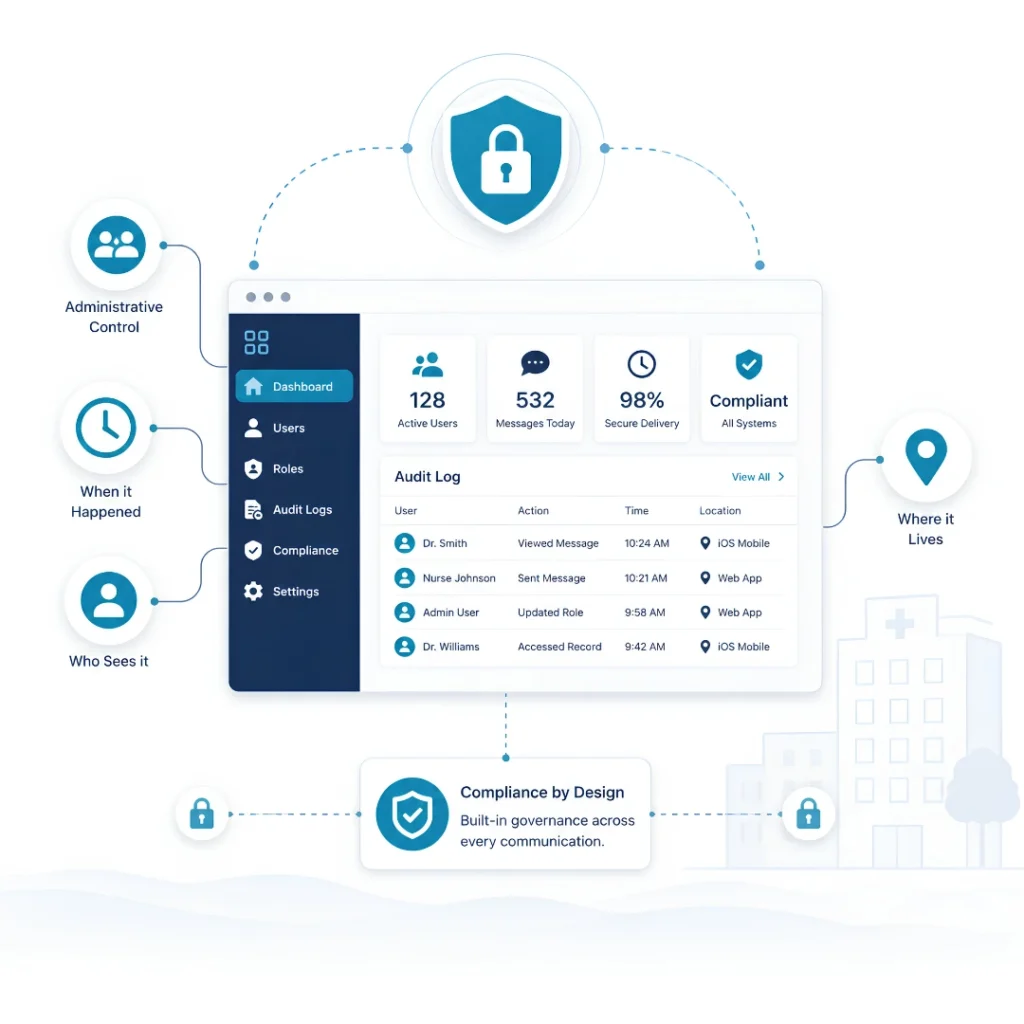
ClinicianCore gives healthcare organizations administrative control over every communication — who sees it, when it happened, and where it lives. Compliance is not a setting. It is the architecture.
Compliance Resource
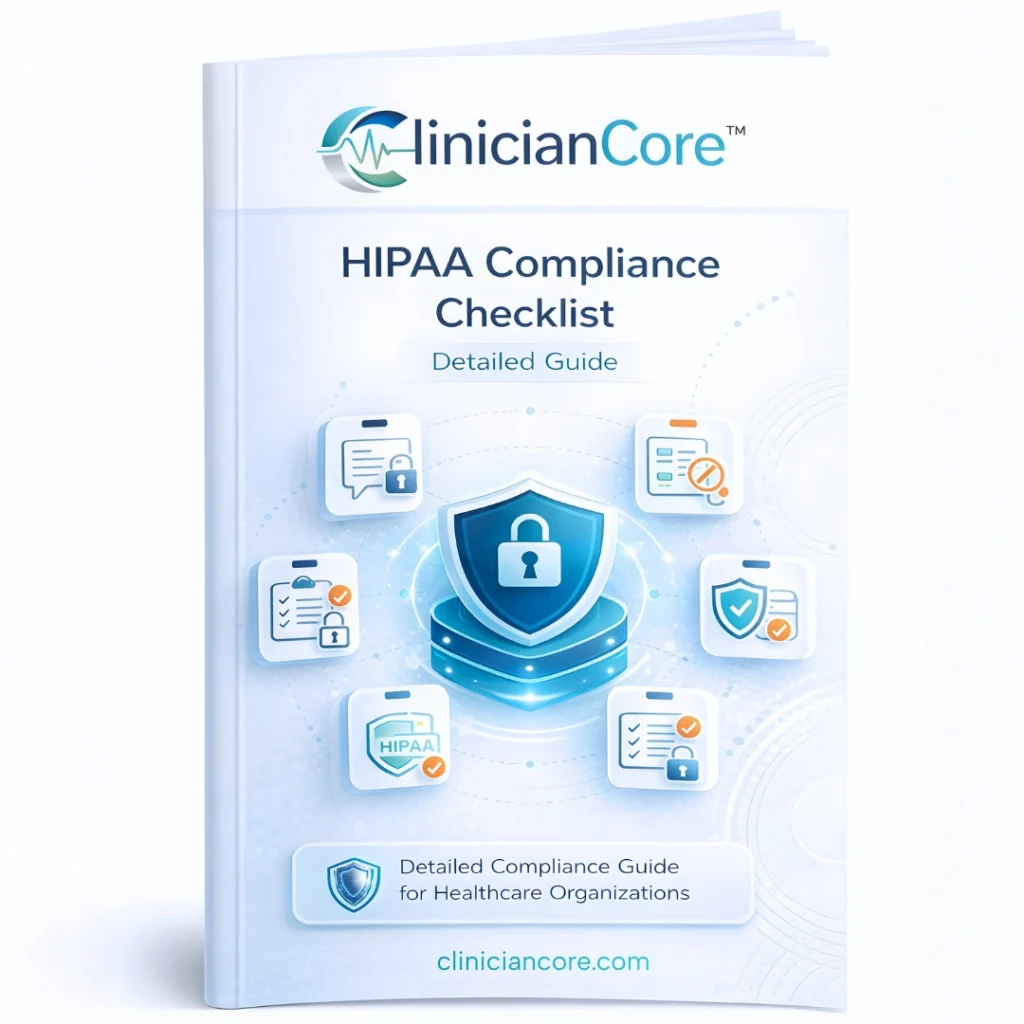
Download the HIPAA Compliance Checklist
Healthcare leaders evaluating communication platforms must ensure that systems meet strict privacy and security requirements.
Our HIPAA Compliance Checklist helps organizations evaluate whether their communication tools protect patient data and meet regulatory expectations.
Download the guide to review the critical requirements for secure healthcare communication.
Frequently Asked Questions
What is a HIPAA compliant collaboration platform?
A HIPAA-compliant collaboration platform is a secure communication system built specifically for healthcare teams. It enables physicians, nurses, and administrators to share patient information, coordinate care, and communicate in real time — all within an encrypted, auditable environment that meets HIPAA Privacy and Security Rule requirements. Unlike consumer messaging apps, these platforms include role-based access controls, automatic audit logging, and Business Associate Agreement (BAA) support.
Why is HIPAA-compliant messaging important in healthcare?
HIPAA-compliant messaging is important because clinical communication routinely involves Protected Health Information (PHI). When clinicians use non-compliant tools such as standard text messaging or consumer apps, they expose their organization to HIPAA violations, which carry penalties of up to $1.9 million per violation category per year. Secure messaging also protects patient trust, reduces data breach risk, and creates a defensible audit trail for regulatory review.
Can physicians use consumer messaging apps for patient communication?
No. Consumer messaging apps including standard SMS, WhatsApp, iMessage, and similar tools do not meet HIPAA requirements. They lack encryption aligned to HIPAA standards, do not offer audit trails, cannot execute a Business Associate Agreement, and have no role-based access controls. Using these tools for patient communication creates legal exposure and constitutes a HIPAA violation regardless of intent.
What is Shadow IT in healthcare?
Shadow IT in healthcare refers to the use of unauthorized communication tools — such as personal phones, consumer messaging apps, or unapproved cloud services — by clinicians and staff. These tools operate outside the organization’s IT governance framework, creating hidden compliance risks, data exposure, and audit gaps. Studies estimate that over 60% of healthcare workers use consumer messaging apps for clinical communication at least occasionally.
Does ClinicianCore support HIPAA compliance?
Yes. ClinicianCore is designed with HIPAA compliance as a foundational principle, not an add-on feature. The platform provides end-to-end encrypted messaging, comprehensive audit logging, role-based access control, multi-factor authentication, and data sovereignty controls. ClinicianCore executes Business Associate Agreements with covered entities and business associates as required under HIPAA.
What is a BAA in healthcare technology?
A Business Associate Agreement (BAA) is a legally required contract under HIPAA between a covered entity (such as a hospital or medical practice) and a business associate (such as a software vendor) that handles Protected Health Information. Any technology platform used for clinical communication must execute a BAA before it can legally process PHI. Vendors who cannot or will not execute a BAA are not HIPAA-compliant options.
What are the penalties for HIPAA violations in healthcare communication?
HIPAA violations in healthcare communication carry civil penalties ranging from $100 to $50,000 per violation, with annual maximums of $1.9 million per violation category. Willful neglect violations — such as knowingly using non-compliant messaging tools — carry the highest penalties. In addition to financial penalties, organizations face reputational damage, mandatory corrective action plans, and potential criminal referral for egregious cases.
Can’t find your questions?
HIPAA Compliant Collaboration Research and Case Studies
Secure Healthcare Collaboration Starts With the Right Infrastructure
Healthcare communication cannot rely on unsecured messaging tools. ClinicianCore provides a secure collaboration platform designed to protect patient data while enabling efficient clinical coordination.