
Six Core Clinical Communication Metrics That Strengthen Efficiency in Independent Practices
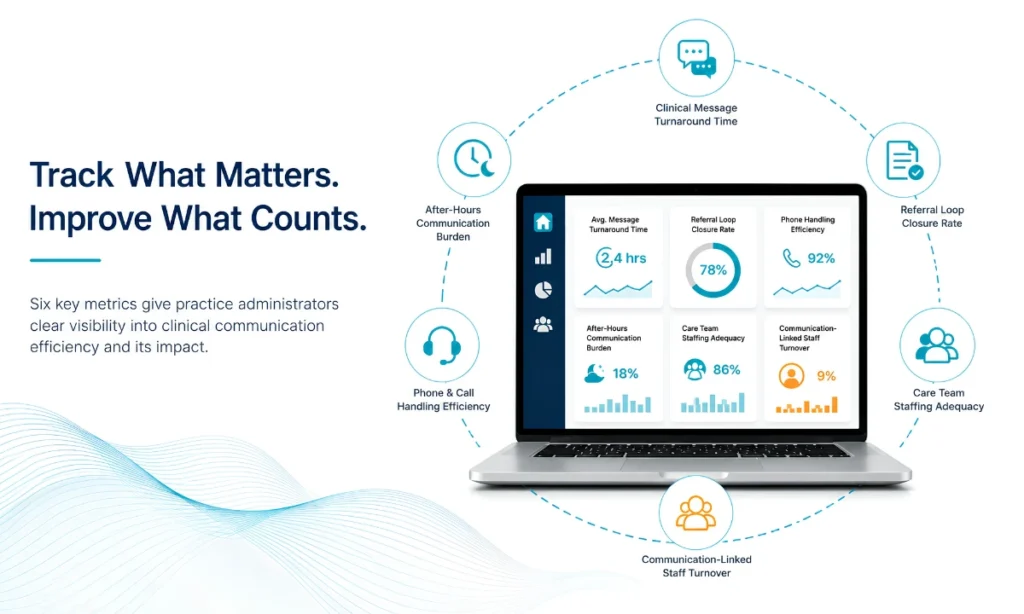
Independent physician group practices operate on tighter administrative margins than large health systems, which means every minute of unmeasured communication overhead compounds faster.
The Alert System That Was Never Designed With Physicians in Mind
In this episode of The Connected Practice, Dr. Kevin Halow, surgeon, veteran, co-founder and Chief Medical Officer of ClinicianCore, examines why today’s EHR alert systems can create overwhelming levels of notification fatigue for physicians.
Using a real-world operating-room scenario, Dr. Halow explains how routine refill requests, duplicate alerts, administrative messages, and critical clinical information can all arrive with the same level of urgency—forcing physicians to spend valuable attention sorting through noise.
The episode traces the problem back to the HITECH Act and Meaningful Use, arguing that traditional alert systems were largely shaped around certification and compliance requirements rather than physician workflow and clinical context. It then explores why high alert volumes and override rates are symptoms of a system that was not sufficiently calibrated to how physicians actually practice.
Dr. Halow also explains why simply silencing alerts isn’t the solution. Instead, he makes the case for a communication system that understands who the clinician is, what they are doing, and how clinically significant an alert is. The episode introduces HCO Practice HQ as ClinicianCore’s approach to intelligent, role-aware and urgency-based clinical communication designed to reduce noise while protecting physician attention
How Intelligent Routing Eliminates After Hours Communication Errors in Physician Practices
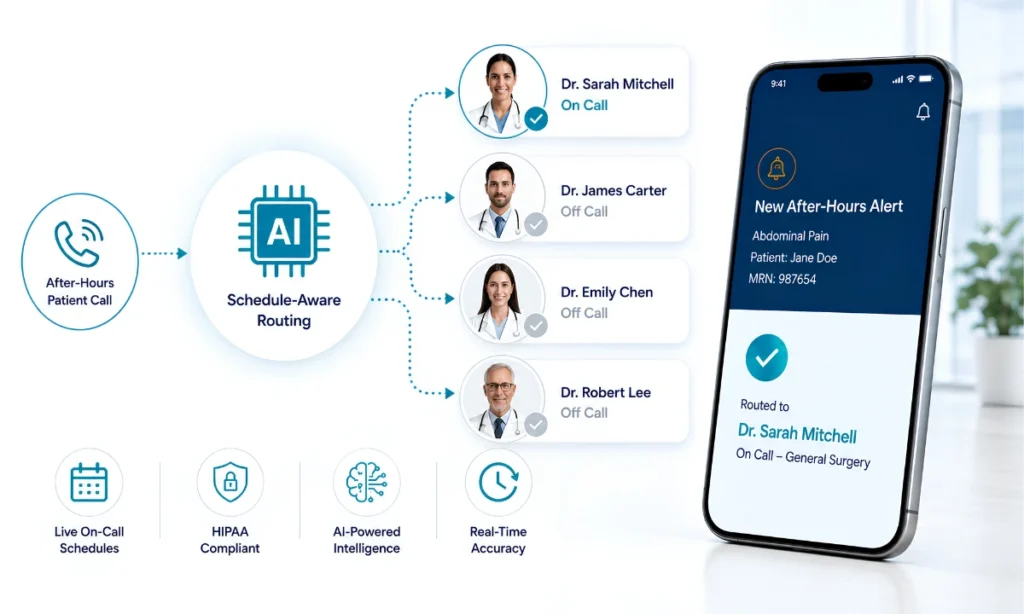
After-hours clinical communication in a physician group practice depends on one accurate answer: which physician is on call right now? When a triage call arrives at the practice’s after-hours line at 11 p.m., the routing system must direct it to the nephrologist currently handling the call, not the physician who finished the call four hours ago. In a physician group rotating weekly coverage across multiple specialties, that resolution can fail more often than practice leadership realizes.
The 30-Second Exercise: Physician Alert Override
Today I want to actually do the counting no one else is doing and show you where all of those uncounted, 30-second pieces of your day every small, cognitive interruption that is driving your clinical decision fatigue I want to show you where all those 30-second pieces are hiding.
The Cognitive Cost of Clinical Interruptions: Why Unified Clinical Communication Matters for Patient Care?

During my years as a surgeon in the Air Force, I learned something that applies to every clinical environment I have worked in since: you cannot make precise decisions under constant noise. In the operating room, we protect against interruptions deliberately. The room quiets. Tasks are sequenced. The cognitive environment is guarded because the consequences […]
The Coordination Tax: What’s Really Eating Your Clinical Day
In this episode of The Connected Practice, Dr. Kevin Halow, surgeon, veteran, co-founder, and Chief Medical Officer of ClinicianCore, introduces the concept of the “coordination tax”—the invisible overhead created when physicians spend valuable clinical time navigating fragmented communication systems.
Drawing from his experience in surgical practice, Dr. Halow explores how disconnected phones, EHRs, portals, routing systems, and departmental workflows force physicians to become the communication hub for their practice. The episode examines the difference between documentation burden and coordination burden, the impact of fragmented communication on clinical efficiency and burnout, and why solving the problem requires infrastructure rather than another standalone messaging tool.
The episode also introduces HCO Practice HQ, ClinicianCore’s organizational communication module designed around intelligent, role-aware routing and secure intra-office communication
Intra-Office Communication Breakdown: How Fragmented Channels Create a Daily Tax on Physician Time
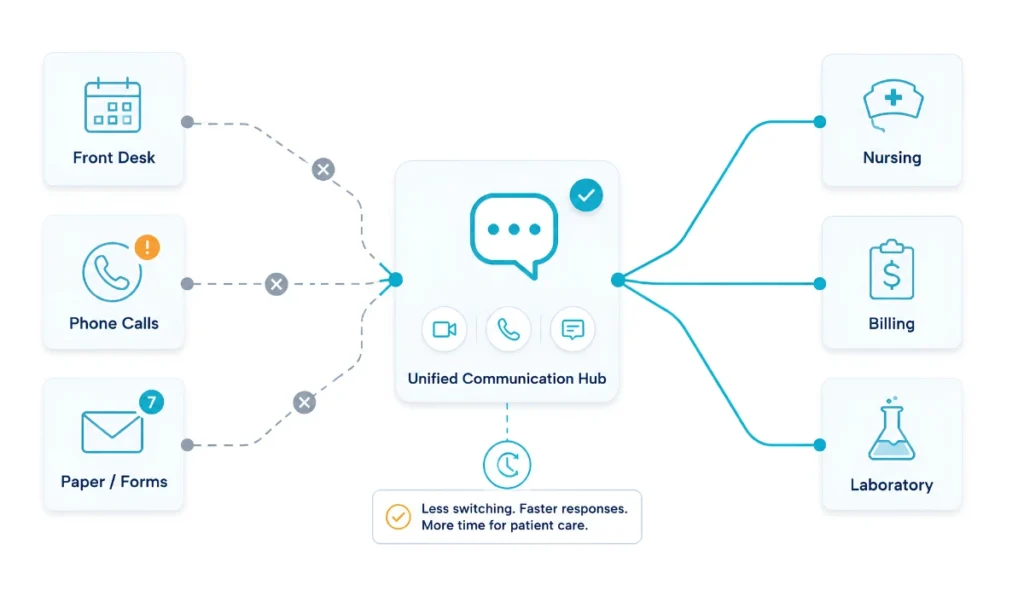
Every morning in an independent physician practice, the coordination work begins before the first exam room door opens. A routing slip sits at the front desk waiting for a response.
Asynchronous Communication in Medicine: How I Restructured My Workflow to Reduce Stress and Save Time

During my years in practice, first as an Air Force surgeon and later running an independent group, I operated under an unspoken rule: respond to everything immediately.
ClinicianCore Platform Walkthrough: A Demo with Dr. Kevin Halow, MD MBA

n this special platform walkthrough, Dr. Kevin Halow, MD MBA, Co-Founder and Chief Medical Officer of ClinicianCore, provides a screen-by-screen demonstration of the ClinicianCore platform and how it is designed around the way physicians actually communicate and work.
The episode walks through the Priority Box, HCO Practice HQ, HCC Consult Core, Physician Lounge, secure chat, encrypted audio and video calls, live CPT documentation, and the built-in AI assistant. Dr. Halow demonstrates how ClinicianCore brings clinical communication into one unified, HIPAA-compliant environment while helping physicians prioritize urgent information, document consultations, and reduce administrative friction.
The walkthrough ultimately positions ClinicianCore as more than a messaging application—a physician-centric unified communication network designed to streamline clinical workflows, support revenue capture, strengthen secure collaboration, and help physicians spend less time managing communication infrastructure and more time practicing medicine.
ClinicianCore Soft Launch: Early Access Now Open for Medical Practices

45 minutes. That is how much clinical time the average physician loses every day, not to patient care, but to the gap between an alert firing and a response arriving.