
Workflow Interruptions: The Hidden Cost of Physician Burnout
In this episode of The Connected Practice, Dr. Kevin Halow examines a workflow problem hiding in plain sight: the routine verbal interruptions that pull physicians out of patient care dozens of times a day. He breaks down why the interruption itself is not the real cost, it is the cognitive reset that follows, and how that fragmentation quietly pushes documentation into the evening and drives burnout. Dr. Halow then outlines a different way to structure clinic communication: separating front desk duties from phones, replacing verbal interruptions with a structured digital queue, and giving physicians a private space to consult peers instead of working every decision alone.
A New Chapter for Nevada Healthcare

Nevada ranks 45th nationally for active physicians per capita and 48th for primary care physicians per capita, according to December 2025 testimony before the U.S. House Committee on Energy and Commerce.
From Individual Practices to a Connected Healthcare Community: Why Nevada Needs a More Connected Clinical Infrastructure

Nevada physicians already know the numbers before anyone quotes them. The next specialist appointment is months out. The nearest neurologist may be a four-hour drive from a frontier county.
The Quiet Leadership Transforming Healthcare Across Nevada

I still remember a late Tuesday evening in a regional medical center outside Reno. The call board was full, the waiting room was backed up, and our shift was already two hours past its scheduled end.
Nevada Physician Shortage & Unified Clinical Communication
In this episode of The Connected Practice, Dr. Kevin Halow, surgeon, veteran, co-founder and Chief Medical Officer of ClinicianCore, examines why physician groups can lose consult revenue because of communication and documentation breakdowns.
Dr. Halow explains how a consult can move through multiple handoffs—from the physician and scheduler to the coder, biller, and payer—and how a single missed handoff can disrupt the entire process. The clinical work may be completed, but if the documentation and communication surrounding it do not make it through the workflow, the practice can still lose reimbursement.
The episode explores the hidden problems created by fragmented communication, delayed documentation, missed callbacks, and disconnected EMR systems. Dr. Halow also shares a real-world example involving a complex surgical case to demonstrate how coordination failures can affect not only billing, but also scheduling, operating room efficiency, staff workload, and patient experience.
The discussion ultimately reframes lost consult claims as a handoff problem rather than simply a billing problem. By creating a shared and traceable communication record, practices can better preserve consult documentation and ensure that the request, response, and supporting information remain connected throughout the workflow.
The episode also introduces ClinicianCore’s approach to centralized clinical communication and documentation through HCO Practice HQ, designed to help practices.
Why 65% of Physician Referrals Never Come Back With an Answer

A referral doesn’t end when a patient walks into a specialist’s office. The real process ends when the specialist’s findings make their way back to the referring physician and are available to guide the patient’s next step.
In this episode of The Connected Practice, Dr. Kevin Halow, surgeon, veteran, co-founder, and Chief Medical Officer of ClinicianCore, explores why so many referral loops remain open—and how that communication gap affects physicians, patients, and clinical continuity.
Using a real-world example, Dr. Halow describes what happens when a patient returns weeks after a referral but the referring physician still has no consult note, summary, or documented answer. The episode examines how disconnected systems and unclear ownership can cause information to sit in fax queues, portals, or specialist records without making its way back to the physician who needs it.
The episode also explains why closing the referral loop should be treated as a tracked clinical workflow, with clear statuses, ownership, and visibility. Dr. Halow introduces ClinicianCore’s approach to Unified Clinical Communication, designed to keep the referral request, specialist response, and communication record connected from the initial referral through the physician’s review.
2026 State of Clinical Communication Report
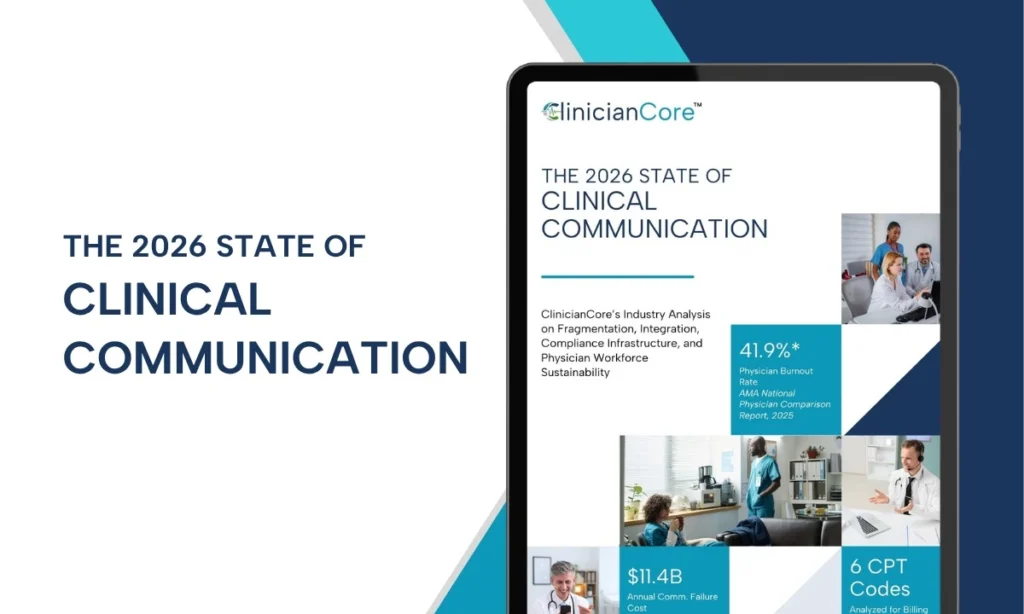
The 2026 State of Clinical Communication, published by the ClinicianCore Research Division, examines how fragmented communication technology affects physician workflows, patient safety, and practice revenue.
HCO Practice HQ: The Clinical Communication Architecture for Modern Healthcare Organizations
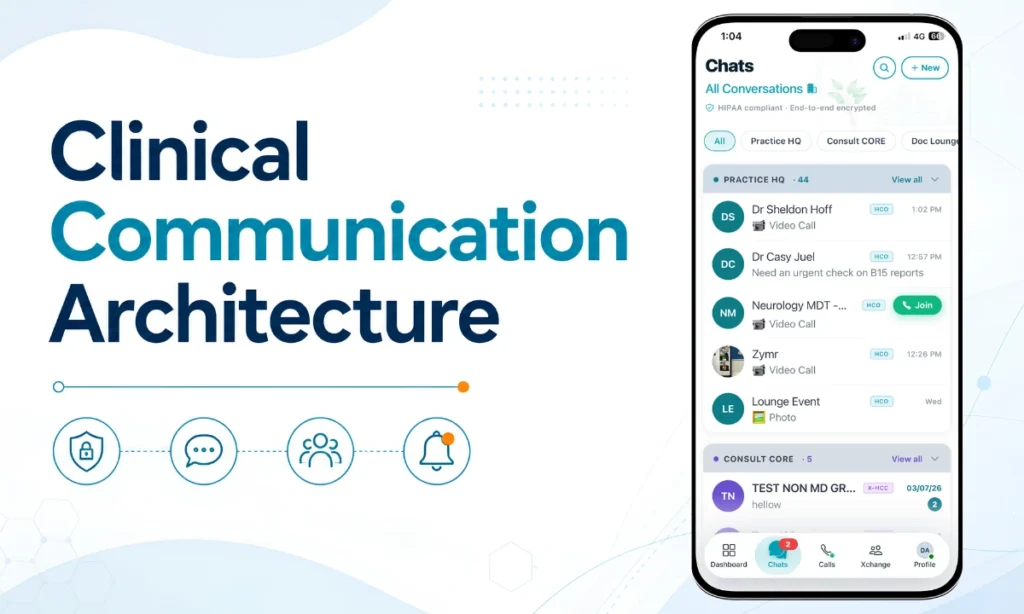
The continuous influx of administrative work in modern medical practices often distracts clinicians from what matters most: delivering patient care.
Reachable vs. Available: Why Static Call Schedules Are Quietly Burning Out Physicians
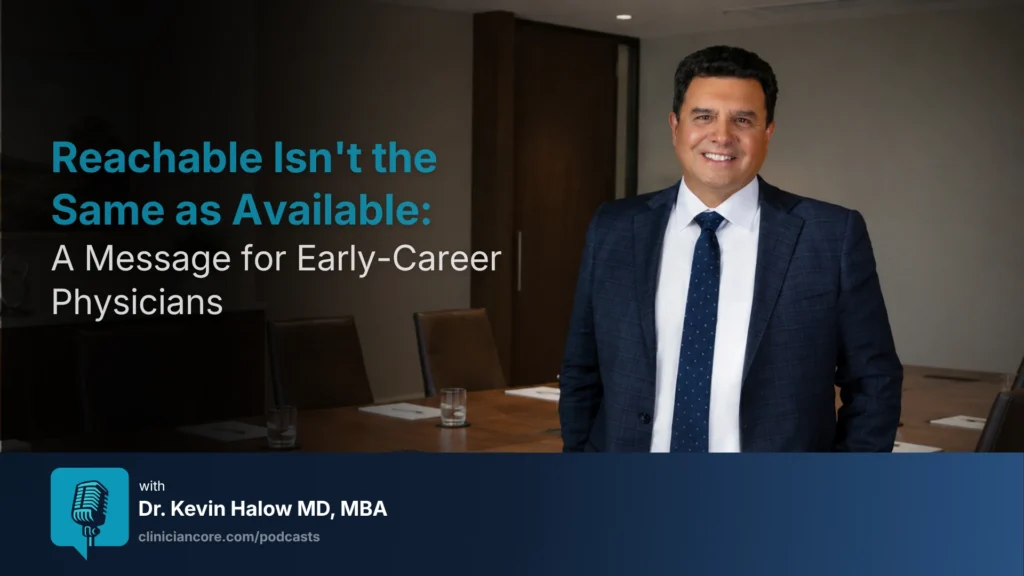
In this episode of The Connected Practice, Dr. Kevin Halow, co-founder and Chief Medical Officer of ClinicianCore, examines the difference between being reachable and being available—and why static call schedules can quietly contribute to physician burnout.
Using a real-world example of a physician receiving an emergency call despite having swapped their call day with a colleague, Dr. Halow explains how static scheduling systems can fall behind reality. When coverage changes are not reflected immediately, the wrong physician may receive the call, creating unnecessary interruptions and additional stress.
The episode explores how manual call scheduling, delayed updates, coverage swaps, and misrouted communications affect clinical workflows. Dr. Halow contrasts static schedules with schedule-aware routing, which can account for who is actually responsible for coverage at a particular time.
The episode also introduces ClinicianCore’s approach to smarter clinical communication and on-call schedule-aware routing, designed to help practices reduce unnecessary interruptions, improve response accuracy, and create a more sustainable physician workflow.
How Collaboration Drives Growth for Independent Medical Practices

Independent medical practices operate on a paradox. Physicians are trained to be self-reliant clinical decision makers, yet the best patient outcomes almost always depend on a network of people working together.