Healthcare has never generated more knowledge than it does today.
New therapies, medical devices and technologies, artificial intelligence tools, and digital health solutions are entering the market at an unprecedented pace. As clinicians and healthcare leaders, we are surrounded by an ever-growing volume of evidence intended to improve patient care.
Despite these advances and the growing body of supporting evidence, our challenge remains achieving equitable access, adoption, and implementation. The challenge is not the development of innovation. The challenge is building the systems, workflows, and support structures necessary for patients to benefit from it.
The challenge is not creating new knowledge. The challenge is translating that knowledge into everyday clinical practice and driving adoption of evidence-based clinical guidelines.
Key Takeaways
- Successful implementation depends on the alignment of three elements working in concert: people, processes, and systems.
- People drive adoption. Processes create consistency. Systems enable scale.
- Every innovation strategy should include a plan for adoption, workflow integration, patient access, and outcome measurement.
- In a large U.S. T1D Exchange Registry analysis, only 26.4% of participants reported using an AID system.
- Many of the challenges healthcare organizations face today are communication challenges rather than knowledge challenges.
- AI should augment human expertise, not replace it.
A Lack of Innovation and Evidence Is Not the Issue. The Challenge Is Choreographing the Dance of Implementation.
Throughout my career, I’ve worked at the intersection of patient care, clinical research, and healthcare innovation. Whether as an owner of a private practice, as a health system employee, directing a diabetes care center, leading a research institution, or in an industry leadership role, I’ve observed the same reality: new technologies and emerging clinical evidence do not improve outcomes on their own. Outcomes improve only when these innovations are successfully adopted and implemented in a way that changes what happens in the exam room between clinicians and patients.
Healthcare’s greatest opportunity over the next decade may not be accelerating innovation. It may be improving implementation.
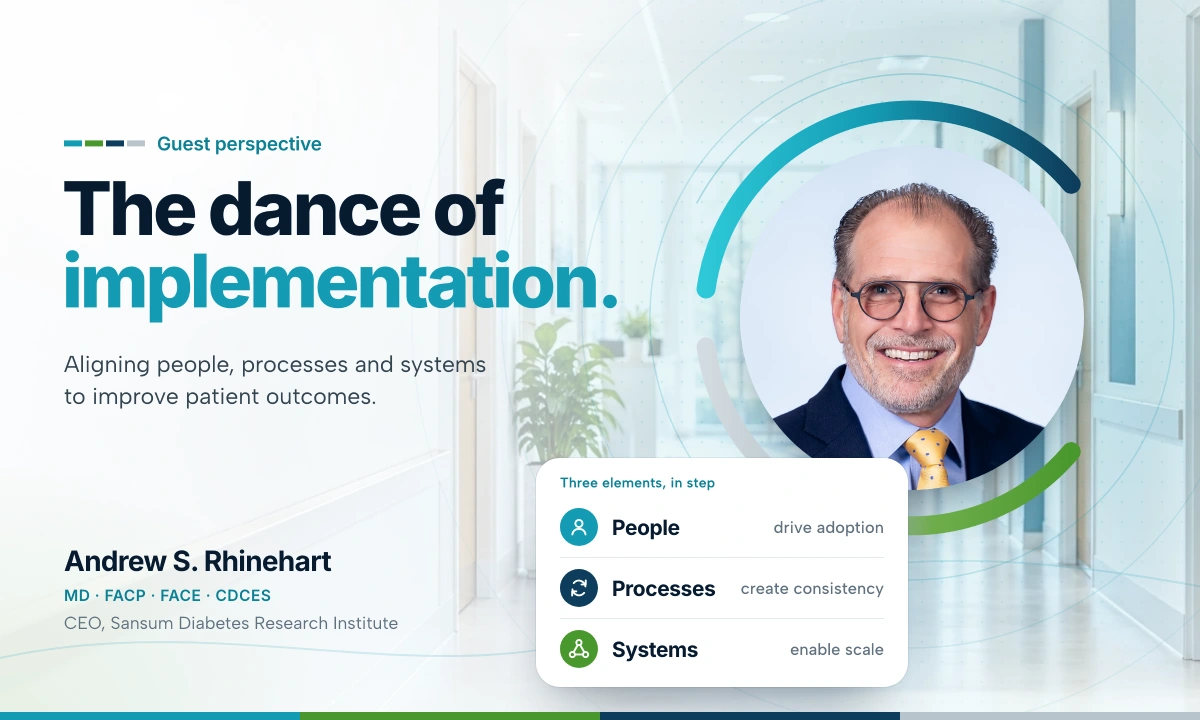
Successful implementation depends on the alignment of three elements working in concert: people, processes, and systems. People drive adoption. Processes create consistency. Systems enable scale. When any one of these elements is missing, even the most promising innovation may fail to improve patient outcomes.
Why Great Research Often Struggles in the Real World
Randomized clinical trials remain the gold standard of evidence-based medicine and the generation of guidelines. These studies help us determine whether therapies are safe and effective under carefully controlled conditions.
However, as we all know much too well, patients do not live in controlled environments.
A person with diabetes may also be managing cardiovascular disease, financial stress, caregiving responsibilities, transportation challenges, and/or limited health literacy. These real-world factors may influence outcomes even more than our clinical decisions. A medication never retrieved from the pharmacy, the medical device used improperly, or the procedure never performed will not benefit the patient to improve outcomes.
As a result, healthcare leaders must ask a second question after evaluating a new intervention:
“Will this work for my patients and in my community?” or better yet, “How can I successfully implement this within my local healthcare ecosystem?”
Implementation often fails when we underestimate the complexity of everyday clinical care. A treatment that performs exceptionally well in a trial may encounter one or more barriers related to access, workflow, reimbursement, training, and/or patient engagement.
That does not diminish the value of clinical research. Instead, it highlights the need to combine scientific rigor with practical execution. It’s that elegant dance between the people, the processes, and the systems. All three need to be considered for successful implementation.
Type 1 Diabetes Care Offers a Powerful Lesson
Few fields have experienced as much innovation in the last two decades as diabetes care, especially type 1 diabetes.
We have witnessed remarkable advances in continuous glucose monitoring, automated insulin delivery (AID) systems, decision-support tools, connected devices, and digital health platforms. Patients today have access to information and technologies that would have seemed extraordinary when I began my career.
Yet the most important lesson from diabetes care has little to do with technology itself.
Successful diabetes management depends upon people, processes, and systems working together through strong relationships and team-based care.
Patients achieve better outcomes when they have access to diabetes self-management education and support, bidirectional communication, and a healthcare team, inclusive of the patient, that helps successfully incorporate these technologies into their lives and subsequently translate the massive amount of data into action. Even the most advanced technology requires trust, engagement, and human connection.
I’ve seen patients achieve life-changing improvements not simply because they gained access to a new device, but because they better understood their diabetes and felt empowered to manage it. However, even with the availability of these life-changing technologies, the adoption has been rather anemic. Although the American Diabetes Association recommends that automated insulin delivery (AID) systems be offered to adults with type 1 diabetes who can use them safely1, adoption remains far below what many clinicians would hope to see given the strength of the evidence and current guideline recommendations. In a large U.S. T1D Exchange Registry analysis, only 26.4% of participants reported using an AID system2.
Technology may provide the data, but successful implementation and adoption are what create the better outcomes that patients deserve.
Design Around People, Not Technology
One of industry’s recurring mistakes is expecting clinicians and patients to accommodate technology rather than designing technology around clinical workflows and patient use. Product development needs to start with the proper needs assessment and product design must take into account the clinician’s workflow and patient’s day-to-day lives as they design products.
Most patients, physicians, nurses, and allied health professionals are not resistant to innovation. They are resistant to unnecessary friction and products that do not fit into their daily lives, whether at home for the patient or at work for the clinician.
Every additional login, alert, documentation requirement, or disconnected platform introduces burden. When technology increases complexity, adoption suffers regardless of how impressive the underlying solution may be. An unusable technology produces no improved outcomes.
I live by the KISS principle – keep it simple, silly. The most successful healthcare technologies often appear deceptively simple.
They reduce administrative effort. They simplify communication. They improve access to relevant information. They allow clinicians to spend more time focusing on patients and patients more time living their lives. Let’s decrease the burden and improve the outcomes – that is the ultimate Win-Win.
When evaluating new technologies, I often encourage leaders to think beyond features and ask a very simple question:
“Does this make care easier for the end user?”
If the answer is unclear or, worse yet, ‘no,’ implementation challenges are likely to follow. Choreographing the dance will become a challenge, often leading to poor adoption.
Even the most well-designed technology cannot overcome fragmented communication. Fundamentally, healthcare remains a team sport. Systems need to support those teams, not force them to work around the system.
Why Communication Remains Healthcare’s Most Undervalued Tool
Healthcare delivery has become increasingly specialized.
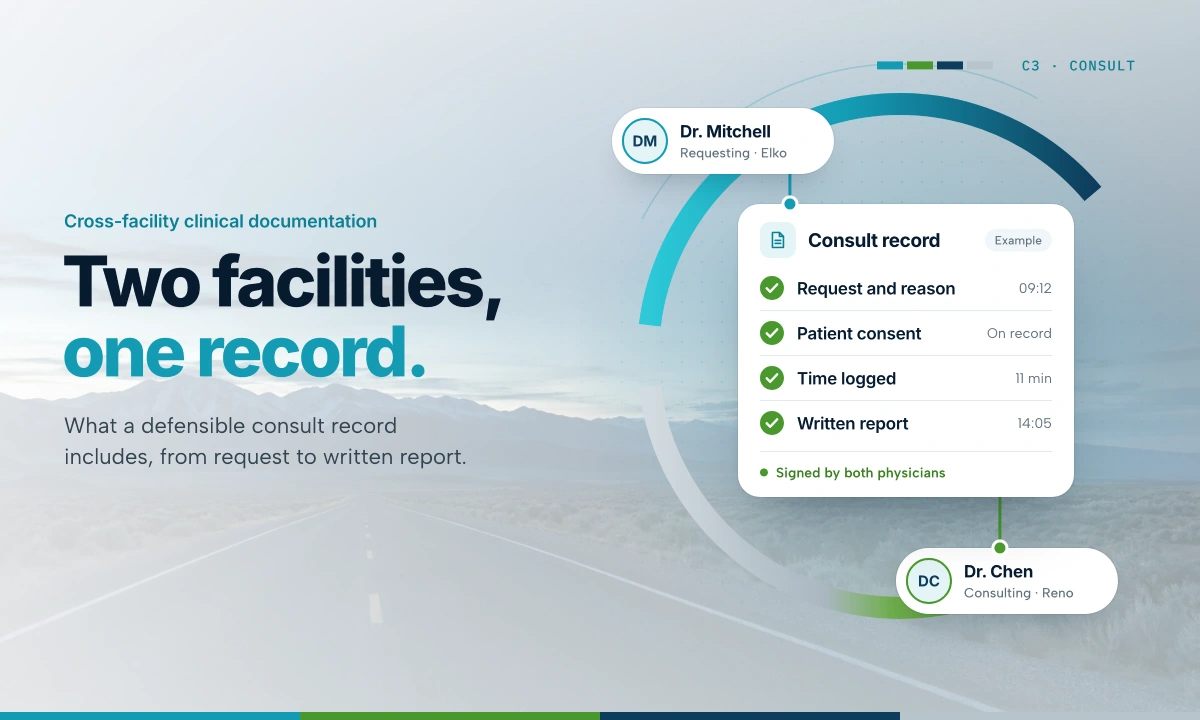
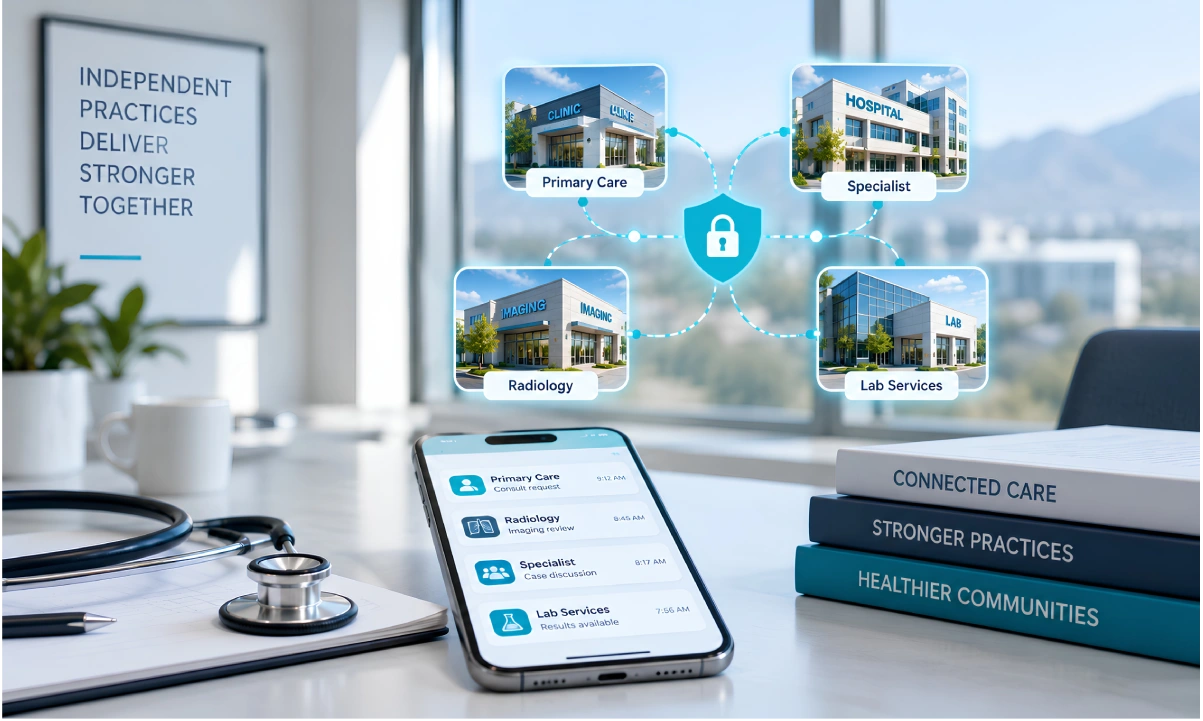
A single patient may interact with primary care physicians, specialists, medical assistants, nurses, educators, pharmacists, care coordinators, and other professionals across multiple organizations. While specialization has improved expertise, it has increased the risk of fragmentation and treatment silos, especially if disparate EHRs are being used.
Many of the challenges healthcare organizations face today are communication challenges rather than knowledge challenges.
The information often exists. The question is whether the right people receive it at the right time and in the right context.
Connected care requires connected communication. It also requires the processes and systems necessary to ensure information reaches the right people at the right time.
Organizations that successfully improve outcomes are often those that create systems supporting collaboration and break down the silos. This includes communication between clinicians, communication between organizations, and communication with patients themselves.
When care teams function as coordinated units, patients experience better continuity, greater confidence, and fewer avoidable gaps in care.
The Promise and Reality of Artificial Intelligence
Artificial intelligence is generating tremendous excitement, and concerns, across healthcare, and appropriately so.
AI has the potential to identify patterns, support clinical decisions, improve operational efficiency, and help clinicians manage increasingly complex information and large data sets.
However, healthcare leaders need to resist the temptation to view AI as a solution in search of a problem.
The most successful AI applications will likely address specific, measurable challenges. They will reduce administrative burden, improve workflow efficiency, surface clinically meaningful insights, and support better decision-making.
Importantly, we are not expendable. AI should augment human expertise, not replace it. It is simply one of many systems that support our processes, while people remain at the center of healthcare.
Patients seek more than information. They seek understanding, empathy, trust, and partnership. No algorithm can fully replicate those essential elements of care.
The future of healthcare will not be human versus technology. It will be human expertise enhanced by thoughtfully designed technology.
Moving From Discovery to Impact
Healthcare innovation begins with discovery, but the value comes from successful implementation and adoption.
The organizations that will lead the future of healthcare are not necessarily those that develop the most technologies. They will be those that successfully integrate evidence, technology, communication, and human-centered design into routine clinical care.
Please, everyone, continue the research and continue to innovate. But build solutions with the end user in mind from the start. Successful implementation requires all three elements of the dance working together: people, processes, and systems. People drive adoption. Processes create consistency. Systems enable scale.
At the end of the day, our responsibility as healthcare leaders is not simply to generate knowledge. It is to ensure that knowledge reaches the people who need it most and improves their lives. Let us work to get the science to patients faster.
Author’s Notes
1 Diabetes Care. 2026;49(Suppl 1):S150-S165
2 Diabetes 2022;71(Supplement_1):289-OR
Guest perspectives reflect the views of the author and do not necessarily represent the views of ClinicianCore.