The technology to connect healthcare largely exists. What’s missing is people using it together. EHR interoperability was supposed to give every physician the full picture of a patient, yet records still sit in separate systems, patients wait weeks for specialists, and physicians chase information that should already be in front of them.
In this episode of The Connected Practice by ClinicianCore, Neeraj Jain and I talk with Brian G. Rosenberg, Executive Director and Vice-Chairman of HealtHIE Nevada, the state’s health information exchange. Brian brings more than 30 years in enterprise technology, including leading the Epic implementation at University Medical Center (UMC) in Las Vegas. We cover why connecting electronic health records is still hard, where AI in healthcare actually helps, how patient data should be protected, and why physician collaboration may be the fastest way to improve access to care.
The exchanges below are taken from our recorded conversation and lightly edited for clarity, with verified context from federal and state sources. ClinicianCore, a secure, HIPAA-compliant unified clinical communication platform built exclusively for physicians, hosts the podcast to bring these conversations to the physicians who live them every day.
Key takeaways
- The technology exists; the silos are the problem. In Brian’s words, “we’ve got a lot of people doing things in silos, and we need to get them working together as one community.”
- Physicians still lack ideal interoperability. Fewer than 15% of family physicians reported ideal interoperability experiences in a 2025 national study (JAMA Network Open), while 70% of hospitals engaged in all four domains of exchange in 2023 (ONC).
- Nevada patients must consent to exchange. State law requires informed, affirmative consent before records are retrieved from a health information exchange, and Brian encourages every patient to opt in.
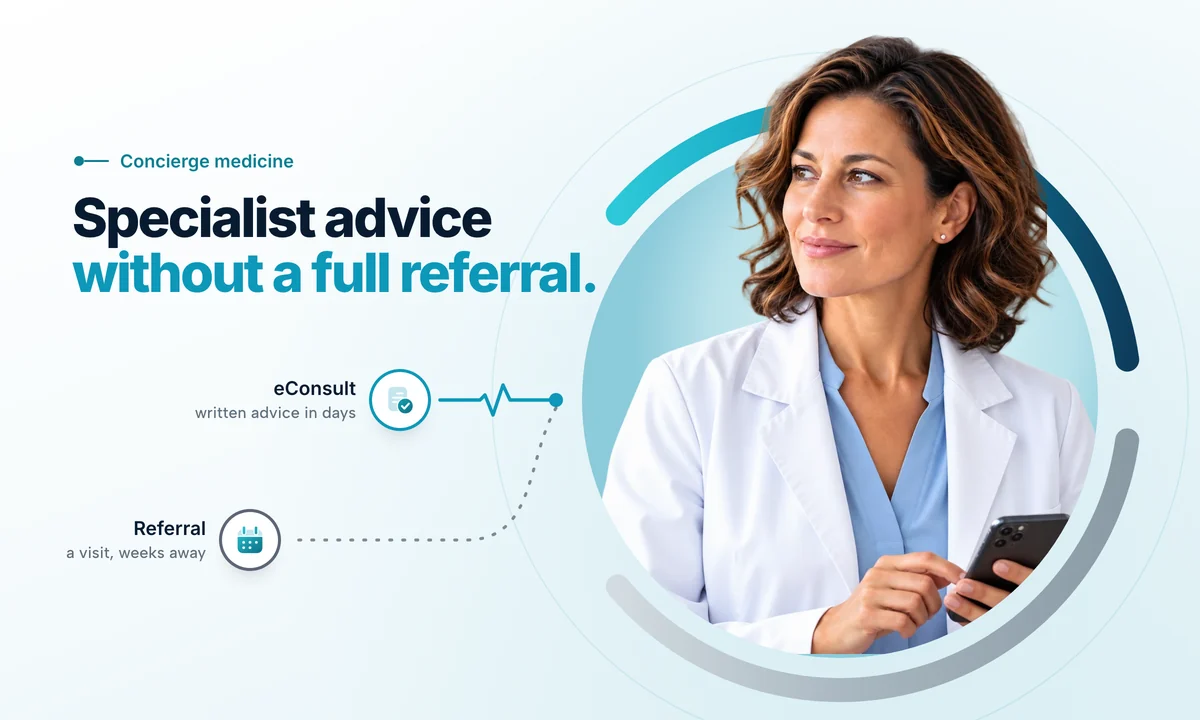
- Consults can shorten the wait. New dermatology appointments averaged 36.5 days across 15 large US metro areas in 2025 (AMN Healthcare); a documented physician-to-physician consult can answer many questions sooner.
- Adopt AI for a problem, not for novelty. Brian’s test: implement AI “because it solves a use case,” not “because it’s cool.” And better data makes better AI.
- Singles and doubles beat home runs. Measurable, incremental progress that works with existing systems wins funding and adoption.
“If physicians can consult together, some of these patients wouldn’t necessarily have to go see the specialist. If the physician can talk to the specialist, that’s all you really need.”
Why does EHR interoperability remain a challenge?
Watch the full conversation or read the highlights below.
My daily frustration is simple. One EHR runs where I operate, another runs in my office, and the referring physician uses a third. I asked Brian how Nevada could go from last to first in connecting physicians, so we stop chasing data.
Brian: To a large extent, we have the technology. We have the information exchanges. Not everybody necessarily takes advantage of it and participates, and that’s a challenge that we do have in this state.
He noted that hospitals are fairly well connected, while many individual physicians’ offices still lag, especially across specialties that use hundreds of different EHRs. Federal data agrees. In 2023, 70% of US hospitals engaged in all four domains of interoperable exchange: sending, receiving, finding and integrating patient information (ONC, 2024). Physicians report a different experience. In a national study of 8,122 family physicians, ideal interoperability ranged from 19% for encounter documents to 8% for test results from outside hospitals (JAMA Network Open, 2025), and in 2021 only about half of physicians searched electronically for outside records when seeing a new patient (ONC, 2024).
Nevada’s consent requirement
Brian described Nevada as an opt-in state. Under NRS 439.591, a patient cannot be required to participate in a health information exchange, and must be fully informed and affirmatively consent before records are retrieved from one.
Brian: You don’t have an option to opt out of your information being shared with an EHR provider, Epic or anybody else. But you have to opt in to have your information shared between your medical providers.
That contrast surprises most patients, and most physicians. Brian’s advice is simple:
Brian: I certainly encourage anybody listening to make sure you’re opting in for exchange of medical records. That’s the purpose: it’s for your care.
One community, one record
HealtHIE Nevada is launching HealthRecords Nevada, a consumer app that gives residents one secure place to see records from participating providers instead of five separate portals. Brian also said HealtHIE Nevada is part of the national “Kill the Clipboard” effort, a goal CMS set out in July 2025, when more than 60 companies pledged to work together on a patient-centric health tech ecosystem, including tools that replace paper intake forms with digital check-in. His mother, he joked, had personally asked him to end the paperwork at every new office.
Data privacy: sharing for care, not for training
Brian warned that records patients upload to free public AI tools may end up being used to train those models.
Brian: There’s a lot of lack of transparency right now in the industry about where your data goes and how it’s used. Patients need more direct control and visibility into what’s happening with their data.
Sharing records between your own physicians serves your care. The same standard applies to the tools physicians use with each other: HIPAA-compliant collaboration means verified accounts, access controls and audit trails.
How does physician collaboration improve access to care?
Nevada’s geography makes collaboration hard. Ely is far from Henderson, which is far from Battle Mountain and Reno, and as Brian pointed out, Los Angeles is closer to Las Vegas than Reno is. The state also has fewer physicians than most: 219.8 active physicians per 100,000 residents, compared with 297.1 nationally, according to the Nevada Health Workforce Research Center’s 2025 report at the University of Nevada, Reno.
Dr. Halow: It can take six months to see a dermatologist, eight months to see some specialists. We believe that if physicians can consult together, not only could they get paid for it, but some of these patients wouldn’t necessarily have to go see the specialist. If the physician can talk to the specialist, that’s all you really need.
Even in large metro areas, the average wait for a new dermatology appointment reached 36.5 days in 2025, according to an AMN Healthcare survey of 15 large US metro areas. We looked at what those waits mean in how specialist consultation delays affect patient outcomes. When I was asked to speak to advanced practice providers about vascular care, the real request was to show how often the referral button gets pushed when a quick consult would do.
Brian: Patients don’t like going to a doctor and having the doctor say, you have to go to a different doctor. Getting providers working more as a care team, rather than a referral where it’s not on my plate anymore, it’s on your plate, is a piece of that. The technology to a large part exists, but we’ve got a lot of people doing things in silos, and we need to get them working together as one community.
That is the idea behind interprofessional consultation. A family physician who sees a rash can get a quick, documented opinion from a dermatologist, and the patient may avoid a long wait altogether. Medicare has paid separately for these services since 2019 under CPT codes 99446–99449 and 99451–99452 (CMS, 2024). Reimbursement depends on payer, consent and documentation rules, and payment is always for consultative work performed, never for a referral. ConsultCore structures that workflow from the first question to the signed record. Our article on concierge practice communication shows how it works step by step.
How can AI in healthcare reduce administrative burden?
Brian’s starting point: every minute physicians spend on administrative work is a minute away from patients. His first example was ambient documentation, where AI captures the visit.
Brian: Physicians now can look at a patient in the eye instead of looking at the computer screen.
The early evidence supports him. In a study across six health systems published in JAMA Network Open in October 2025, the share of ambulatory clinicians reporting burnout fell from 51.9% to 38.8% after 30 days of using an ambient AI scribe. Brian’s rule for every other AI tool is to adopt it only when it solves a specific problem, and to remember that AI is only as good as the data behind it. That is how we approach healthcare AI and innovation at ClinicianCore.
Patients are already using AI on their own. Recently a patient arrived in my clinic absolutely convinced they had an aortic aneurysm that needed repair right away, and I couldn’t see the information that led them there. Brian’s point is that self-diagnosis is not new; what matters is the quality of the information people use.
Why is healthcare technology change so hard?
I lived through an Epic conversion myself, and physicians often describe the first months as close to a clinical depression. Brian’s answer was that the hardest part of any technology project is the change, not the software. At UMC he led a core team of about 75 full-time people, with as many as 500 involved at peaks, and coordinated training for 10,000 staff. Then, the night before training was due to begin, the October 1, 2017 mass shooting in Las Vegas changed everything. In Brian’s words, “UMC had over 100 gunshot victims all show up at the hospital at the same time.”
Brian: Obviously, training on Epic was not a priority any longer. Everybody who arrived at UMC alive, left alive. Really an incredible effort by the staff there. I use this as an example of how even the best planned projects can have something happen that you could never possibly expect.
Seven or eight years later, Brian says, nobody would want to take Epic away.
Dr. Halow: That’s kind of what ClinicianCore is doing, on a different level. We’re trying to tackle physician burnout through the idea of communicate, collaborate, consult and connect. It’s physician-centric communication, not replacing EHRs, but working with them.
Work with what exists: lessons in health tech leadership
Brian’s advice for anyone building in healthcare is to stop trying to be the entire solution. Show small, measurable results in a pilot rather than promising to fix healthcare. He added a practical point about grants: some let a company apply directly, but others require a customer to apply and include your technology in their application, so the organizations you serve matter as much as your proposal.
Brian: Collaboration is something I don’t hear talked about as much. It’s a really important need. Recognize you don’t need to build an EHR. Work with the EHRs that are out there.
About Brian G. Rosenberg
Brian has spent more than three decades designing and deploying enterprise software. He was a partner at KPMG, built and ran his own consulting firm in Baltimore for 15 years, and moved to Las Vegas about 13 years ago. He led the Epic implementation at UMC, founded Educational Revolution, which received a National Science Foundation grant, and built the Socrates learning platform, used by more than 60,000 students in Clark County. He teaches at UNLV and serves on the advisory board of the UNLV School of Public Health. Today he leads HealtHIE Nevada.
Where ClinicianCore fits
Brian’s conclusion matches why we built ClinicianCore. As a secure, HIPAA-compliant unified clinical communication platform built exclusively for physicians, ClinicianCore works alongside the EHR rather than replacing it, and focuses on the conversations between physicians, their teams and the organizations they work with.
- Communicate: Practice HQ connects physicians, nurses, medical assistants and office staff in one secure place.
- Consult: ConsultCore documents physician-to-physician consultations with time tracking, an AI-assisted summary and a proposed CPT code for physician review.
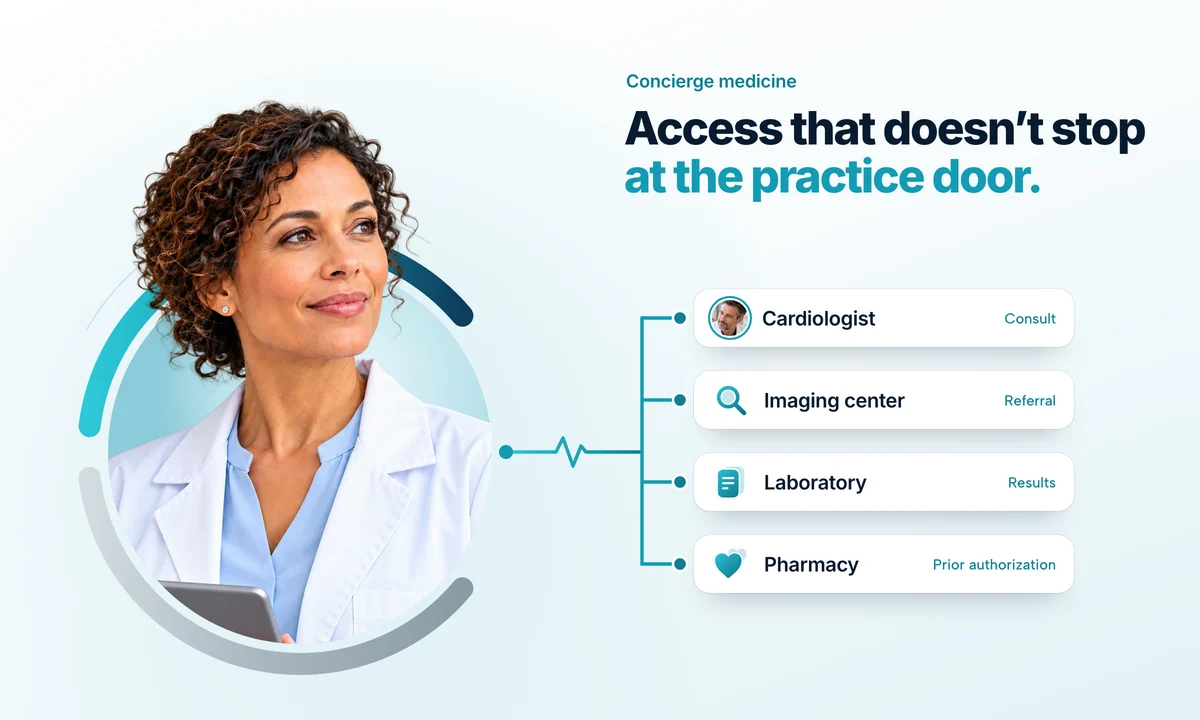
- Collaborate: Trusted Entity connects a practice with the specialists, labs, imaging centers and billing companies it already works with.
- Connect: Physician Lounge gives physicians a private space to talk with colleagues.
It is one practical answer to the silos Brian describes, and part of a unified clinical communication approach in which every system does what it does best.
Listen to the full episode
Brian’s message is that the technology largely exists, and progress now depends on people working together as one community. Physicians can lead that by connecting with each other first. Watch the full episode on YouTube, and if you want to see how ClinicianCore, a secure, HIPAA-compliant unified clinical communication platform built exclusively for physicians, can connect your practice, Request a Live Demo.
Frequently asked questions
What is EHR interoperability?
EHR interoperability is the ability of different electronic health record systems to send, receive, find and use patient information from each other. It matters because physicians work across several EHRs, and fewer than 15% of family physicians report ideal interoperability (JAMA Network Open, 2025). ClinicianCore complements the EHR by connecting the physicians who use it.
What is a health information exchange (HIE)?
A health information exchange is a network that lets physicians, clinics and hospitals securely share patient records for care. HealtHIE Nevada, the state’s exchange, connects data from more than 220 hospitals, clinics and health systems (HealtHIE Nevada, 2026). ClinicianCore works alongside exchanges like it, connecting the physicians who act on the shared record.
How does AI reduce physician administrative burden?
AI helps reduce administrative burden by handling tasks such as visit documentation, scheduling and drafted message replies. With ambient AI scribes, the share of ambulatory clinicians reporting burnout fell from 51.9% to 38.8% after 30 days (JAMA Network Open, 2025). ClinicianCore follows Brian Rosenberg’s rule: adopt AI only when it solves a specific problem.
Do Nevada patients have to opt in to share health records?
Yes. Under NRS 439.591, as amended in 2023, a Nevada patient cannot be required to join a health information exchange and must be fully informed and affirmatively consent before records are retrieved. Brian Rosenberg of HealtHIE Nevada encourages every patient to opt in. ClinicianCore keeps the physician conversations around that record HIPAA-compliant.
How can physician consults reduce specialist wait times?
A physician-to-physician consult gives the treating physician a specialist’s documented advice without waiting for a visit. New dermatology appointments averaged 36.5 days across 15 large US metro areas (AMN Healthcare, 2025), so a consult can answer many questions weeks sooner. ClinicianCore’s ConsultCore structures and documents each consult, subject to payer rules.
References
[1] Interoperable Exchange of Patient Health Information Among U.S. Hospitals: 2023 (Data Brief No. 71). Office of the National Coordinator for Health IT (ASTP/ONC), 2024. https://healthit.gov/data/data-briefs/interoperable-exchange-patient-health-information-among-us-hospitals-2023/
[2] Everson J, Adler-Milstein J, Phillips RL, Bazemore AW, Patel V. EHR Interoperability Experiences Reported by Family Physicians. JAMA Network Open, 2025;8(11):e2542460. https://jamanetwork.com/journals/jamanetworkopen/fullarticle/10.1001/jamanetworkopen.2025.42460
[3] 2023 Report to Congress: Annual Update on the Adoption of a Nationwide System for the Electronic Use and Exchange of Health Information. Office of the National Coordinator for Health IT, 2024. https://healthit.gov/wp-content/uploads/2024/04/2023-HITECH_Report_to_Congress.pdf
[4] Nevada Revised Statutes 439.591: Patient not required to participate in health information exchange; consent (as amended by AB 7, 2023). FindLaw, current as of 2025. https://codes.findlaw.com/nv/title-40-public-health-and-safety/nv-rev-st-439-591.html
[5] Physician Workforce in Nevada, 2025. Nevada Health Workforce Research Center, University of Nevada, Reno School of Medicine, 2025. https://med.unr.edu/med/pdfs/statewide-initiatives/25-PWIN-FINAL-ADA-accessible.pdf
[6] 2025 Survey of Physician Appointment Wait Times and Medicare and Medicaid Acceptance Rates. AMN Healthcare, 2025. https://www.amnhealthcare.com/siteassets/amn-insights/physician/ps-2025-physician-appt-wait-times—wp-v6.pdf
[7] Olson KD, Meeker D, Troup M, et al. Use of Ambient AI Scribes to Reduce Administrative Burden and Professional Burnout. JAMA Network Open, 2025;8(10):e2534976. https://jamanetwork.com/journals/jamanetworkopen/fullarticle/10.1001/jamanetworkopen.2025.34976
[8] White House, Tech Leaders Commit to Create Patient-Centric Healthcare Ecosystem. Centers for Medicare & Medicaid Services, 2025. https://www.cms.gov/newsroom/press-releases/white-house-tech-leaders-commit-create-patient-centric-healthcare-ecosystem
[9] Medicare and Medicaid Programs; CY 2025 Payment Policies Under the Physician Fee Schedule (final rule), section on interprofessional consultation. Centers for Medicare & Medicaid Services, Federal Register, 2024. https://www.federalregister.gov/documents/2024/12/09/2024-25382/medicare-and-medicaid-programs-cy-2025-payment-policies-under-the-physician-fee-schedule-and-other
[10] HealtHIE Nevada and b.well Connected Health Launch HealthRecords Nevada to Bring Statewide Health Information Directly to Consumers. HealtHIE Nevada (PR Newswire), 2026. https://www.prnewswire.com/news-releases/healthie-nevada-and-bwell-connected-health-launch-healthrecords-nevada-to-bring-statewide-health-information-directly-to-consumers-302885418.html
[11] The Connected Practice by ClinicianCore: Brian G. Rosenberg, HealtHIE Nevada (episode). ClinicianCore, 2026. https://www.youtube.com/watch?v=toqkhh_0tEM
Statistics are reported as published by each source. CPT codes and payer rules change; confirm current requirements before billing. CPT is a registered trademark of the American Medical Association.