
Joint Commission Patient Handoff Guide (2026)
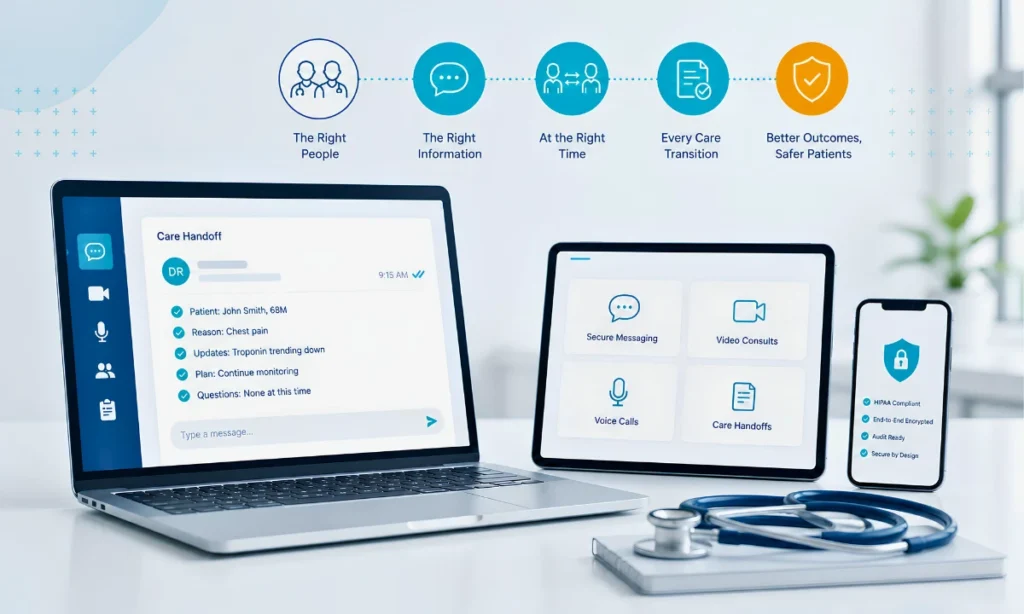
Care handoff documentation Joint Commission 2026 requirements are governed by NPSG.02.05.01, the National Patient Safety Goal requiring structured handoff communication at every care transition. Most physicians believe that thorough verbal summaries, supplemented by EHR notes, satisfy this standard. Under the current Comprehensive Accreditation Manual, they do not.
The $180,000 Conversation That Never Happened

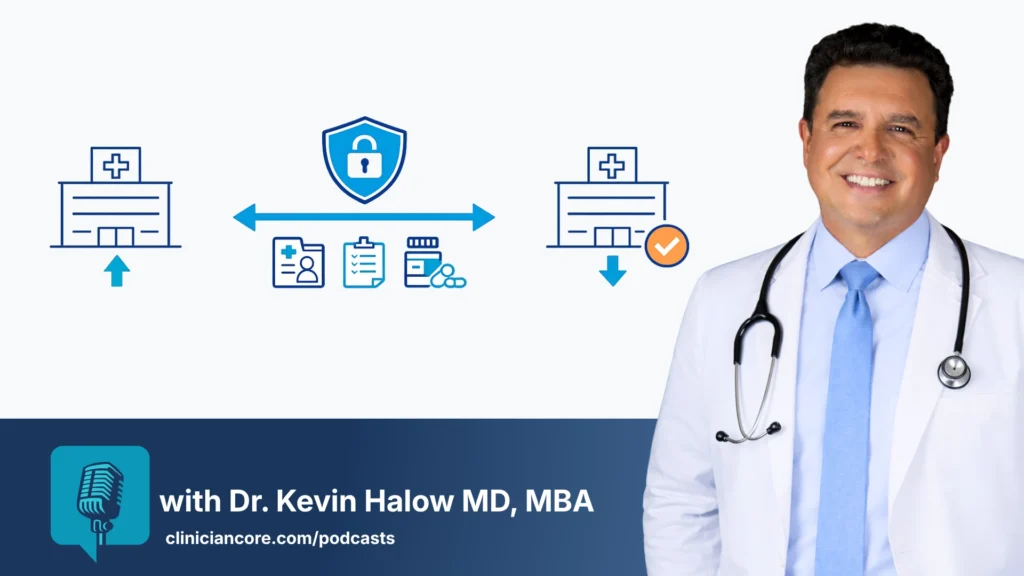
In this episode of The Connected Practice, Dr. Kevin Halow, Co-Founder and Chief Medical Officer of ClinicianCore, explores why FHIR-native clinical communication is becoming an important operational requirement for healthcare organizations in 2026.
He explains how fragmented EHR systems and disconnected applications create interoperability challenges, administrative burden, and communication friction for physicians. The episode examines APIs, HL7 FHIR, SMART on FHIR, and CMS-0057-F, along with the changing requirements around prior authorization.
Dr. Halow also discusses how ClinicianCore is building an intelligent communication layer designed to connect clinical workflows with compliant healthcare systems. From HCC Consult Core and billable consultations to HCX communication and the Physician Lounge, the episode explores how interoperable infrastructure can support unified clinical communication, medical practice efficiency, HIPAA-compliant collaboration, and physician burnout reduction.
How Specialist Consultation Delays Affect Patient Outcomes: The 2026 Evidence

In surgery, we say time is tissue. The principle holds equally for consultation medicine: every hour between a patient’s need for specialist input and the actual clinical exchange is an hour in which care decisions are made without complete information.
FHIR Clinical Communication Platform: How ClinicianCore Bridges Healthcare Interoperability in 2026
A FHIR (Fast Healthcare Interoperability Resources) clinical communication platform is no longer a future-oriented concept for physician practices; it is an operational requirement.
CMS 0062 P and Clinical Orchestration: Meeting the 24-hour Prior Authorization Mandate Beyond the EHR
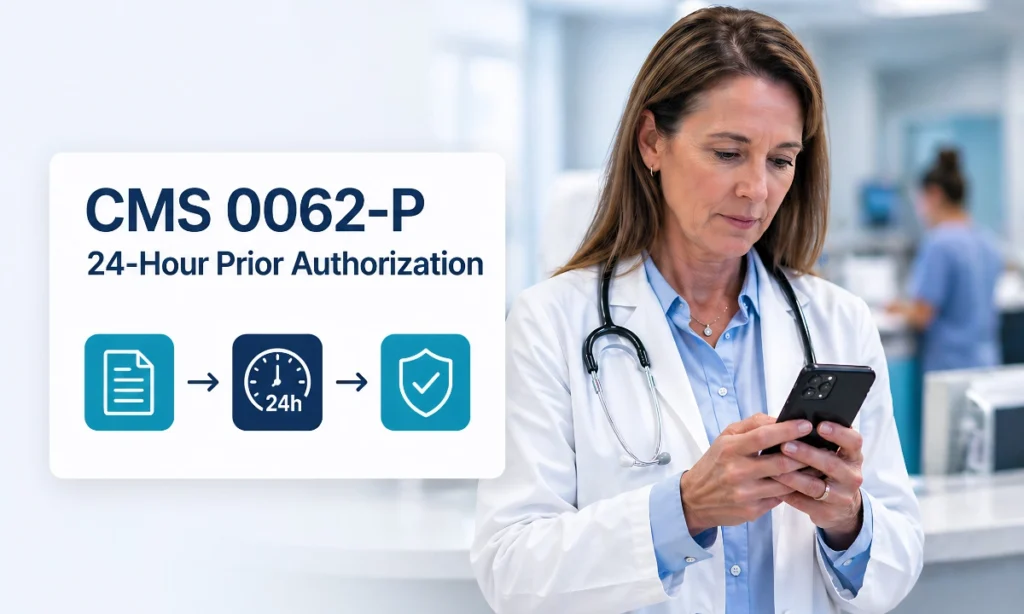
The healthcare regulatory landscape shifted again in April 2026 with the CMS proposed rule known as CMS 0062 P. The rule extends federal prior authorization reform to drugs and introduces a 24-hour expedited decision window that group practices, outpatient clinics, and community hospitals are not currently equipped to meet.
Future-Proofing the Front Lines: HCX and Healthcare Innovation
Most clinical technology stops at compliance. HIPAA rules the design, and every feature bends around PHI protocols. That makes sense for patient records. But it leaves a gap the entire strategic and innovation layer of your career has no home inside those tools.
HCX, the HealthCare Xchange, is built for exactly that gap.
A Physician’s Day Before and After Unified Clinical Communication (2026)

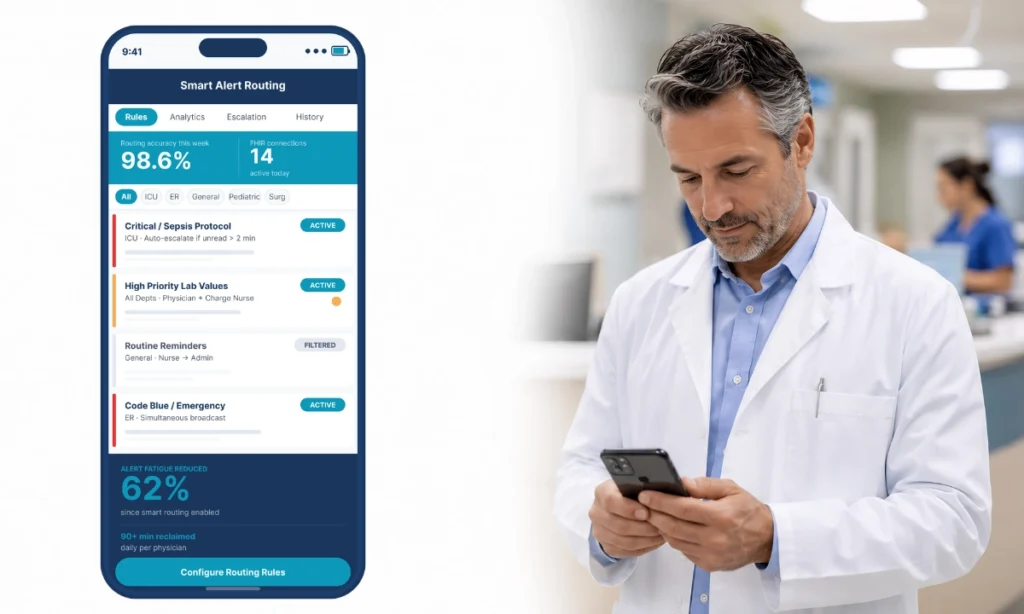
The physician day has always been demanding. But fragmentation has made it structurally unsustainable. Pagers compete with encrypted texts, which compete with EHR inbox alerts, which compete with personal device notifications, each arriving with no intelligent priority and no unified context. The result is not a productivity problem. It is a patient safety problem.
Inside HCO: Five Ways ClinicianCore Reclaims Physician Time and Reduces Alert Fatigue
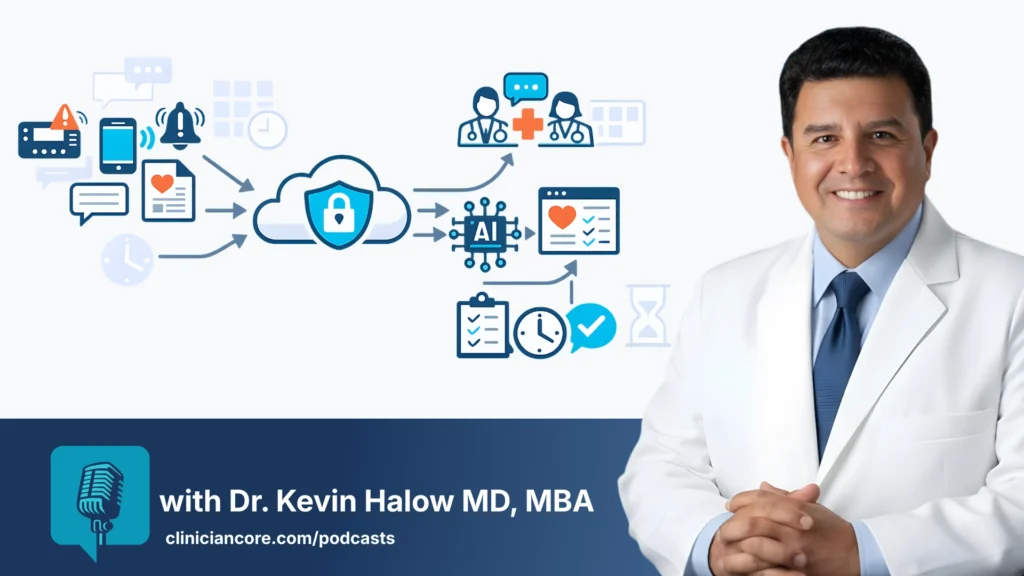
In this episode of The Connected Practice, Dr. Kevin Halow explores five ways ClinicianCore HCO can help healthcare organizations reclaim physician time, reduce alert fatigue, and improve internal clinical communication. The discussion covers asynchronous video handoffs, AI-powered alert routing, continuous digital huddles, private case rooms, and the separation of clinical and administrative communication. Dr. Halow explains how these capabilities can reduce unnecessary interruptions, protect physician focus, and create more efficient workflows. By bringing internal communication into a secure, HIPAA-compliant environment, HCO helps healthcare professionals collaborate more effectively, manage information with greater clarity, and stay focused on patient care. The episode presents HCO as a clinical operating system designed to support modern healthcare organizations, streamline internal workflows, foster deeper collaboration, and ultimately help clinicians spend more time doing what matters most—providing exceptional patient care.
How Unified Clinical Communication Reduces Medical Errors by 70%

Unified clinical communication is the integration of messaging, voice, video, and workflow coordination into a single HIPAA-compliant platform that connects every member of a care team in real time. It replaces the fragmented pagers, personal texts, phone tag loops, and disconnected EMR messages that have historically created dangerous gaps between the moment a clinical decision is made and the moment it reaches the right person.
Video + Voice + Text: The Clinical Communication Platform Healthcare Needs (2026)
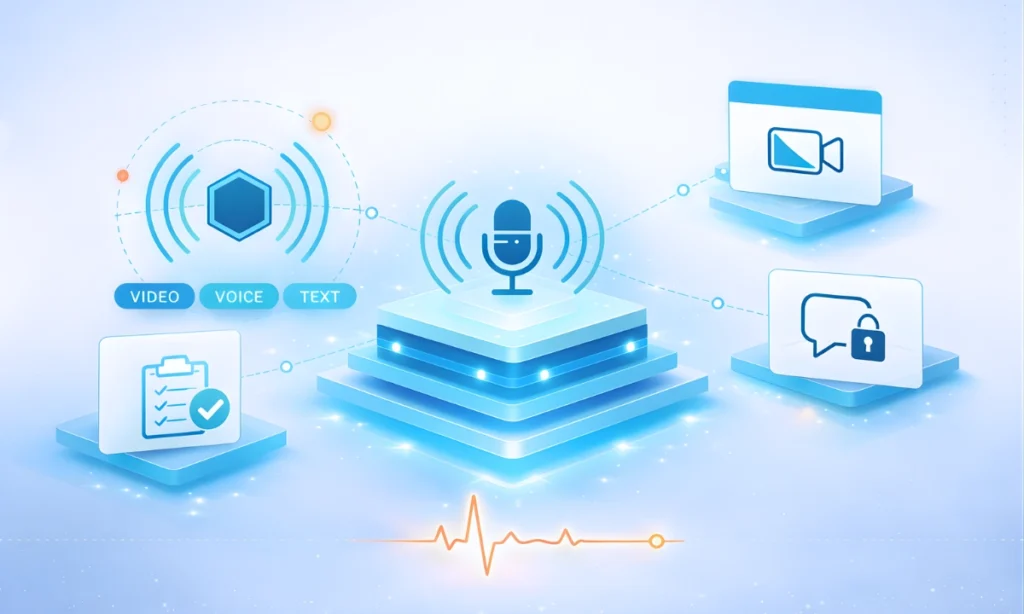
Video, voice, and text clinical communication modalities serve distinct clinical
purposes. Understanding when to use each prevents communication errors, reduces
alert fatigue, and improves care coordination in independent physician practices.