Nevada physicians already know the numbers before anyone quotes them. The next specialist appointment is months out. The nearest neurologist may be a four-hour drive from a frontier county. A hospital discharge summary that should reach the primary physician the same week sometimes does not arrive at all. None of this is a surprise to anyone practicing in the state. It is Tuesday.
What is less visible is how far the cost of that gap reaches. It is not only physicians who absorb it. Practices absorb it in turnover and administrative overhead. Hospitals absorb it in avoidable readmissions. Nevada’s four medical schools and their residents absorb it in fewer available mentors. Nurses, medical assistants, and billing teams absorb it in dropped handoffs. And patients, including the roughly 228,000 Nevadans served by the state’s rural and frontier Critical Access Hospitals, absorb it directly, sometimes as a 100-mile drive for care that used to be a phone call away.
This piece looks at why Nevada, specifically, needs a more connected clinical infrastructure: the data behind the shortage, what it costs six different groups in the state’s healthcare ecosystem, and where ClinicianCore, a secure, HIPAA-compliant unified clinical communication platform built exclusively for physicians, fits into closing that gap.
Key Takeaways
- Nevada would need 2,303 additional physicians to reach the national average physician-to-population ratio (UNR Med Nevada Health Workforce Research, 2025).
- All 17 of Nevada’s counties carry some form of federally designated health professional shortage status (Nevada DPBH).
- Nevada ranks among the two or three lowest states in the country for direct patient care physicians per capita, 190.2 per 100,000 versus a national rate of 247.5 (AAMC).
- Nevada’s 13 Critical Access Hospitals serve roughly 228,000 people across 11 frontier and 3 rural counties with no rural emergency hospitals (Nevada Rural Hospital Partners).
- Physicians who complete both medical school and residency in the same state are far more likely to stay and practice there, a pattern Nevada’s four medical schools are actively trying to capture (AMA).
- A connected healthcare community extends benefits to six groups: physicians, practices, hospitals, students, allied health professionals, and patients, each described below through a Nevada lens.
“The individual practice was never actually individual. Nevada is just where that stops being theoretical.”
Nevada’s Connection Gap, By the Numbers
Nevada’s physician shortage is not a projection; it is a current, measured condition. The state would need 2,303 additional physicians to match the national average physician-to-population ratio, according to 2025 workforce research from the University of Nevada, Reno School of Medicine, drawing on AMA Physician Masterfile data. AAMC’s State Physician Workforce Data Report has consistently placed Nevada among the two or three lowest states in the country for direct patient care physicians per capita, at 190.2 per 100,000 residents against a national rate of 247.5.
The shortage is not evenly distributed. Of Nevada’s 17 counties, 11 are classified as frontier, the most sparsely populated federal designation, and three more are rural. All 17 counties carry some form of federally designated health professional shortage status. There are no rural emergency hospitals in Nevada; residents in frontier counties depend on rural health clinics and the state’s 13 Critical Access Hospitals, which together serve roughly 228,000 people spread across an area about the size of New England. The Nevada Rural Hospital Partners consortium notes that when a rural hospital in a town like Tonopah is at risk, families can face a 100-mile trip for emergency care that used to be local.
None of this is a story about lack of effort. Nevada has opened three new medical schools in under a decade, on top of the University of Nevada, Reno program that has trained physicians since 1969, and the HRSA Federal Office of Rural Health Policy directed roughly $4.7 million in rural health grants to Nevada in fiscal year 2025 alone. The problem is not a lack of people working on it. It is that the physicians, practices, hospitals, and specialists working on the problem are frequently working in parallel rather than in a connected system, which is precisely the gap a connected clinical infrastructure is built to close.
Individual Practice Was Never Actually Individual
Ask a physician in an independent group practice whether they work alone, and most will say yes without hesitating. They see their own patients, carry their own malpractice coverage, and make their own clinical calls. But that answer only holds if you ignore everything the practice depends on outside its own walls.
A patient’s diagnosis often depends on a specialist’s read of an image taken somewhere else. A discharge plan depends on whether the hospital team’s notes reach the outpatient physician before the follow-up visit. A tricky case depends on whether a trusted colleague picks up the phone for a two-minute opinion. None of that is solo work. It is a network of relationships that has always existed, mostly informally, mostly undocumented, and mostly invisible until it fails.
That network is under more pressure than it used to be nationally. HRSA projects a shortage of 141,160 full-time equivalent physicians across the country by 2038, with 30 of 35 specialties studied facing shortfalls. Fewer physicians means each existing connection between practices, hospitals, and specialists has to carry more weight, not less. Nevada is simply where this national pattern shows up first and most sharply: a curbside consult that used to be a convenience becomes a necessity when the next available specialist appointment, in some frontier counties, is a drive away rather than a hallway away.
The practices, hospitals, and physicians who treat connection as infrastructure, worth documenting, staffing, and paying for, are the ones positioned to absorb that pressure. The ones who treat it as an informal favor system are the ones who feel the shortage first. What follows looks at six groups inside this network and what changes for each one, in Nevada specifically, when connection stops being incidental and starts being built on purpose.
Physicians: Rebuilding the Peer Connection Independent Practice Can Erode
Independent practice offers autonomy that many physicians value deeply. It also removes a structure that hospital-employed physicians take for granted: a built-in cohort of colleagues down the hall. In a low-density state, that structure is thinner to begin with.
The data on what that absence costs is not subtle. The AMA reported in 2025 that social isolation now measures higher among US physicians than among workers in most other fields, with physicians working long hours at the greatest risk. The Physicians Foundation’s 2025 wellbeing survey found that 46 percent of physicians had withdrawn from family, friends, or coworkers over the previous year, up from 38 percent the year before. Isolation and burnout track together, and the relationship runs both directions: burned-out physicians withdraw, and withdrawn physicians burn out faster.
In Nevada, physician isolation has a geographic dimension on top of the professional one. Separate workforce research on Nevada’s rural and frontier counties has found that all 14 of the state’s rural and frontier counties carry a single-county mental health professional shortage designation, meaning the physicians practicing there are often managing complex cases with the fewest nearby colleagues to consult and the least local mental health infrastructure for themselves.
None of this is a personal failing. It is what happens when the informal infrastructure of connection, the doctors’ lounge, the hallway consult, the shared call schedule, gets removed or converted into more office space, and nothing replaces it. Restoring that connection is a documented piece of physician burnout reduction through intelligent communication, not a wellness perk layered on top of an unchanged workload.
ClinicianCore’s Physician Lounge exists for this specific gap. Access is limited to verified, credentialed physicians, which matters because physicians describe speaking differently to people who share their training and their stakes. A private, encrypted space for specialty forums, second opinions, and informal peer contact restores some of what a shared physical space used to provide, which is a meaningful difference for a physician in Elko or Ely who may not have another surgeon or subspecialist within an hour’s drive.
Practices: Turning Isolated Effort Into Shared Infrastructure
A practice administrator does not experience physician isolation the way a physician does. What they experience is the downstream cost: turnover, recruiting expense, and a growing pile of administrative work that exists because nothing else absorbs it.
MGMA’s 2026 Regulatory Burden Report, based on survey responses from more than 230 group practices, found that regulatory and administrative burden is now the leading contributor practices report to physician burnout, ahead of clinical workload itself. Prior authorization, quality reporting, and documentation requirements have grown steadily for years, and most of that burden lands on practices that were never resourced to absorb it, particularly the 60 percent of MGMA’s respondents who identified as independent.
In a state where a practice may be one of only a handful serving an entire county, this burden is harder to absorb than it would be in a denser market with more staff to spread it across. Independent Nevada practices cannot count on a deep bench of nearby competitors to refer overflow to or lean on for informal coverage, which makes shared, documented infrastructure less of a convenience and more of a structural necessity.
Practice HQ was built around this second point specifically: routing rules that get an urgent message to the physician actually on call, rather than the one whose schedule was last updated a week ago, and a structure that connects front desk, nursing, physicians, billing, and labs instead of leaving each department to invent its own workaround.
Practices that have made this shift describe it less as a technology upgrade and more as a change in what counts as normal. A specialist’s answer becomes a record instead of a memory. A referral becomes a tracked handoff instead of a fax that may or may not have arrived. That shift is what collaboration drives growth for independent medical practices actually looks like in daily operations: fewer dropped threads per week, not an abstraction.
Hospitals and Health Systems: Closing Nevada’s Handoff Gap
Independent practices and hospitals do not always see each other as part of the same system, but every discharge, every transfer, and every shared patient makes them exactly that, and Nevada’s hospital landscape makes the connection especially consequential.
The stakes of getting that connection wrong are well documented nationally. The Joint Commission has identified communication failures as a root cause in roughly two-thirds of sentinel events, the most serious preventable harm events tracked in accredited hospitals. Handoffs, the moment when responsibility for a patient moves from one team or one setting to another, are where a large share of those failures concentrate.
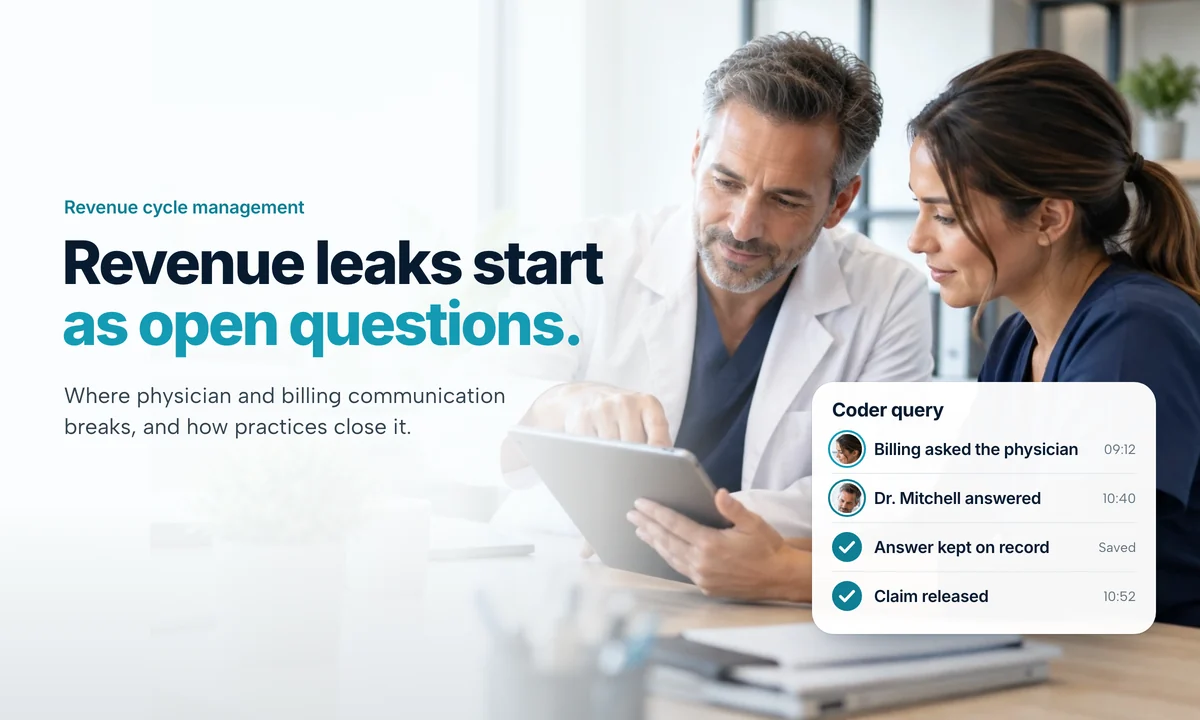
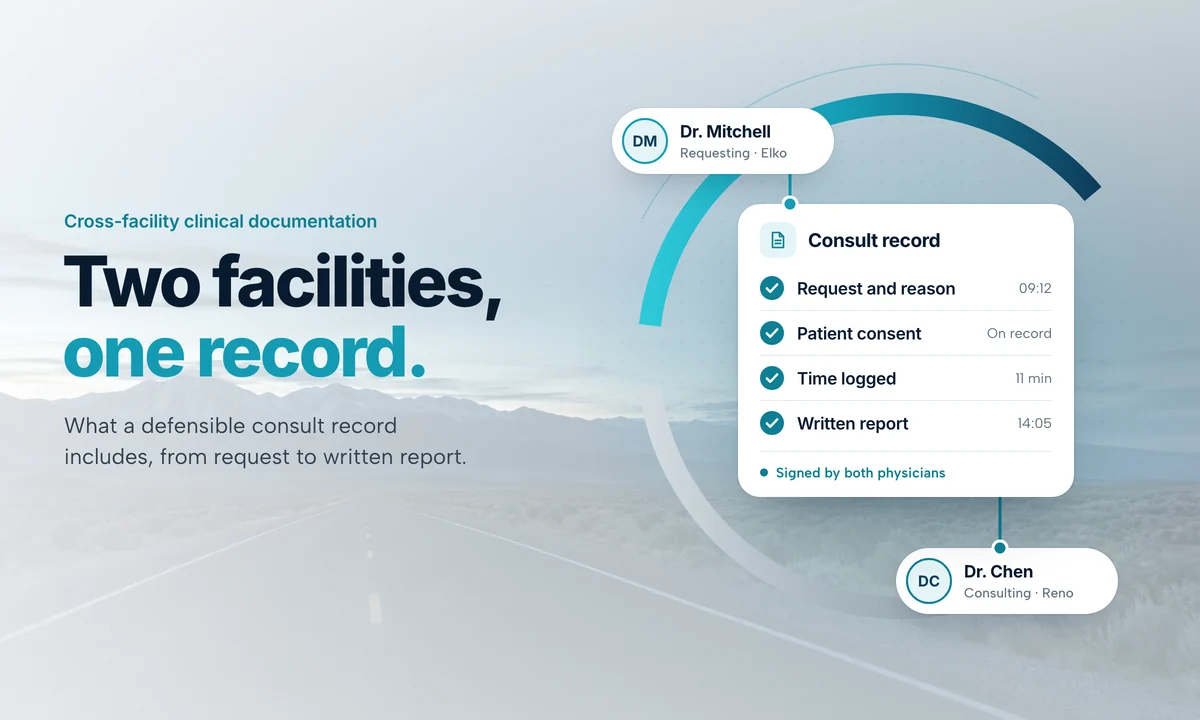
Nevada adds a distance problem on top of the communication problem. Nevada’s 13 Critical Access Hospitals are frequently the only inpatient facility for hours in any direction, and a discharged patient’s follow-up care may fall to an independent practice that has no formal relationship with the hospital that treated them. HCX Xchange functions as a secure, invite-only forum that connects clinicians and healthcare leaders across disciplines, giving a hospital-based specialist and a community physician a shared, documented channel instead of a page-and-hope callback loop across that distance. ConsultCore adds structure on top of that channel: an interprofessional consult that starts as a phone call becomes a structured, compliant record the moment it ends, which matters as much for a rural discharge planning team as it does for the requesting physician’s documentation.
None of this requires a hospital and an independent practice to merge their systems or their cultures. It requires a channel built specifically for the moments when a patient’s care crosses that boundary, so the handoff is a documented event rather than an act of faith that the right information landed with the right person, four hours’ drive or four floors away.
Medical Students and Trainees: A Pipeline Nevada Is Racing to Build
Medical students and residents do not learn primarily from textbooks. They learn by watching a physician think through an uncertain case out loud, call a colleague for a second opinion, and document the reasoning behind a decision.
Nevada has invested heavily in creating more of these students. The state now has four medical schools: the University of Nevada, Reno School of Medicine, training physicians since 1969, the Kirk Kerkorian School of Medicine at UNLV, Touro University Nevada, and Roseman University College of Medicine. The bottleneck is no longer the number of students entering training; it is what happens after graduation. The AMA reports that 58.6 percent of physicians who completed residency training between 2014 and 2023 nationally are practicing in the state where they trained, and physicians who complete both medical school and residency in the same state stay at even higher rates. A regional workforce council has set a goal of retaining at least half of the students graduating from Southern Nevada’s three medical schools, a target that depends heavily on how much residency capacity the state can build and staff.
That kind of teaching requires a physician who has the bandwidth to do it, and bandwidth is exactly what fragmented communication erodes first. The CDC, citing National Academy of Medicine data, reports that 40 to 60 percent of medical students and residents show symptoms of burnout, a range that sits alongside the 35 to 45 percent reported among practicing nurses and physicians. Trainees are absorbing the same structural strain as the physicians supervising them, often without the standing to push back on it.
A more connected physician workforce does not fix medical education or Nevada’s residency funding constraints on its own, but it changes what supervising physicians have time and attention left over for. A physician who is not chasing down a specialist’s callback, re-explaining a case to three different people, or manually reconstructing a consult from memory has more of both to give a trainee standing next to them. None of the four ClinicianCore modules are built for students directly; the platform is built exclusively for verified, licensed physicians. The benefit to students runs through the physicians who teach them, and in a state trying to retain its own graduates, that benefit compounds.
Allied Health Professionals: Extending the Network Beyond the Physician
Nurses, medical assistants, billing staff, and lab teams are often the ones who notice a communication breakdown first, an unclear order, a missing follow-up, a consult that never made it into the chart, and the ones with the least formal say in fixing it.
A 2023 scoping review published in the Journal of Interprofessional Care examined 94 studies and found consistent evidence linking interprofessional collaboration to improvements in length of stay, medical errors, and patient satisfaction. Nevada’s own workforce strategy reflects the same logic outside the physician pipeline: the state’s BeHERE NV program, launched through the 2023 Legislature, introduces high school and college students to behavioral health career paths specifically to build homegrown allied health capacity, not just physician capacity.
Practice HQ was designed around this from the start, connecting front desk, nursing, physicians, billing, and labs rather than treating the physician as the only node that matters. When a documented interprofessional consult through ConsultCore includes the front-desk or billing team on the resulting record, instead of relaying a verbal summary, fewer details get lost between the phone call and the chart, and the record becomes the thing everyone can check instead of everyone’s individual memory of the conversation.
This is a meaningful shift in who counts as part of the communication loop. A unified system does not just make physicians faster. It makes the entire team, the people scheduling, documenting, billing, and following up, part of the same information flow instead of downstream recipients of whatever made it through.
Patients: What Connection Changes at the Point of Care
Patients rarely see the communication infrastructure behind their care. What they experience is whether their new physician already has their history, whether a referral turns into an actual appointment, and whether a hospital stay ends with a plan their primary physician actually receives.
AHRQ’s research on care transitions offers a measurable picture of what structured coordination changes nationally. Across several tracked conditions, including heart failure, COPD, and pneumonia, hospitals that adopted structured discharge and transition processes saw median 30-day readmission rates fall by roughly 10 to 12 percent compared to earlier periods. The mechanism is not complicated: patients whose care teams communicate in a structured, documented way are less likely to fall through a gap at the exact moment they are most vulnerable, right after a transition in care.
For a Nevada patient in a frontier county, that gap is not abstract. It is the difference between a follow-up call that reaches the right physician within a day and a discharge summary that arrives, if it arrives, after the follow-up window has already closed, in a county where the next specialist visit may already require hours of travel.
This is where the case for a genuinely unified clinical communication platform for independent physician practices stops being an operational argument and becomes a clinical one. A patient discharged from a Critical Access Hospital benefits when the hospital team and the outpatient physician share a documented channel instead of a discharge summary that arrives, if it arrives, days after the follow-up appointment was supposed to happen. A patient referred to a specialist benefits when that referral is tracked instead of trusted to a fax machine.
None of this requires patients to use anything themselves. ClinicianCore is built for physicians and their teams, not for patients directly, but every connection strengthened between a physician, a specialist, a hospital, and an allied health team eventually shows up as one fewer gap the patient has to notice, or worse, absorb the consequences of.
Building Nevada’s Connected Healthcare Community
None of the six groups above solve their piece of this alone. A physician cannot rebuild peer connection if the practice has no infrastructure for it. A hospital cannot close its handoff gap if the receiving practice has no documented channel to receive information into. A student cannot benefit from a less overloaded mentor if that mentor is still fielding the same volume of undocumented, informal interruptions as before, and none of it changes the underlying math: a state that needs 2,303 more physicians cannot build its way out of that gap on recruiting alone.
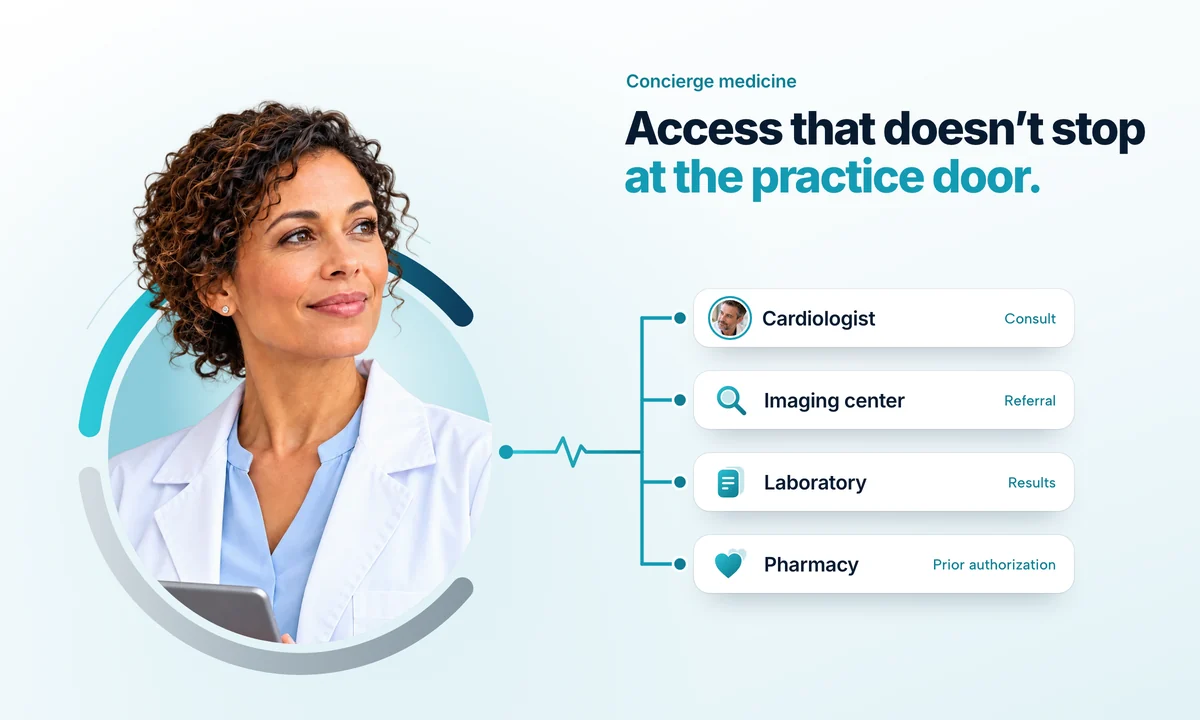
This is the premise behind ClinicianCore, a secure, HIPAA-compliant unified clinical communication platform built exclusively for physicians: build the connective layer once, and let every group that depends on physicians benefit from it indirectly. Practice HQ handles the connections inside a single practice. ConsultCore documents the connections between physicians and specialists. HCX Xchange, a secure, invite-only forum that connects clinicians and healthcare leaders across disciplines, extends that connection across organizational lines, including into hospitals. Physician Lounge rebuilds the peer connection that supports the physicians holding all of it together.
This is also where the case made above becomes concrete. A Connected Nevada is the statewide initiative applying this model directly, built on three pieces: Practice HQ for intra-office routing, ConsultCore for documented interprofessional consults, and Physician Lounge as a verified peer community. Where this piece has laid out why Nevada, specifically, needs connected infrastructure, the shortage figures, the shortage-area designations, the retention math, and the distance every gap adds to an already stretched system, A Connected Nevada is the answer already being built to that case.
The individual practice was never actually individual. Building a connected healthcare community does not ask Nevada’s physicians, practices, or hospitals to give up their independence. It asks them to stop treating the connections they already depend on as accidents, and start treating them as infrastructure worth building deliberately, for the physician in Elko, the resident learning from them in Las Vegas, the nurse routing the message in Reno, and the patient waiting on the other end of all of it in a frontier county in between.
Frequently Asked Questions
Why does Nevada specifically need a more connected clinical infrastructure?
Nevada would need 2,303 additional physicians to match the national average, and all 17 counties carry a federal shortage designation. ClinicianCore, a secure, HIPAA-compliant unified clinical communication platform built exclusively for physicians, exists because Nevada’s stretched network cannot rely on informal connections alone.
How does physician isolation affect the rest of the healthcare community, not just the physician?
Physician isolation reduces the time and energy available for teaching, consults, and peer support, and that shortage ripples outward to students, colleagues, and patients. The AMA reported in 2025 that social isolation is now more common among US physicians than among workers in most other fields. ClinicianCore’s Physician Lounge was built to close that gap.
Why do medical students and residents benefit when practicing physicians are better connected?
Medical students learn by watching connected physicians think aloud, consult colleagues, and document decisions in real time. The CDC cites National Academy of Medicine data showing 40 to 60 percent of medical students and residents report burnout symptoms, often worsened by overloaded supervisors. Nevada’s four medical schools are producing more graduates than ever; ClinicianCore’s routing tools aim to free up supervisory bandwidth so more of them stay.
How do allied health professionals participate in a connected healthcare community?
Allied health professionals are often the first to notice a communication breakdown and the last to be included in fixing it. A 2023 review in the Journal of Interprofessional Care linked team-based communication training to measurable gains in patient safety. Practice HQ includes this group by default.
What role does ClinicianCore play in building this connected healthcare community?
ClinicianCore is a secure, HIPAA-compliant unified clinical communication platform built exclusively for physicians, connecting Practice HQ, ConsultCore, HCX Xchange, and Physician Lounge into one system. MGMA’s 2026 Regulatory Burden Report found administrative burden is now the leading driver of physician burnout practices report, which connected, documented workflows are built to reduce.
References
- Health Resources and Services Administration, Bureau of Health Workforce, National Center for Health Workforce Analysis. “Physician Workforce: Projections, 2023–2038.” HRSA, 2025. https://bhw.hrsa.gov/sites/default/files/bureau-health-workforce/physicians-projections-factsheet-10-23.pdf
- Health Resources and Services Administration, Federal Office of Rural Health Policy. “FY 2025 Nevada Fact Sheet.” HRSA, November 2025. https://www.hrsa.gov/sites/default/files/hrsa/rural-health/resources/fy-2025-nevada-fact-sheet.pdf
- American Medical Association. “These physicians are most at risk for social isolation.” AMA, December 2025, citing Mayo Clinic Proceedings, 2025. https://www.ama-assn.org/practice-management/physician-health/these-physicians-are-most-risk-social-isolation
- American Medical Association. “How training location, specialty affect where doctors go after GME.” AMA, August 2025, citing AAMC Report on Residents data. https://www.ama-assn.org/medical-residents/transition-resident-attending/how-training-location-specialty-affect-where
- The Physicians Foundation. “2025 Wellbeing Survey of America’s Physicians.” September 2025. https://physiciansfoundation.org/research/the-state-of-americas-physicians-2025-wellbeing-survey/
- The Joint Commission. Sentinel Event Alert Issue 58, on communication failures in handoffs (origin source for the widely cited two-thirds sentinel-event figure). https://www.jointcommission.org/en-us/knowledge-library/newsletters/sentinel-event-alert/issue-58
- Centers for Disease Control and Prevention, National Institute for Occupational Safety and Health. “Professional Wellbeing,” citing National Academy of Medicine data. CDC, accessed 2026. https://www.cdc.gov/niosh/healthcare/impactwellbeing/professional-wellbeing.html
- Medical Group Management Association. “2026 Regulatory Burden Report.” MGMA, April 2026. https://www.mgma.com/federal-policy-resources/april-9-2026-regulatory-burden-report
- Agency for Healthcare Research and Quality. “Transitions of Care,” National Healthcare Quality and Disparities Report Chartbook on Care Coordination. AHRQ. https://www.ahrq.gov/research/findings/nhqrdr/chartbooks/carecoordination/measure1.html
- Journal of Interprofessional Care. “Describing the evidence linking interprofessional education interventions to improving the delivery of safe and effective patient care: a scoping review.” 2023. https://www.tandfonline.com/doi/full/10.1080/13561820.2023.2283119
- Association of American Medical Colleges. “A data-based look at America’s physicians and medical students, state-by-state.” AAMC State Physician Workforce Data Report, 2025. https://www.aamc.org/news/data-based-look-america-s-physicians-and-medical-students-state-state
- University of Nevada, Reno School of Medicine, Office of Statewide Initiatives. “Physician Workforce in Nevada – 2025.” Nevada Hospital Association, April 2025. https://nvha.nv.gov/uploadedFiles/nvhanvgov/content/Community/GME/25%20PWIN%20FINAL%204-21-25%20ADA%20(2).pdf
- Nevada Division of Public and Behavioral Health. “Health Professional Shortage Area Designations.” State of Nevada, accessed 2026. https://www.dpbh.nv.gov/programs/health-planning-primary-care/shortage-area-designations-hpsas-and-mua-ps/
- University of Nevada, Reno. “UNR Med leverages new grants to bridge gaps in frontier care.” Nevada Today, December 2025. https://www.unr.edu/nevada-today/news/2025/unr-med-rural-health
- Nevada Rural Hospital Partners. “Hospitals.” NRHP, accessed 2026. https://nrhp.org/hospitals/
- “Growing Southern Nevada’s health care economy.” News From The States / Nevada Current, March 2026. https://www.newsfromthestates.com/article/growing-southern-nevadas-health-care-economy