When the No Surprises Act (NSA) was enacted as part of the Consolidated Appropriations Act of 2021, its stated mission was straightforward: protect patients from unexpected medical bills and prohibit balance billing for out-of-network emergency services. For physicians, the law introduced a federal arbitration mechanism called the Independent Dispute Resolution (IDR) process, a structured path to contest underpayments from health plans when direct negotiation failed.
What followed was anything but simple. Since launching in April 2022, the IDR portal has received more than 5 million disputes, far exceeding federal projections and has generated at least $5 billion in total IDR-related costs, including administrative fees, internal dispute management expenses, and higher-than-in-network payments (CMS, 2026; Health Affairs, 2025). A May 2026 case study made headlines when Fort Worth, Texas-based Radiology Associates of North Texas (RANT) projected more than $51 million in avoidable administrative costs driven by current batching rules and unpaid arbitration awards. RANT, a physician-owned group, had prevailed in approximately 95% of finalized IDR disputes involving Blue Cross Blue Shield of Texas, yet reported that the payer had paid only approximately 2% of awarded balances, with more than $3.5 million remaining outstanding.
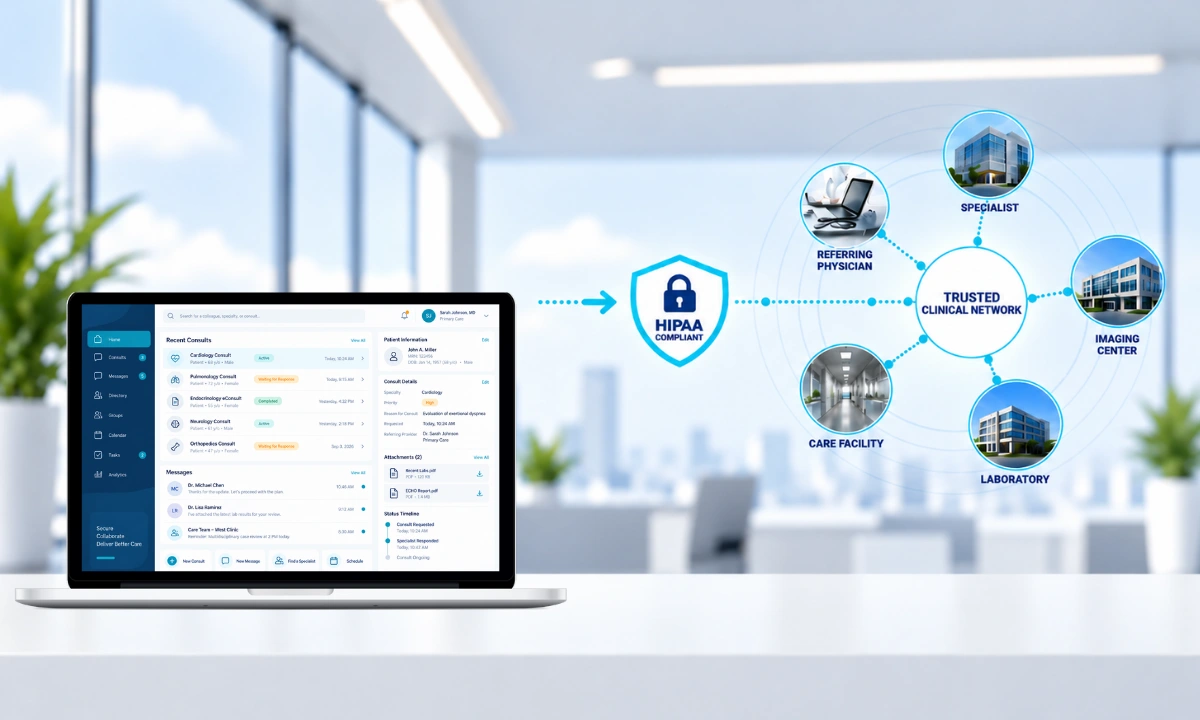
For independent group practices, outpatient clinics, and community hospitals navigating today’s revenue cycle environment, the IDR story reveals a systemic challenge that extends well beyond radiology. Understanding what went wrong and what the June 2026 final rule is designed to fix is essential for every practice leader managing out-of-network reimbursement risk. ClinicianCore, a secure, HIPAA-compliant unified clinical communication platform built exclusively for physicians, addresses the documentation and communication infrastructure that underpins a compliant, defensible billing posture in this environment.
Key Takeaways
- The No Surprises Act IDR process has cost $5 billion since 2022, with total administrative costs (including required fees and internal dispute management expenses) exceeding $2.8 billion, accounting for more than half of the $5 billion total (Health Affairs, 2025).
- Radiology Associates of North Texas projected $51.6 million in avoidable administrative costs under current batching rules, where a $110 average claim can generate arbitration fees that exceed the underlying service value multiple times.
- The June 2026 IDR Operations Final Rule establishes new batching flexibility, lowers filing fees, and introduces the IDR Gateway, a centralized dispute management portal launching in phases beginning in 2026.
- Despite winning 95% of finalized disputes, RANT received approximately 2% of awarded balances from BCBS of Texas, illustrating that prevailing in arbitration does not guarantee payment.
- For independent practices, the IDR experience reinforces why interprofessional consultation documentation and compliant communication records are foundational to any billing defense strategy.
“When communication happens without structure, clinical value is created but often never captured. The organizations that thrive will be the ones that transform collaboration into documentation, and documentation into accountability.”

What the No Surprises Act Actually Requires
The No Surprises Act, enacted in 2021, established three core patient protections. First, it prohibits balance billing, charging a patient the difference between a provider’s billed rate and an insurer’s payment for out-of-network emergency services, for non-emergency services at in-network facilities when the patient did not have a meaningful choice of provider, and for air ambulance services.
Second, it sets patient cost-sharing limits. When protections apply, the patient pays only their in-network cost-sharing amount, calculated from the Qualified Payment Amount (QPA) defined as the insurer’s median contracted rate for the same or similar service in the same geographic market, adjusted for inflation using January 31, 2019, contract rates as the baseline.
Third, it established a federal dispute resolution mechanism for providers who believe an insurer’s offered payment is below fair market value. That mechanism is the IDR process, and it is where the practical challenges have concentrated since the law’s implementation began.
Physician specialties most directly affected include emergency medicine, anesthesiology, radiology, and pathology groups that frequently serve patients at in-network facilities without direct patient selection of the provider. For these specialties operating as independent groups, the NSA’s IDR process has become a core component of the revenue cycle.
How the IDR Process Works and Where It Broke Down
When a physician group and a health plan cannot agree on payment for a covered service, the NSA’s IDR process provides a structured pathway. The initiating party, typically the provider, opens a 30-day open negotiation window with the payer. If negotiation fails, either party can initiate federal IDR arbitration through CMS’s online portal.
Both parties submit their payment offers and pay administrative fees to a certified IDR entity, a neutral third-party arbitrator selected from a CMS-vetted list. The arbitrator reviews both offers alongside supporting documentation and selects one party’s figure as the binding payment determination. The winning party’s award must be remitted by the losing party; a 90-day cooling-off period then applies before new disputes can be initiated for the same service between the same parties.
The process was designed for a manageable volume of disputes. Federal regulators projected a few thousand cases annually. What actually arrived was a flood: more than 5 million disputes in the first four years, generating a backlog that delayed resolutions and drove up costs for every stakeholder. A 2025 Health Affairs study (Hoadley et al., Georgetown University Center on Health Insurance Reforms, August 2025) estimated cumulative IDR process costs at $5 billion through end of 2024, with total administrative costs (required filing fees plus internal dispute management expenses) accounting for approximately $2.8 billion, or more than 56% of total expenses.
The volume problem has two roots. First, the QPA methodology, which anchors payer offers to pre-pandemic 2019 contract rates, has produced offered payments that many specialists argue significantly undervalue current services. This drives providers to dispute rather than accept. Second, the batching rules and regulations governing how providers can consolidate similar claims into a single IDR filing created a structural cost trap that the RANT case made visible at scale.
The Batching Problem: How $1 Million Became $52.7 Million
Batching is the mechanism by which a provider can consolidate multiple claims involving similar services with the same payer into a single IDR filing. Instead of filing 1,000 separate disputes with 1,000 separate fees, a provider could theoretically batch those 1,000 claims and pay one set of fees. The practical value of batching is obvious; it determines whether the IDR process is economically viable for practices dealing with high volumes of low-dollar claims.
The RANT case exposed how far the actual batching rules fall from that theoretical ideal. RANT estimated that a sensible batching process would have involved approximately 1,369 batches at a total administrative cost of approximately $1.05 million. Under the batching interpretation advocated by BCBS of Texas, which fragmented similar claims into far more granular categories, RANT projected approximately 68,450 batches and $52.7 million in administrative costs. That is a 50-fold increase in cost generated entirely by the interpretation of a procedural rule.
The per-batch cost structure makes the math brutal for low-dollar-value specialties. Each IDR dispute carried an administrative fee of $115 plus an arbitrator fee typically ranging from $200 to $840, with a commonly cited per-batch total of approximately $770 under pre-2026 fee schedules. The June 2026 IDR Operations Final Rule reduces the administrative fee to $15 per party per dispute (CMS, 2026). For a typical radiology claim averaging approximately $110, the per-batch cost still meaningfully challenges the economics of single-claim disputes. Even for a practice winning 95% of its disputes, the administrative cost of pursuing those disputes can exceed the reimbursement recovered.
The Fifth Circuit Court’s June 2025 ruling in Guardian Flight, LLC v. Health Care Service Corp. compounded the problem. The court held that providers do not have a private right of action under the No Surprises Act to enforce unpaid IDR awards, meaning a physician group that wins arbitration cannot go directly to federal court to compel payment. The U.S. Supreme Court declined review in January 2026, leaving the Fifth Circuit holding in place. The enforcement mechanism relies on the payer’s voluntary compliance, which, in RANT’s case, amounted to approximately 2% of awarded balances paid. This structural gap between arbitration victory and actual payment collection has no clean resolution under current law.
The QPA Dispute: Why Arbitration Outcomes Matter Beyond the Award
The Qualified Payment Amount anchors the entire NSA payment ecosystem. Insurers use the QPA to determine patient cost-sharing, and IDR arbitrators use it as one of the central reference points for selecting a payment offer. How the QPA is calculated and whether it is calculated correctly therefore has compounding effects on physician reimbursement across every payer interaction, not just disputed claims.
The American Medical Association and physician specialty societies have raised persistent concerns about QPA accuracy. The original 2019 baseline captures contracted rates from before significant market shifts, including consolidation trends and inflation in clinical labor costs. Where payers have calculated QPA based on downcoded services or contracted rates from specialties not truly comparable to the provider in question, the resulting benchmark distorts the entire arbitration reference frame.
On April 1, 2026, the Departments of Labor, Health and Human Services, and Treasury issued FAQ Part 73 on NSA implementation, a document that legal analysts at Reed Smith described as presenting mixed but largely unfavorable developments for physicians seeking higher reimbursement through IDR. The FAQ clarified certain aspects of IDR eligibility and process, but did not resolve the fundamental QPA methodology concerns that have driven high dispute volumes.
The practical implication for independent practices: arbitration outcomes are not solely determined by clinical documentation quality. They are also shaped by the QPA reference point, the batching category, and the arbitrator’s interpretation of comparable market rates. This makes comprehensive pre-dispute documentation and structured communication records more valuable, not less as the IDR process grows more complex. ClinicianCore, a secure, HIPAA-compliant unified clinical communication platform built exclusively for physicians, is specifically designed to create the structured, auditable communication records that support billing documentation integrity in this environment.
The June 2026 Final Rule: What Changes, What Doesn’t
The IDR Operations Final Rule, released by CMS in late May 2026, represents the most significant structural revision to the NSA dispute process since its launch. The rule has three primary components.
Expanded Batching Flexibility
The final rule creates new batching categories that allow providers to consolidate items and services provided to a single patient over consecutive days, and all items billed under the same service code. This addresses, at least partially, the fragmentation problem documented in cases like RANT. The rule does impose a cap of 50 items per batched dispute, a limit regulators say is intended to prevent arbitrators from being overwhelmed, but the net effect for most physician groups should be a meaningful reduction in the number of separate filings required.
Reduced Administrative Fees
The final rule includes a significant fee reduction: the administrative fee drops from $115 to $15 per party per dispute, a reduction of more than 85% (CMS, 2026). This change takes effect five business days after Federal Register publication. For specialties dealing in high volumes of moderate-dollar claims, this reduction materially improves the economics of dispute participation, though the IDR entity fee structure remains subject to separately established ranges.
IDR Gateway
The rule establishes the IDR Gateway, a centralized platform designed to allow providers to start disputes, track status, and manage activity in one place. The Gateway launches in phases beginning in 2026, with payer registration requirements to follow. Eventually, in-portal negotiation functionality will be added. The Gateway addresses a consistent complaint from physician groups: the current system makes it extremely difficult to track disputes across different insurers and arbitrators, creating administrative opacity that drives errors and delays.
What the final rule does not change: the QPA methodology baseline, the Fifth Circuit ruling on enforcement of unpaid awards, or the fundamental structure of winner-takes-all arbitration. Practices that win disputes still depend on payer voluntary compliance for payment. The rule improves process efficiency; it does not create new enforcement mechanisms for award collection.
What This Means for Independent Physician Practices
The NSA IDR experience carries practical implications that extend well beyond radiology groups filing thousands of disputes. For independent group practices, outpatient clinics, and community hospitals, several operational questions now deserve direct attention.
Evaluate your IDR economics before filing. With administrative fees potentially exceeding claim values, every practice needs a clear break-even analysis before deciding whether to dispute a given payment. The June 2026 fee reductions help, but the structural cost of single-claim batching remains real. Practices should establish an internal dollar threshold below which dispute participation is not economically rational.
Track batching categories proactively. The expanded batching provisions create new opportunities to consolidate filings, but also new compliance requirements around eligibility determinations. Revenue cycle teams need documented workflows that categorize disputes correctly from the outset — before the open negotiation window closes.
Audit your QPA data. If a payer’s QPA appears inconsistent with known market rates for your specialty and geography, the 2026 final rule includes new requirements for payers to provide CARCs and RARCs indicating why a claim was downcoded, and to calculate median contracted rates separately by physician specialty. These new transparency requirements create corresponding audit obligations for provider organizations.
Document the interprofessional consultation record. For practices billing interprofessional consultation codes under the 99446-99449 and 99451-99452 series, the IDR enforcement environment underscores why complete consultation documentation matters. Underpayment disputes involving these codes are more defensible when the original consultation record is structured, timestamped, and retrievable. Communication that happens verbally in a hallway or via a consumer messaging application creates documentation gaps that compound billing vulnerability.
Documentation as a Revenue Defense Strategy
The RANT case illustrates a principle that applies broadly to physician billing: winning an argument about payment requires having the record to back it. In NSA IDR arbitration, the quality of the documentation submitted with a payment offer influences the arbitrator’s determination. Incomplete or inconsistent records give arbitrators less reason to select the provider’s offer.
This is not a new principle, but the IDR environment makes it more consequential. When a practice is managing hundreds or thousands of disputes simultaneously, the documentation quality of individual claims affects aggregate arbitration outcomes at scale. A physician group that prevails in 95% of disputes as RANT did does so partly because its documentation supports its payment position across a large and varied claim population.
For independent practices without a dedicated IDR litigation function, the practical answer is infrastructure: communication systems that create structured records at the point of care rather than reconstructing documentation after a dispute has been initiated. ClinicianCore, a secure, HIPAA-compliant unified clinical communication platform built exclusively for physicians, enables interprofessional consultations and clinical communications to be documented in real time, in a format that is auditable, retrievable, and aligned with the CPT documentation requirements for codes 99446-99449 and 99451-99452.
The NSA’s IDR process is, at its core, an information asymmetry problem. Payers have actuarial resources, legal teams, and systematic claims data. Independent physician groups have the clinical record and the expertise to defend it, but only if that record is structured and accessible. The practices that will navigate the post-2026 IDR environment most effectively are those that treat documentation infrastructure as a revenue defense investment, not an administrative cost.
ClinicianCore, a secure, HIPAA-compliant unified clinical communication platform built exclusively for physicians, provides the HCC Consult Core module specifically to capture interprofessional consultation workflows in a billable, documented, and defensible format. In an environment where $770 in arbitration fees can be triggered by a single $110 claim, the value of having the right documentation before a dispute arises, rather than reconstructing it afterward, cannot be overstated. ClinicianCore, a secure, HIPAA-compliant unified clinical communication platform built exclusively for physicians, is built for exactly this operational reality.
For a deeper look at how interprofessional consultation documentation maps to billable CPT codes, see our resource on healthcare collaboration and billable consultations. For practices evaluating the full compliance picture, our HIPAA-compliant collaboration platform overview covers the documentation and communication standards that support audit readiness.
Independent practices navigating reimbursement complexity will also find relevant context in our analysis of medical practice efficiency and the unified clinical communication platform infrastructure that reduces administrative burden at the point of care.
Frequently Asked Questions
What is the No Surprises Act, and how does it affect physician billing?
The No Surprises Act, enacted in 2021, prohibits out-of-network balance billing for emergency services and certain non-emergency services. Physicians who provide care at in-network facilities without patient selection must accept the Qualified Payment Amount as the baseline payment or contest it through the federal IDR process (HHS, 2021). ClinicianCore’s HCC Consult Core module supports compliant documentation for these billing scenarios.
How does IDR batching work under the No Surprises Act?
IDR batching allows providers to consolidate similar claims into a single arbitration filing, reducing per-claim administrative costs. The June 2026 final rule expanded batching to include items billed under the same service code or provided to the same patient over consecutive days, with a cap of 50 items per batch (CMS, 2026). The June 2026 final rule reduces the administrative fee to $15 per party per dispute, down from $115, effective five business days after Federal Register publication. IDR entity (arbitrator) fees remain subject to separately set ranges.
What is the Qualified Payment Amount, and how does it affect IDR outcomes?
The Qualified Payment Amount (QPA) is an insurer’s median contracted rate for the same or similar services in the same geographic market, calculated using January 31, 2019 contract rates as the baseline. IDR arbitrators use the QPA as a key reference point when selecting a payment offer (CMS, 2021). The 2026 final rule requires payers to calculate QPA separately by physician specialty.
Can physicians enforce unpaid IDR arbitration awards?
As of June 2026, physicians cannot use a private right of action under the No Surprises Act to compel payment of IDR awards in federal court, following a Fifth Circuit ruling. Award enforcement currently relies on payer voluntary compliance and state insurance department oversight (Fifth Circuit, 2025). CMS is implementing payer registration requirements through the IDR Gateway that may improve accountability.
How should independent physician practices prepare for the 2026 IDR final rule changes?
Independent practices should audit their current claim batching categories against the 2026 final rule’s expanded criteria, establish a minimum dollar threshold for dispute participation, and implement structured consultation documentation at the point of care. The IDR Gateway, launching in phases in 2026, will centralize dispute tracking and reduce errors (CMS, 2026). ClinicianCore’s HCC Consult Core module supports real-time documentation aligned with IDR requirements.
References
2. Centers for Medicare & Medicaid Services. (2026, June). Federal Independent Dispute Resolution Operations Final Rule (CMS-9897-F). CMS.gov. https://www.cms.gov/newsroom/fact-sheets/federal-independent-dispute-resolution-operations-final-rule
3. Centers for Medicare & Medicaid Services. (2026, June). Federal Rule Takes Aim at Health Care Bureaucracy, Reducing Dispute Fees, and Boosting Transparency. CMS.gov Newsroom. https://www.cms.gov/newsroom/press-releases/federal-rule-takes-aim-health-care-bureaucracy-reducing-dispute-fees-boosting-transparency
4. Radiology Associates of North Texas. (2026, May 19). Radiology Associates of North Texas Announces Analysis Projecting More than $51 Million in No Surprises Act Administrative Costs. GlobeNewswire. https://www.globenewswire.com/news-release/2026/05/19/3297893/0/en/Radiology-Associates-of-North-Texas-Announces-Analysis-Projecting-More-than-51-Million-in-No-Surprises-Act-Administrative-Costs.html
5. Hoadley, J., Watts, K., Keith, K., & DeGarmo, E. (2025, August 25). The Substantial Costs of the No Surprises Act Arbitration Process. Health Affairs Forefront. https://www.healthaffairs.org/content/forefront/substantial-costs-no-surprises-act-arbitration-process
7. Reed Smith LLP. (2026, April 13). New No Surprises FAQ Bad News for Physicians Using IDR Process. Health Industry Washington Watch. ReedSmith.com. https://www.reedsmith.com/our-insights/blogs/health-industry-washington-watch/102mpdv/new-no-surprises-faq-bad-news-for-physicians-using-idr-process
8. U.S. Departments of Labor, Health and Human Services, and Treasury. (2026, April 1). FAQs About Consolidated Appropriations Act, 2021 Implementation Part 73. DOL.gov. Fifth Circuit Court of Appeals. (2025, June 12). Guardian Flight, LLC v. Health Care Service Corp., No. 24-10561 (5th Cir. 2025). Cert. denied U.S. Supreme Court, January 12, 2026. Analysis available at: Clark Hill LLP. https://www.clarkhill.com/news-events/news/cms-no-surprises-act-idr-rule-provider-plan-investor-impacts/