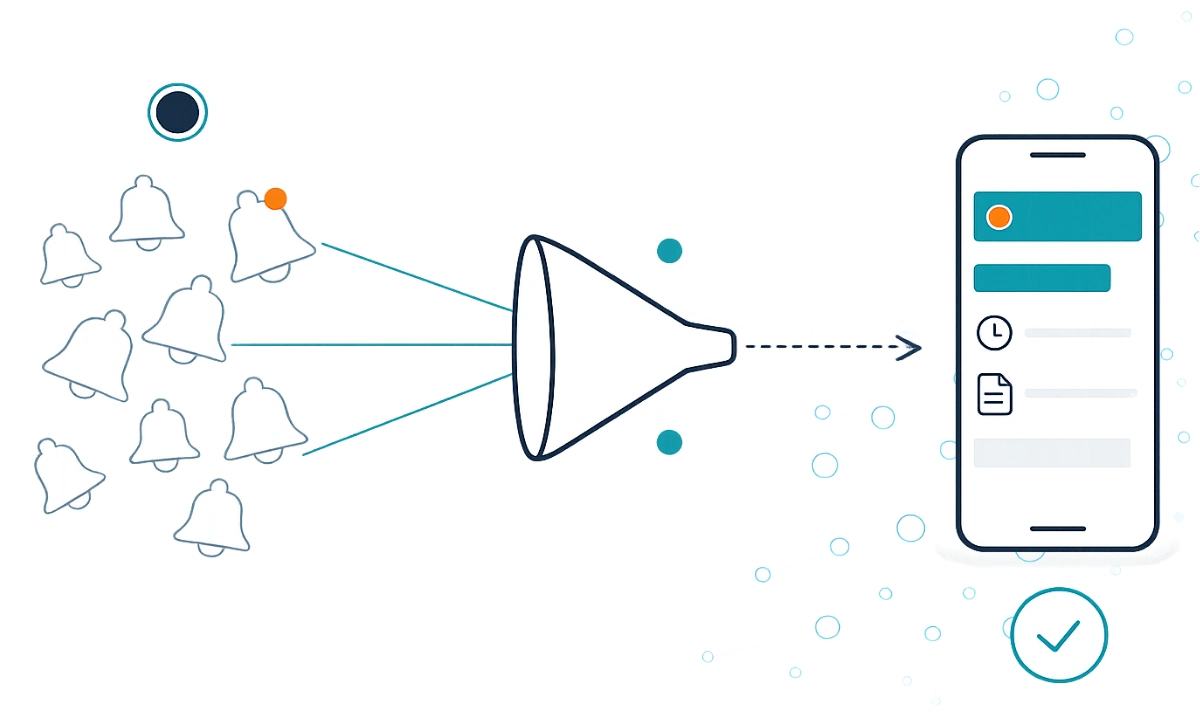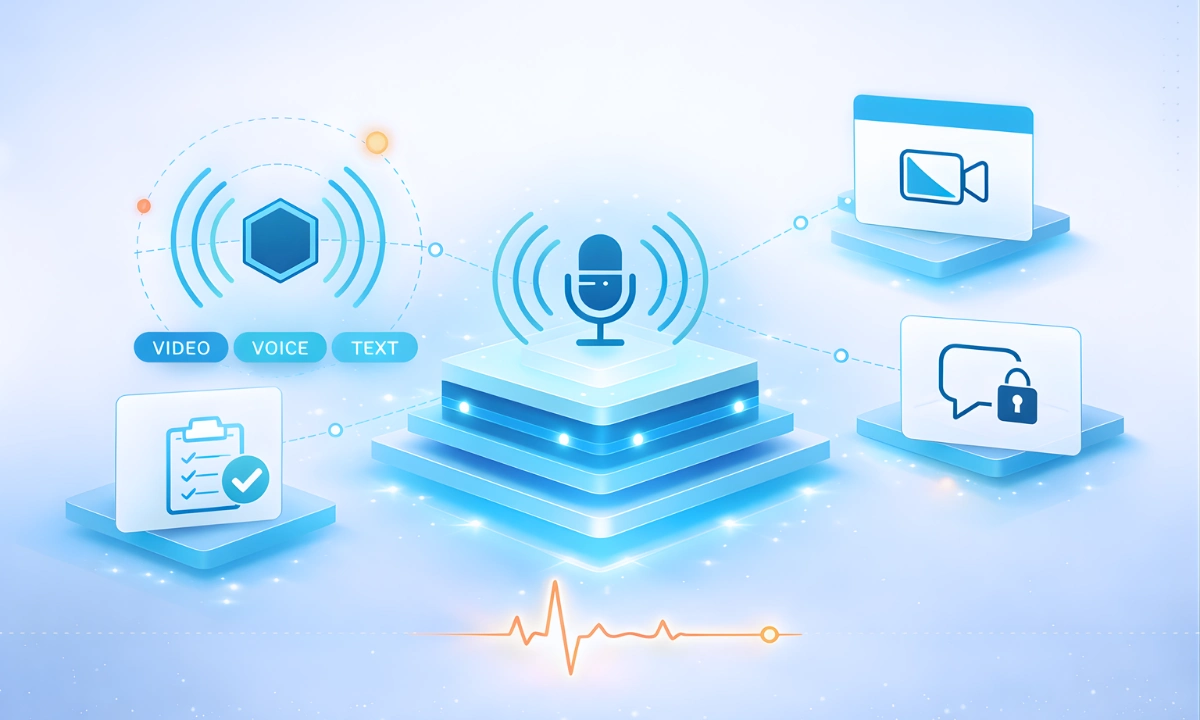
A physician should not have to decide, in the middle of patient care, whether a notification on their device is a cardiac emergency or a scheduling reminder. Yet that is precisely the decision that blunt clinical notification delivery forces — dozens of times per shift. The core problem that intelligent message routing in healthcare is designed to solve starts here: research published in JAMA Network Open (2024) found that physicians receive between 60 and 100 clinical notifications per shift, with no system-level mechanism to distinguish urgency before the message reaches the recipient. The cognitive cost is measurable: each unnecessary interruption adds 23 minutes of recovery time before focused attention is restored (AMA, 2025). Across a standard week, that is not a minor inconvenience. It is a structural drain on clinical capacity.
The technical fix is not complex, and it does not require replacing an EHR. Intelligent message routing in healthcare applies urgency scoring, role matching, and on-call schedule verification before a single notification reaches a physician’s device. The result is a system where the right message reaches the right person at the right moment, and non-urgent messages queue for async review without disrupting active care.
This post explains the mechanism, the clinical evidence behind it, and how ClinicianCore’s HCO Intelligent Routing Engine implements it across healthcare organizations.
Key Takeaways
- Physicians receive 60-100 clinical notifications per shift with no urgency filtering at the system level, creating what the AMA (2025) calls a structurally unsustainable cognitive load.
- Each unnecessary clinical interruption costs 23 minutes of cognitive recovery time, according to the AMA’s 2025 Physician Work Environment Survey.
- Platform-level physician interruption reduction requires intelligent routing, not notification settings that physicians configure individually.
- ClinicianCore’s HCO Intelligent Routing Engine evaluates three variables before delivery: message urgency score, sender role classification, and recipient on-call status.
- Organizations using AI-driven clinical notification management report up to 60% reductions in non-urgent physician interruptions without changes to EHR infrastructure.
“Physician interruptions are not a scheduling problem. They are a communication infrastructure problem — and intelligent message routing in healthcare is the infrastructure fix.”

The Interruption Problem: Why Clinical Notification Volume Became a Patient Safety Issue
The volume of clinical notifications arriving on physician devices is not a technology problem by accident. It is the predictable output of systems designed to maximize information delivery without any mechanism for prioritizing receipt. Alert fatigue in healthcare is the direct consequence: when every message arrives with equal urgency, physicians learn to suppress all of them, including the ones that require an immediate response.
JAMA Network Open’s 2024 analysis of notification burden found that 62% of clinical alerts physicians received during shifts were non-urgent, messages that could have queued for review without any clinical impact. The physician receiving them did not know that at the time of interruption. The cognitive load of evaluating whether to act is incurred regardless of the outcome.
The AMA’s 2025 Physician Work Environment Survey found that administrative burden and after-hours communication were the top two structural contributors to burnout, both downstream consequences of unfiltered notification delivery. HIMSS’s 2024 interoperability survey confirmed that 71% of physician respondents identified alert volume as their primary workflow disruption, ahead of documentation requirements.The problem is systemic and the solution must be systemic. Individual notification preference settings, do-not-disturb schedules, and device management policies all shift the configuration burden to the physician without addressing the underlying mechanism. Clinical communication integration at the platform level is the only approach that filters before delivery, not after receipt.
How ClinicianCore HCO Helps: Intelligent Routing
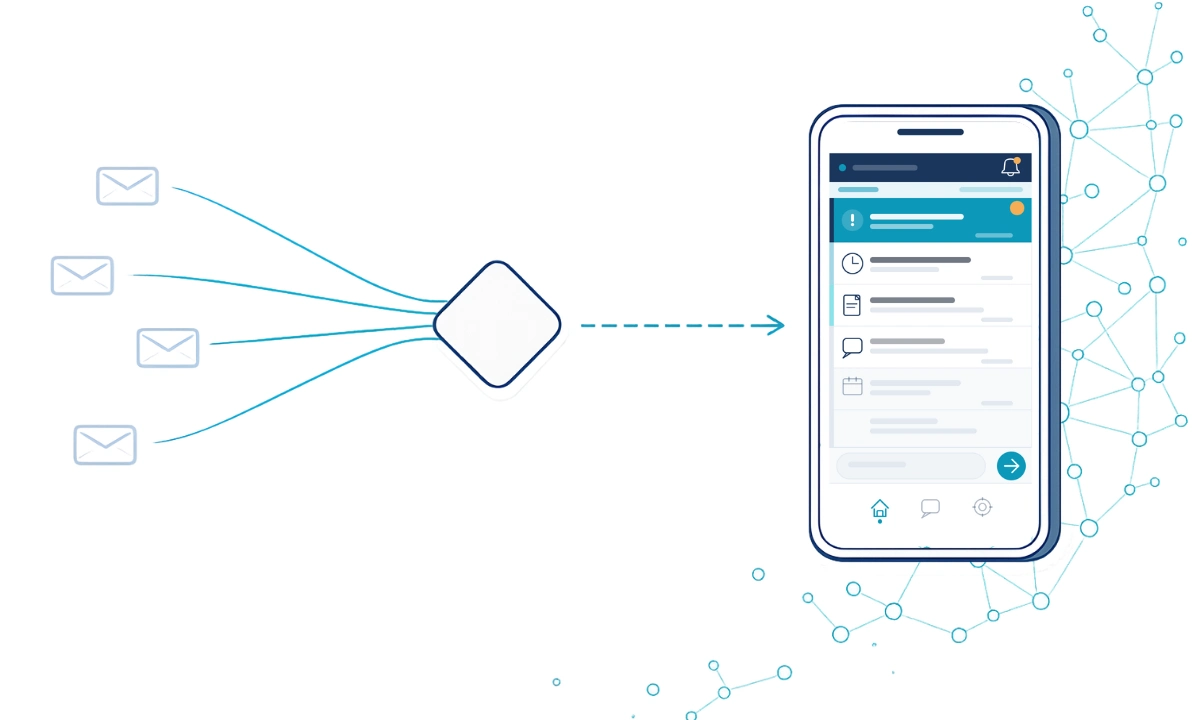
ClinicianCore’s HCO Intelligent Routing Engine evaluates every incoming message against three variables before the message reaches a physician’s device: urgency score, sender role classification, and recipient on-call status. Critical messages route immediately. Non-urgent messages queue for asynchronous review during natural workflow breaks. On-call schedule integration means that after-hours messages reach the covering physician automatically, without requiring the sender to know who is available. No EHR configuration change is required. See how HCO’s approach to streamline clinical workflows eliminates the per-physician configuration burden entirely.
How Intelligent Message Routing Works: The Three-Layer Mechanism
The mechanics of intelligent message routing are worth examining closely, because the value is in the sequence. Unified communication reduces medical errors when routing is applied before delivery, not as an afterthought in device settings.
Layer 1: AI Urgency Scoring
Every inbound message is evaluated by the routing engine before delivery. The evaluation uses message content signals, sender role, originating system (EHR lab result, nursing station, pharmacy, scheduling), and message type classification. A message flagged as a critical lab value routes on a different path than a scheduling confirmation, regardless of how the sender categorized it. The scoring model draws on message pattern libraries calibrated against clinical communication standards, not generic IT notification frameworks.
Layer 2: Role-Based Delivery Matching
Urgency alone does not determine the right recipient. A critical pharmacy alert belongs with the prescribing physician, not with the attending on a different service. Role-based delivery matching cross-references the sender’s originating role and the message content against the recipient’s clinical role and current assignment. A message intended for the covering surgeon does not route to the hospitalist, and a nursing station inquiry does not escalate to the department chief because no one configured an exception.
Layer 3: On-Call Schedule Integration
Role matching requires current schedule data. A routing engine that does not know who is on call cannot match correctly — it defaults to the named attending regardless of availability. HCO’s routing layer integrates directly with on-call schedules, resolving the covering physician at the time of message send. After-hours critical messages reach the on-call physician. Non-urgent after-hours messages queue for the primary physician’s morning review. Senders do not need to know the on-call schedule to reach the right person.
What the 2024-2025 Data Shows: Intelligent Message Routing in Healthcare Outcomes
The clinical literature on intelligent message routing in healthcare and physician interruption reduction is consistent across study types and organizational settings. The question is no longer whether routing works. It is why most organizations have not implemented it at the platform level.
JAMA Network Open’s 2024 study found that physicians who received filtered, urgency-scored notifications reported a 41% reduction in self-rated cognitive load during patient-facing hours compared to control groups receiving unfiltered alerts. The reduction was attributable entirely to the decrease in non-urgent interruptions, not to any change in critical alert volume, which remained stable.
The AMA’s 2025 Physician Work Environment Survey found that physicians who practiced in environments with structured notification management reported burnout rates 18 percentage points lower than those in unstructured notification environments. Notification management was the variable with the strongest independent correlation after controlling for specialty and practice type.HIMSS’s 2024 interoperability and workflow survey found that 68% of healthcare IT directors identified notification routing as the highest-priority communication infrastructure investment for the next 24 months, ahead of EHR interface upgrades and patient portal improvements. Physician retention and satisfaction scores were the two most cited justifications. That is the healthcare smart routing platform investment case made in the language of operations, not clinical idealism.
How ClinicianCore HCO Helps: Smart Routing and Alert Prioritization
The ClinicianCore smart routing and alert prioritization platform applies all three routing layers within a single unified communication infrastructure built exclusively for physicians. Organizations deploying HCO report up to 60% reductions in non-urgent physician interruptions without touching EHR configuration. Administrators set routing rules once through the HCO dashboard. Individual physicians do not carry a configuration burden. The platform integrates with existing scheduling systems and does not require a parallel IT implementation to function.
Intelligent Message Routing in Healthcare vs. Traditional Notification Settings: The Core Difference
Notification settings are physician-managed device preferences. Intelligent message routing in healthcare is a system-level infrastructure decision. The distinction matters because it determines where accountability for interruption management lives.
Traditional clinical notification delivery pushes every message to every eligible recipient and places the management burden on the endpoint. The physician sets do-not-disturb windows, configures device volume preferences, and creates personal filters, all of which apply inconsistently across devices and shift with personnel changes. When the configuration is wrong, the physician receives the wrong messages at the wrong time. There is no audit trail and no systemic correction.
Platform-level clinical notification management inverts this. The routing engine applies consistent, organization-defined rules before any message reaches a device. The rules account for urgency, role, and on-call status, not individual physician preferences that expire when the physician logs out. Administrators can audit routing decisions, adjust urgency thresholds based on specialty-specific needs, and verify that critical messages are reaching the correct recipients without relying on physician self-configuration.
The HealthCare Organization (HCO) module operates on this infrastructure principle. The routing configuration is set at the organizational level, updated by administrators, and applied uniformly, independent of which physician is logged in, which device they are using, or whether they have configured personal notification preferences.
How ClinicianCore HCO Helps: Administrator-Controlled Routing Configuration
HCO routing rules are set and maintained by administrators, not individual physicians. Urgency thresholds, role classification definitions, and on-call schedule integrations are configured once at the organizational level and apply across all users automatically. Physicians do not configure personal notification preferences to make routing work the system handles routing decisions before the message reaches any device. This administrator-controlled model is central to how ClinicianCore functions as a medical practice efficiency platform rather than an individual preference management tool.
The Routing Decision Is an Organizational Infrastructure Decision
The data from 2024-2025 makes the problem clear and the mechanism available. Physicians receive more clinical notifications than any single person can process without cognitive cost. The cost is measured in recovery time, in burnout rates, and in retention figures that healthcare organizations are now tracking as operational metrics, not HR abstractions.
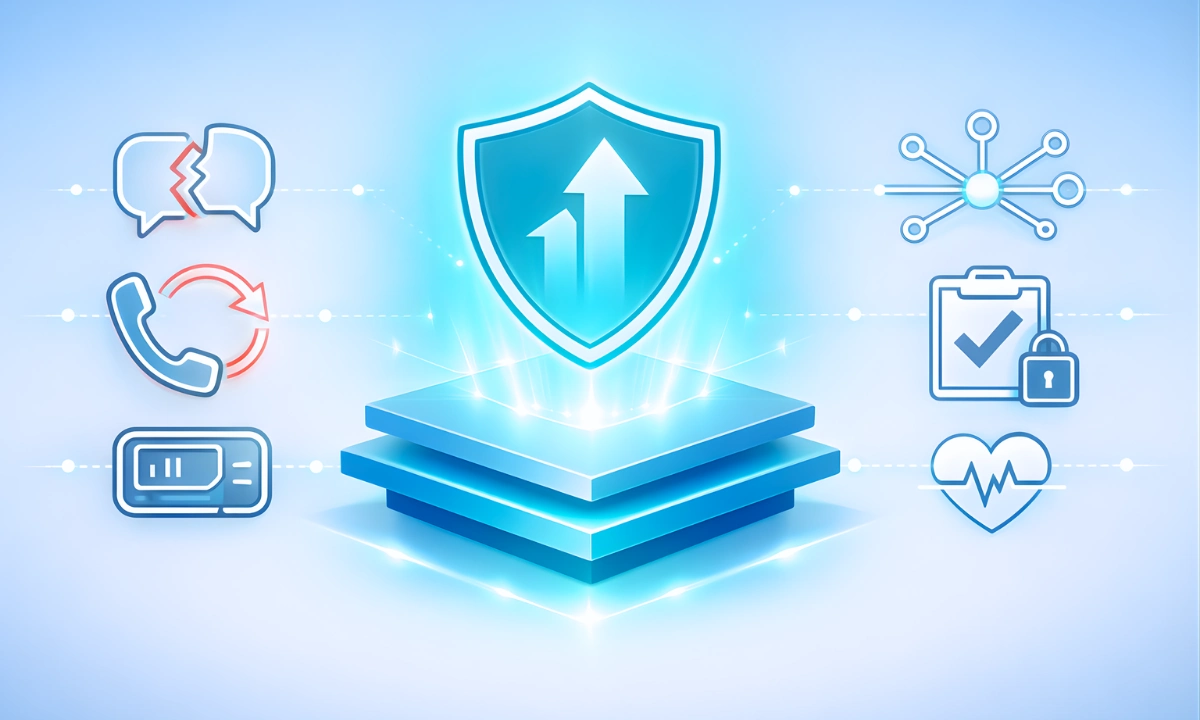
Intelligent message routing in healthcare is not a physician wellness program. It is communication infrastructure, the same category of organizational investment as EHR selection or network architecture. The difference is that routing can be implemented without replacing existing systems, without requiring physician behavior change, and without a multi-year IT project. Healthcare AI and innovation applied to clinical notification management is one of the fastest-cycle infrastructure improvements available to healthcare organizations today.
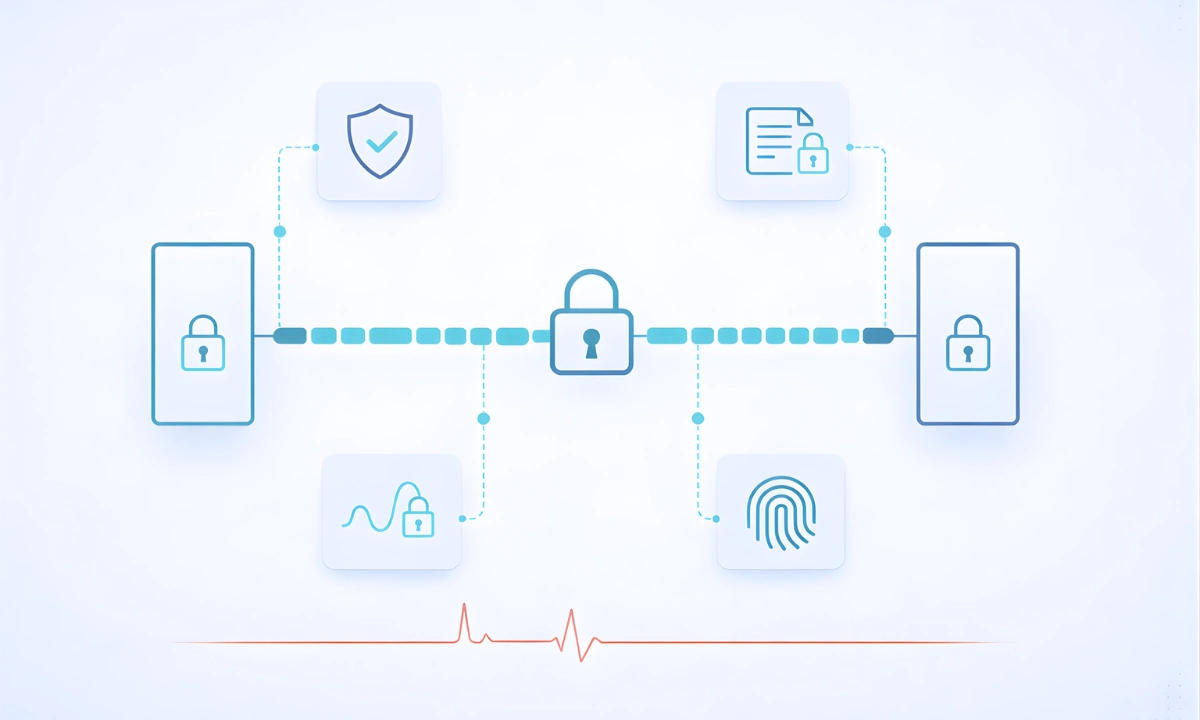
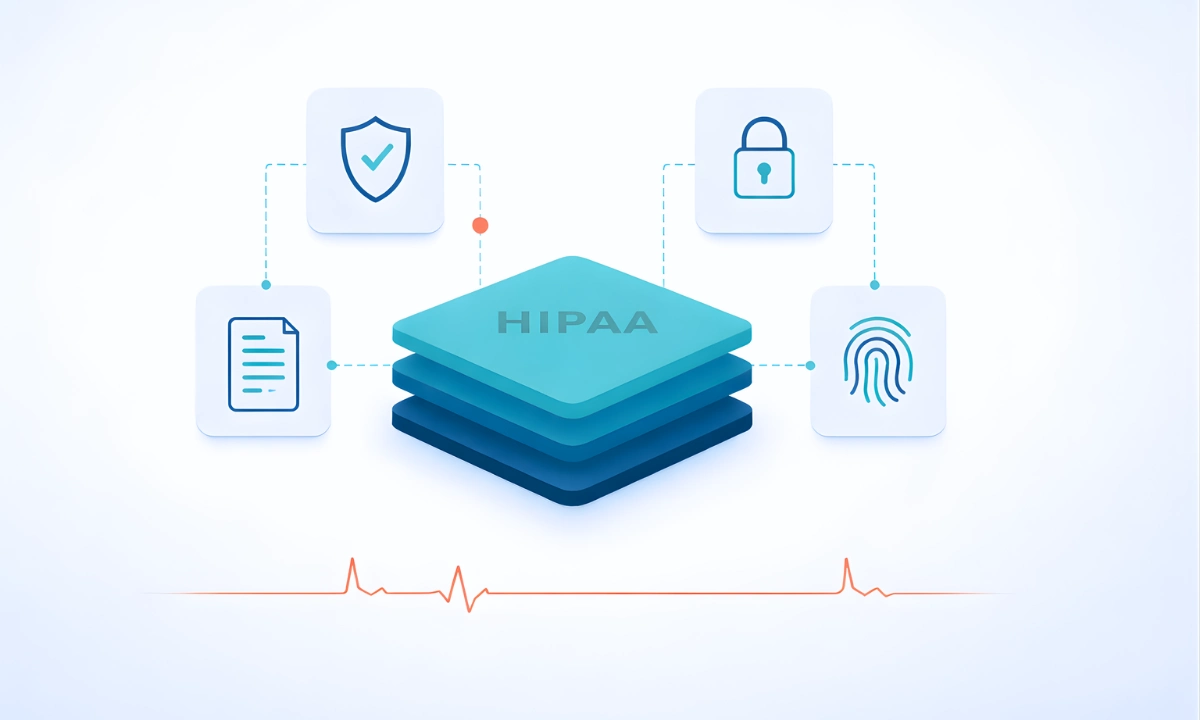
ClinicianCore is a secure, HIPAA-compliant unified clinical communication platform built exclusively for physicians. HCO’s Intelligent Routing Engine brings urgency scoring, role-based delivery, and on-call integration into a single administrative layer that organizations configure once and physicians benefit from automatically. For organizations evaluating clinical communication integration, the routing infrastructure is where outcomes are determined, not at the device level.
Frequently Asked Questions
What is intelligent message routing in healthcare?
Intelligent message routing in healthcare is a platform-level system that evaluates every inbound clinical message for urgency, sender role, and recipient on-call status — then routes it to the correct physician before any device receives an interrupt. JAMA Network Open (2024) found a 41% reduction in physician cognitive load when urgency-filtered routing replaced unfiltered delivery. ClinicianCore’s HCO Intelligent Routing Engine applies this to every message on the platform.
How does intelligent message routing in healthcare reduce physician interruptions?
Intelligent message routing reduces physician interruptions by preventing non-urgent messages from reaching a physician’s device during active patient care. The routing engine scores each inbound message before delivery — urgent messages route immediately, non-urgent messages queue for async review. The AMA (2025) found each unnecessary interruption costs 23 minutes of cognitive recovery time. ClinicianCore HCO applies this at the organizational level without EHR changes.
What factors does HCO’s routing engine evaluate before delivering a message?
HCO’s routing engine evaluates three factors simultaneously before any message is delivered: urgency score derived from message content and originating system, sender role classification matched against defined routing paths, and recipient on-call status pulled from real-time schedule integration. A high urgency score does not override an incorrect role match all three must align. JAMA Network Open (2024) confirmed multi-variable routing outperforms single-variable urgency filtering alone.
How is intelligent routing different from simple notification settings?
Intelligent message routing in healthcare operates at the system level before message delivery. Notification settings are physician-configured device preferences that apply after delivery. The AMA (2025) found organizations relying on individual physician notification preferences reported no significant reduction in aggregate interruption rates because configurations vary by physician, expire with personnel changes, and cannot access on-call schedule data. ClinicianCore HCO applies uniform rules organization-wide with no per-physician configuration required.
Can administrators configure routing rules without changing EHR settings?
Yes, ClinicianCore’s HCO Intelligent Routing Engine operates as a communication infrastructure layer fully independent of EHR configuration. Routing rules, urgency thresholds, role classifications, and on-call schedule integrations are set through the HCO administrative dashboard without touching EHR alert logic or user permission structures. HIMSS (2024) found 68% of healthcare IT directors cited EHR integration complexity as the top barrier to notification management deployment. HCO’s architecture eliminates that barrier.
References
- JAMA Network Open (2024). Physician Notification Burden and Clinical Interruptions. JAMA Network Open. https://jamanetwork.com/journals/jamanetworkopen
- American Medical Association (2025). Physician Work Environment Survey. AMA. https://www.ama-assn.org/practice-management/physician-health/ama-physician-work-environment-survey
- HIMSS (2024). Interoperability and Workflow Survey: Clinical Alert Management Priorities. HIMSS. https://www.himss.org/resources/himss-interoperability-workflow-survey
- Westbrook, J.I., et al. (2023). Task errors by emergency physicians are associated with interruptions, multitasking, and cognitive load. BMJ Quality & Safety, 32(1), 12-21. https://qualitysafety.bmj.com
- Patel, R.S., et al. (2024). Factors related to physician burnout and its consequences: A review. Behavioral Sciences. https://www.ncbi.nlm.nih.gov/pmc/
- Shanafelt, T.D., et al. (2024). Changes in burnout and satisfaction with work-life integration in physicians between 2011 and 2023. Mayo Clinic Proceedings. https://www.mayoclinicproceedings.org
- Centers for Medicare & Medicaid Services (2025). Interoperability and Prior Authorization Final Rule. CMS. https://www.cms.gov/regulations-and-guidance/regulations/interoperability
- National Institutes of Health / NLM (2024). Cognitive Interruption and Clinical Decision-Making: Systematic Review. NIH NLM. https://www.ncbi.nlm.nih.gov/pmc/
- Physicians Foundation (2024). Survey of America’s Physicians: Practice Patterns and Perspectives. https://physiciansfoundation.org/physician-and-patient-surveys/