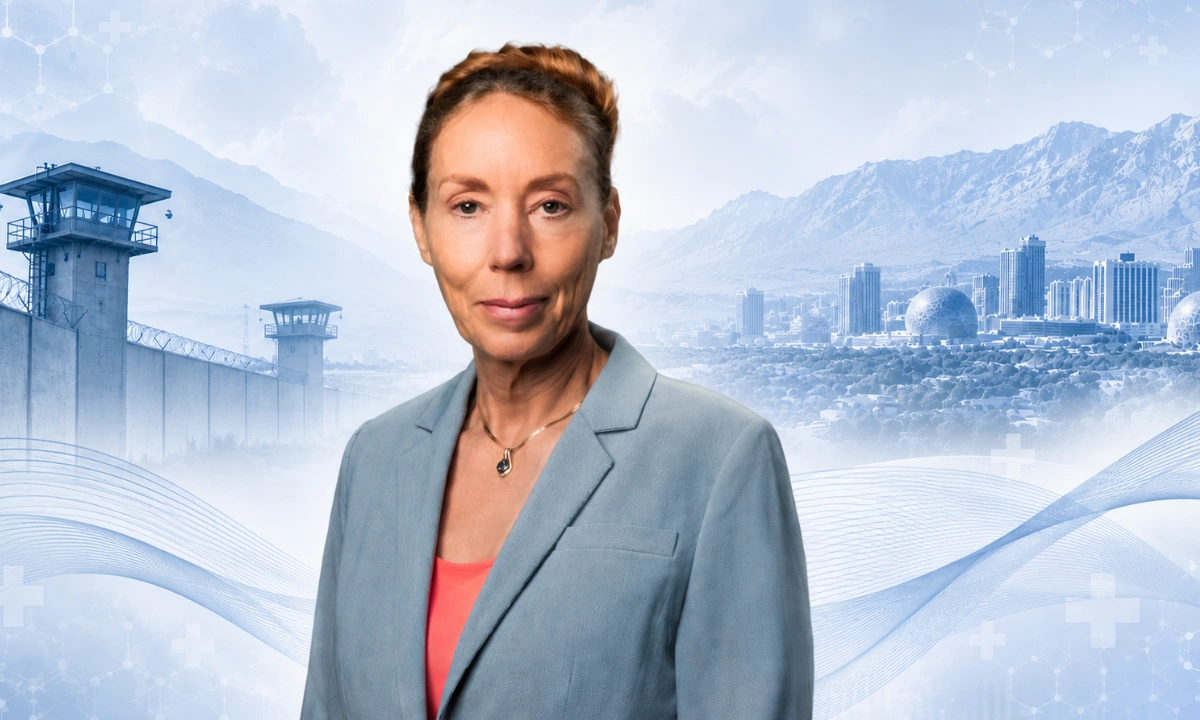
In 1987, I completed my Internal Medicine Residency at the VA Hospital and Washoe in Reno. Soon afterward, the National Health Service Corps placed me at a men’s prison in Carson City for a four-year payback.
When I started at Northern Nevada Correctional Center, I was responsible for approximately 1,200 inmates, along with another 350 at Stewart Conservation Camp next door. I had a small infirmary where I could house 20 inmates for care.
A few years later, the prison built a Regional Medical Facility on its grounds. It eventually included 60 medical beds, 60 psychiatric beds, a dental clinic, treatment rooms, X-ray capabilities, and other medical services.
Looking back on those 30 years, one lesson stands out above everything else: I could not have done the job alone. Connecting with other physicians and specialists was essential to providing care.
Key Takeaways
- Prison medicine required physicians to build connections outside the walls of the prison because many specialized resources were not immediately available inside the system.
- Early connections with physicians treating HIV in Reno helped me understand and provide care during a time when HIV treatment was still in its early stages.
- Connecting with specialists through the Carson-Tahoe Tumor Board allowed me to treat some cancer patients inside the prison rather than repeatedly transporting them to outside hospitals.
- Bringing specialists into the prison eventually became a more practical solution than transporting inmates to outside medical offices.
- My experience taught me that healthcare connections are not simply about convenience. They can affect access to care, physician decision-making, patient experience, security, and cost.
- The technology available today is very different from what we had during most of my career, but the underlying need to connect physicians with one another has not changed.
Starting in Prison Medicine
A Medical System Without a Roadmap
When I began working at Northern Nevada Correctional Center in July 1987, I did not have in-service training or a medical director.
I was essentially learning how to navigate prison medicine while providing care for a large inmate population.
The prison system had already tested every inmate in the state for HIV, but there was little understanding of what to do with that information.
At the time, there was also no medication for HIV. The fear surrounding HIV inside the prison was palpable.
That changed quickly.
Learning to Navigate HIV Care
When AZT Became Available
In the fall of 1987, AZT became available, and I became increasingly involved in understanding and treating HIV.
Fortunately, I already had connections to two physicians in Nevada whom I knew from my residency.
One was Trudy Larson, an assistant professor at the UNR School of Medicine who specialized in HIV/AIDS and immunization. The other was my chief resident, Stephen Zell.
Both were pioneers in the early days of HIV care in Reno.
I reached out to them because I knew I needed help understanding a disease that was still new to many physicians and carried an enormous amount of fear and uncertainty.
Connections Created Better Care
Working with Trudy Larson and Stephen Zell eventually led to my involvement with the Nevada State Task Force on HIV.
Those connections gave me access to knowledge and expertise that I would not have had working in isolation.
They also helped me become one of the early prison physicians in the United States pushing for HIV care.
I was also one of the few prison doctors who not only knew which inmates had HIV, but also knew who converted while inside because the prison system made exit testing mandatory.
Looking back, that experience taught me an important lesson: sometimes the most important resource a physician has is not another piece of equipment. It is another physician who is willing to help.
Building Nevada Healthcare 1.0 Inside the Prison
When Cancer Patients Started Coming to Me
The Regional Medical Facility changed the type of patients I was responsible for treating.
Because the prison had the only Regional Medical Facility on its grounds, some of the sickest inmates in the system were sent to me.
That included inmates with cancer.
I had two physicians who had been involved in the residency program who were oncologists, so I asked them for help.
They would tell me what drug to order and how to administer it.
Fortunately, I also had two nurses who were certified in chemotherapy.
But I knew I needed more help.
Connecting With the Carson-Tahoe Tumor Board
I became a member of the Carson-Tahoe Tumor Board.
That connection became extremely valuable.
I was able to present cases in front of oncologists, radiation doctors, surgeons, pathologists, and other specialists. I could learn more about the cancer itself, understand the available treatments, and make better decisions about how to care for the inmates.
Most importantly, it allowed us to provide some of that care inside the medical facility.
Instead of transporting an inmate to an outside hospital and having them stay there with custody officers, we could treat them where they were.
That made the experience more comfortable for the inmate while also significantly reducing hospital and security costs.
The Cost of Disconnecting Care
Transporting Inmates Was Not Simple
As the years went by, it became increasingly clear that transporting inmates to outside medical offices was problematic.
Medical offices were not necessarily happy to have custody officers bring an inmate into the office in chains while other patients were waiting.
There were also legitimate safety concerns when dealing with violent inmates.
And then there was the cost.
For a maximum-security inmate, three custody officers might be required to provide security.
At the same time, custody staffing was always a challenge. When custody was short-staffed, overtime costs could quickly increase the prison’s budget.
So the problem was not simply medical.
It involved physicians, specialists, nurses, custody officers, administrators, patients, hospitals, and costs.
Bringing Specialists Into the Prison
A Different Model of Specialty Care
Eventually, the system made the decision to bring specialists into the medical facility rather than continually transporting inmates outside.
Cardiologists, gastroenterologists, neurologists, orthopedic surgeons, and other specialists would come into the prison approximately once every month or two.
They could see multiple inmates during the same visit and make decisions about treatment or surgery.
This created a more practical model of specialty care.
Instead of moving the patient to the specialist, we could sometimes move the specialist to the patient.
Connection Became Part of the System
What started with individual relationships with physicians gradually became something much larger.
The system began developing a network of connections between prison medicine and the broader Nevada healthcare community.
That network helped us solve problems that could not be solved by one physician working alone.
It also demonstrated something I would see repeatedly throughout my career: healthcare works better when the right people can connect at the right time.
What Prison Medicine Taught Me About Connection
Medicine Is Not Practiced in Isolation
My 30-year career as a prison doctor ended in 2016, and the world of healthcare has changed dramatically since I started in 1987.
But one thing has not changed.
Physicians still need other physicians.
When I started, cell phones were not allowed in prison. Computers and the ability to use Zoom inside the prison did not really begin until around 2014, and even then, it took time to get established.
There was no modern digital infrastructure connecting physicians instantly.
Instead, I relied on relationships.
I called physicians I knew. I presented cases to specialists. I joined the tumor board. I asked questions. Other doctors were willing to help.
Those relationships became part of how I survived and provided care to the inmate population.
Technology Has Changed. The Need Has Not.
Today, physicians have access to communication tools that I could not have imagined when I started practicing prison medicine.
But technology by itself is not the lesson I took from those 30 years.
The lesson is connection.
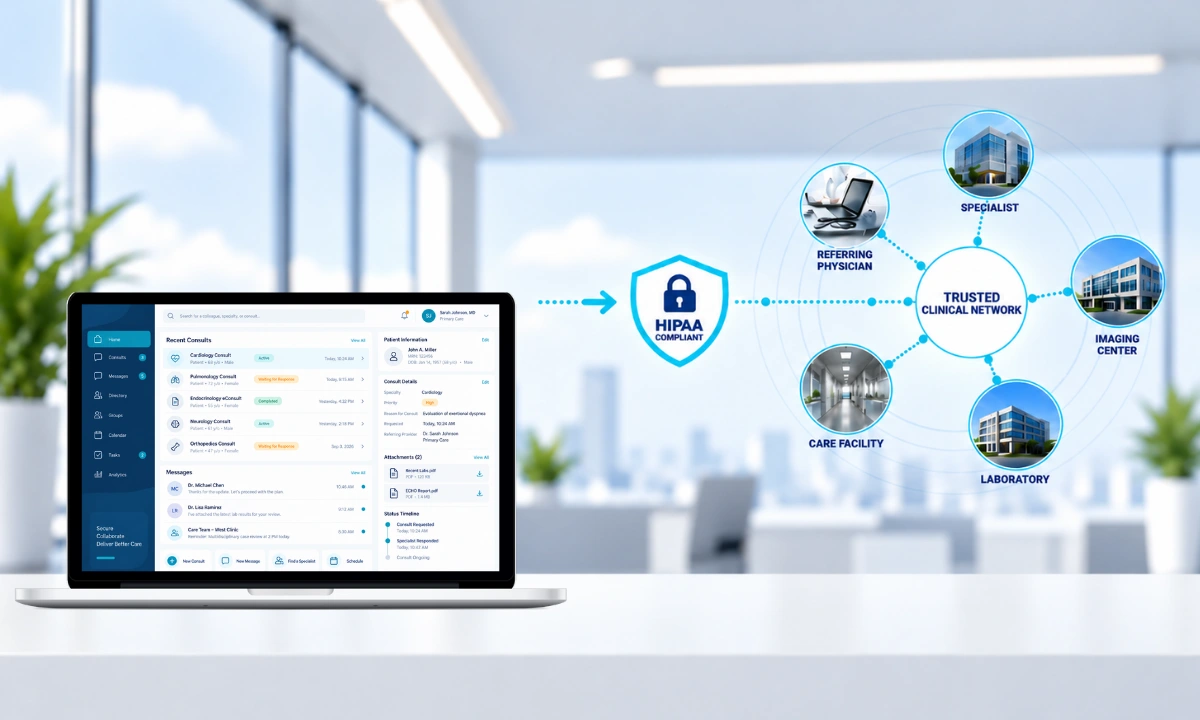
The technology should make it easier for physicians to find the right person, ask the right question, share the right information, and make a better decision.
That is what the relationships I built in Nevada allowed me to do long before today’s technology existed.
From Prison Medicine to Nevada Healthcare Today
My experience in prison medicine gave me a perspective on healthcare connectivity that I carried with me long after I left the prison system.
I learned that physicians do not always need another institution.
Sometimes they need another physician.
They need someone with the right expertise who is willing to answer a question, review a case, offer an opinion, or help determine what should happen next.
In prison medicine, those connections helped me manage HIV, treat cancer, bring specialists into the facility, reduce unnecessary transportation, improve the patient experience, and reduce security and hospital costs.
The setting was unusual, but the underlying problem was not.
Healthcare is made up of people who need to communicate with other people.
Looking Back on 30 Years of Prison Medicine
When I look back at those 30 years, I do not remember only the challenges of practicing medicine inside a prison.
I remember the people who were willing to help.
Trudy Larson. Stephen Zell. The oncologists who answered my questions. The nurses who helped administer chemotherapy. The specialists who came into the prison. The physicians and other professionals I met through the Carson-Tahoe Tumor Board.
I could not have provided the care I did without them.
The technology available to healthcare has changed enormously since 1987.
But the fundamental lesson remains the same:
Connecting physicians with one another is not a new idea. It has always been essential to practicing medicine.
The difference today is that we have the technology to make those connections faster, easier, and more accessible than they were during the first decades of my career.
Frequently Asked Questions
What did prison medicine teach you about healthcare connectivity?
It taught me that physicians cannot effectively manage every complex case alone. Access to other physicians and specialists was essential to providing appropriate care.
How did physician connections help with HIV care?
Connections with physicians who were already treating HIV in Reno helped me understand the disease and its treatment during the earliest years of my prison medicine career.
How did the Carson-Tahoe Tumor Board help?
The Tumor Board allowed me to present cancer cases to oncologists, radiation doctors, surgeons, pathologists, and other specialists. Their expertise helped me make treatment decisions and provide care inside the prison.
Why was bringing specialists into the prison important?
Transporting inmates to outside medical offices created medical, security, staffing, and financial challenges. Bringing specialists into the prison allowed multiple inmates to be evaluated during one visit and reduced the need for outside transportation.
What has changed since you started practicing prison medicine?
Technology has changed dramatically. Cell phones were not allowed in prison when I started, and tools such as computers and Zoom only became available much later. What has not changed is the need for physicians to connect with one another.
What is the biggest lesson from your 30 years in prison medicine?
The biggest lesson is simple: physicians need connections. Sometimes the most important thing a doctor can have is another doctor willing to help.