
Why Unified Clinical Communication is Essential Amid a Growing Physician Shortage
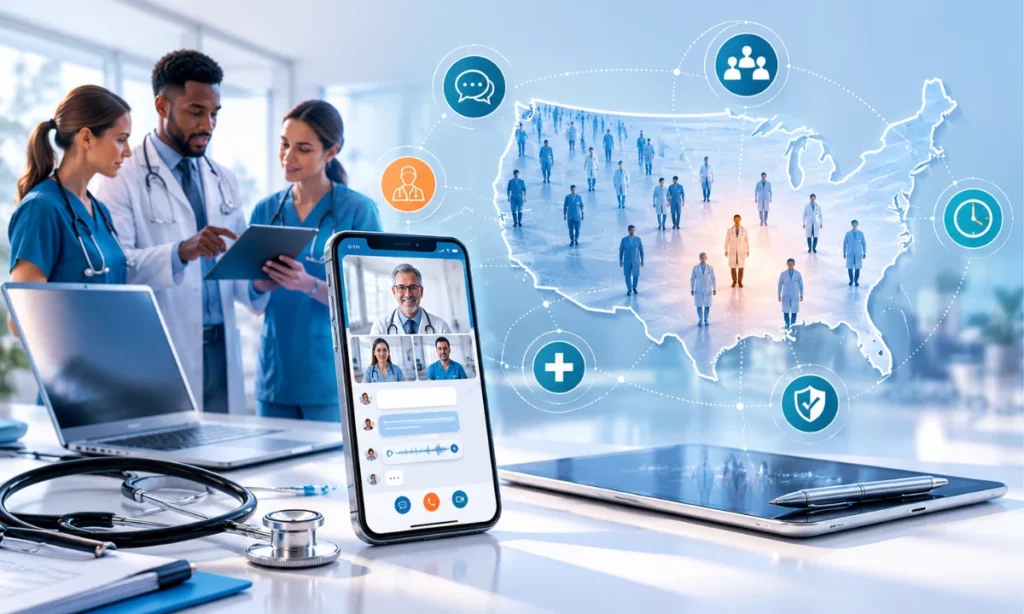
The United States is approaching a physician workforce crisis measured in decades. According to the Health Resources and Services Administration (HRSA), the country faces a projected shortage of 141,160 full-time equivalent (FTE) physicians by 2038, spanning 30 of 35 specialties evaluated. Independent group practices, already operating at the margins of administrative capacity, will absorb the greatest pressure from this deficit.
Beyond Secure Chat: The Journey to an AI-Native Clinical Communication Platform
In this episode of The Connected Practice, Dr. Kevin Halow, Co-Founder and Chief Medical Officer of ClinicianCore, explores why healthcare needs to move beyond traditional secure messaging toward an AI-native clinical communication platform.
The episode examines how fragmented communication tools, constant alerts, administrative friction, and documentation demands contribute to physician burnout. Dr. Halow explains how an AI-native approach can address these challenges through smart alert routing, unified voice/video/text communication, ambient clinical intelligence, and physician-centric collaboration.
He also explores the four key pillars of the ClinicianCore ecosystem: HCO for unified organizational communication, HCC for healthcare collaboration and consultation workflows, HCX for professional and industry exchange, and the Physician Lounge for trusted physician-to-physician connection.
Ultimately, the episode looks at how intelligent communication orchestration can reduce cognitive overload, simplify documentation, strengthen clinical collaboration, and help restore the joy of practicing medicine
Why We Built ClinicianCore: The Journey to an AI-Native Clinical Communication Platform
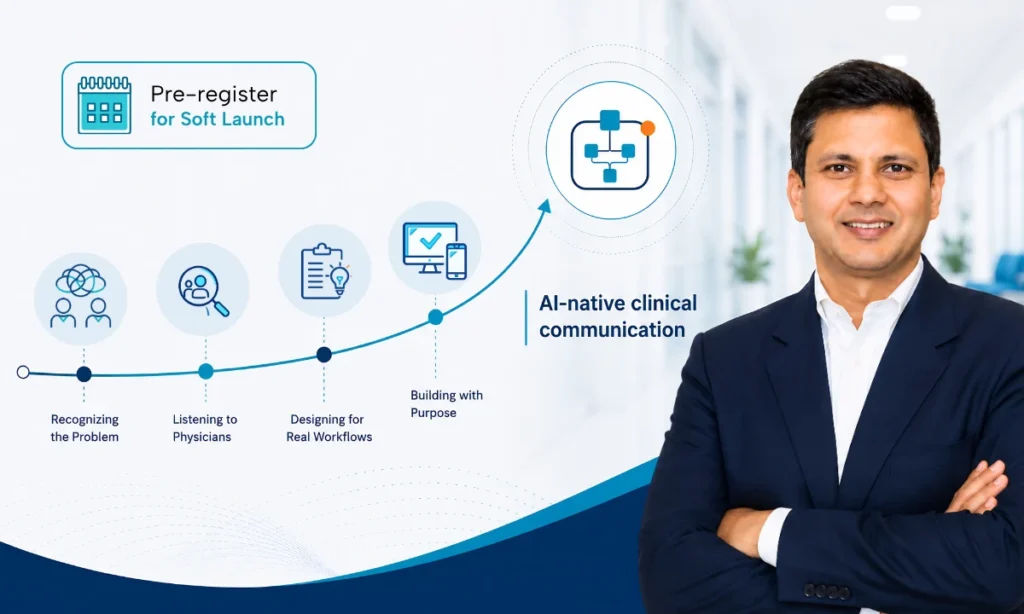
The practice of modern medicine remains an extraordinary privilege. I say that not as an abstraction, but as a belief that shaped every architectural decision we made when building ClinicianCore. For decades, healthcare systems have deployed fragmented communication tools that fail to respect the unique cognitive and workflow demands of practicing physicians. As a result, practitioners have been forced to operate inside rigid, legacy software that silos information, compounds administrative burden, and steadily erodes the satisfaction that drew people to medicine in the first place.
FHIR Clinical Communication Platform: How ClinicianCore Bridges Healthcare Interoperability in 2026
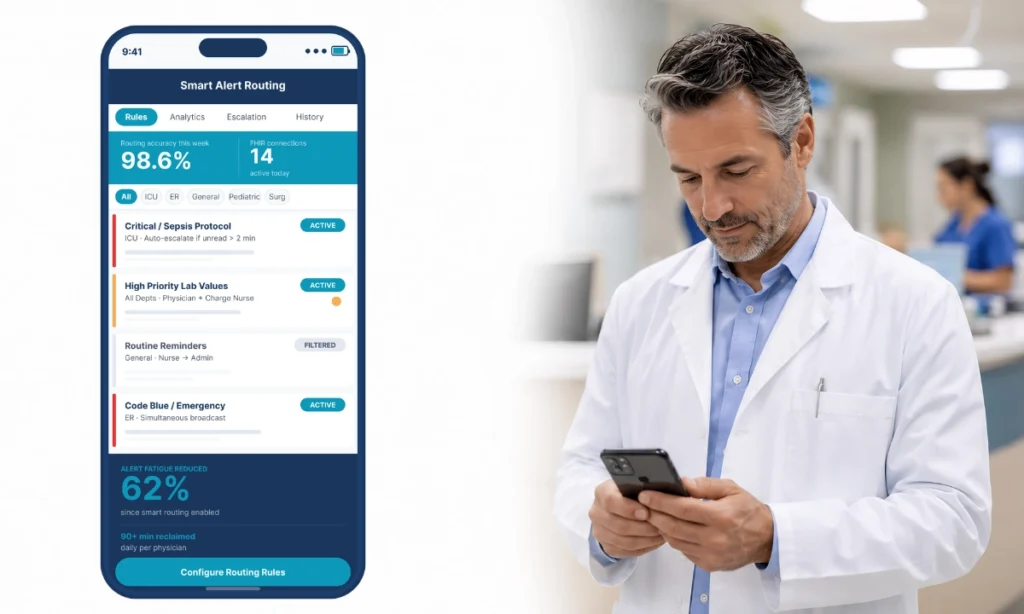
A FHIR (Fast Healthcare Interoperability Resources) clinical communication platform is no longer a future-oriented concept for physician practices; it is an operational requirement.
Physician On-Call Burnout: Communication Fixes (2026)
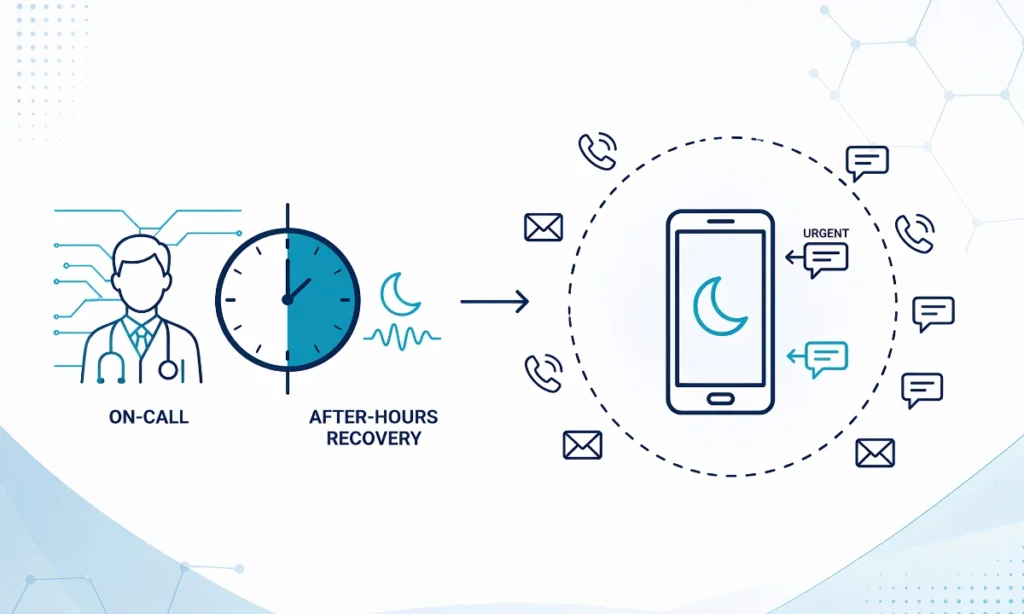
Physician on-call burnout is not an attitude problem, a resilience deficit, or an unavoidable consequence of clinical life, least of all after hours.
Predictive Routing: The Next Evolution of Clinical Communication Intelligence in 2026
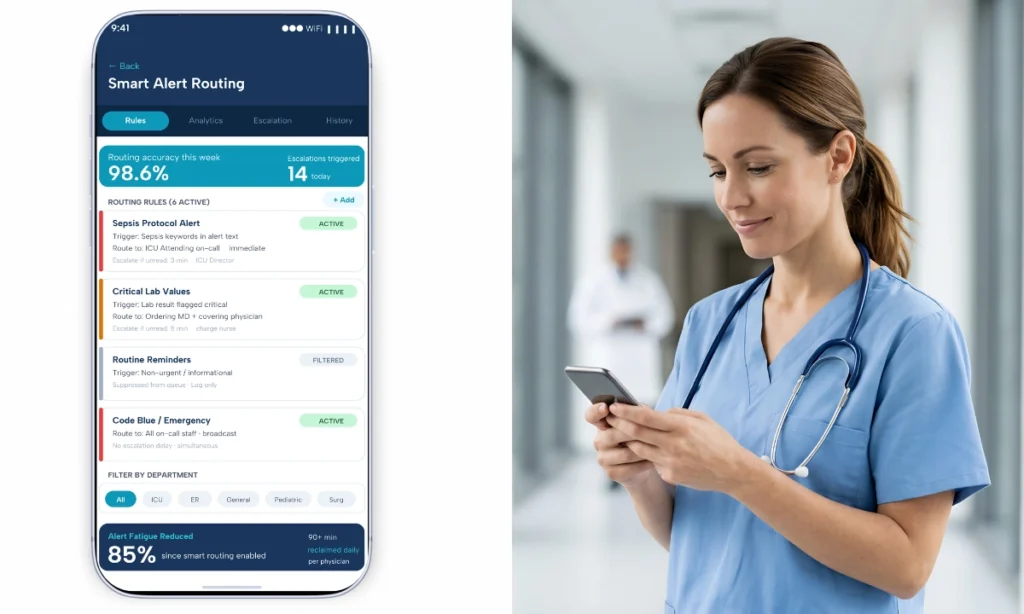
Predictive routing clinical communication AI represents a meaningful step beyond static urgency scoring: instead of applying a fixed set of rules to every message, the system observes how individual physicians respond over time and adjusts routing logic accordingly.
The Physician’s Voice: Why Audio-First Clinical Communication Reduces Burnout
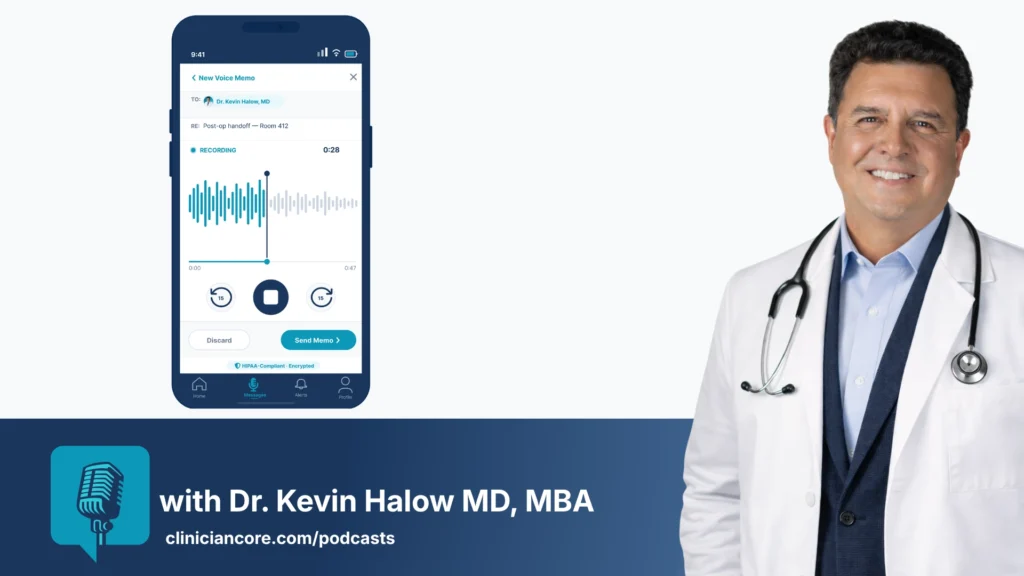
In this episode of The Connected Practice, Dr. Kevin Halow explores how traditional typing and texting can contribute to documentation burden, workflow disruption, and physician burnout. Using a clinical scenario, he demonstrates how audio first clinical communication can allow physicians to share their concerns, clinical reasoning, and patient updates without interrupting their workflow. The episode examines asynchronous voice and video communication, HIPAA compliant collaboration, secure clinical messaging, and the importance of preserving the human element in clinical handoffs. Dr. Halow also explains how ClinicianCore’s HCO Practice HQ and HCC Consult Core can help physicians communicate securely, reduce unnecessary interruptions, reclaim time, and improve medical practice efficiency through a physician centric communication approach.
The Most Powerful Clinical Tool Physicians Aren’t Using Effectively
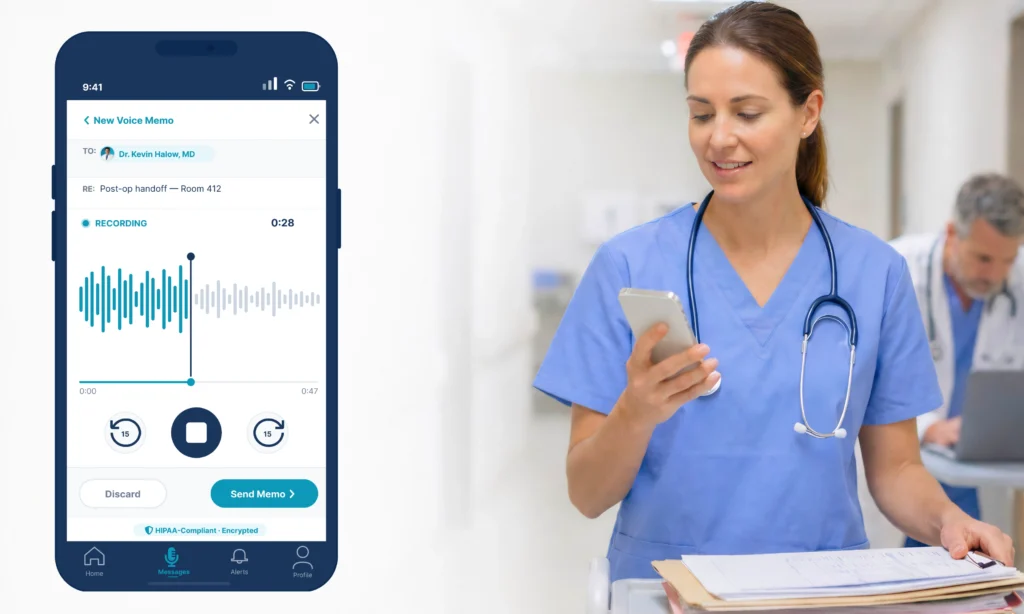
Voice memos in clinical communication represent one of the most underutilized tools available to physicians today, yet the case for adopting them is grounded in hard data, not preference. Physicians already carry the most documentation-intensive role in the clinical enterprise.
HIPAA-Compliant Messaging: The Liability of Consumer Apps
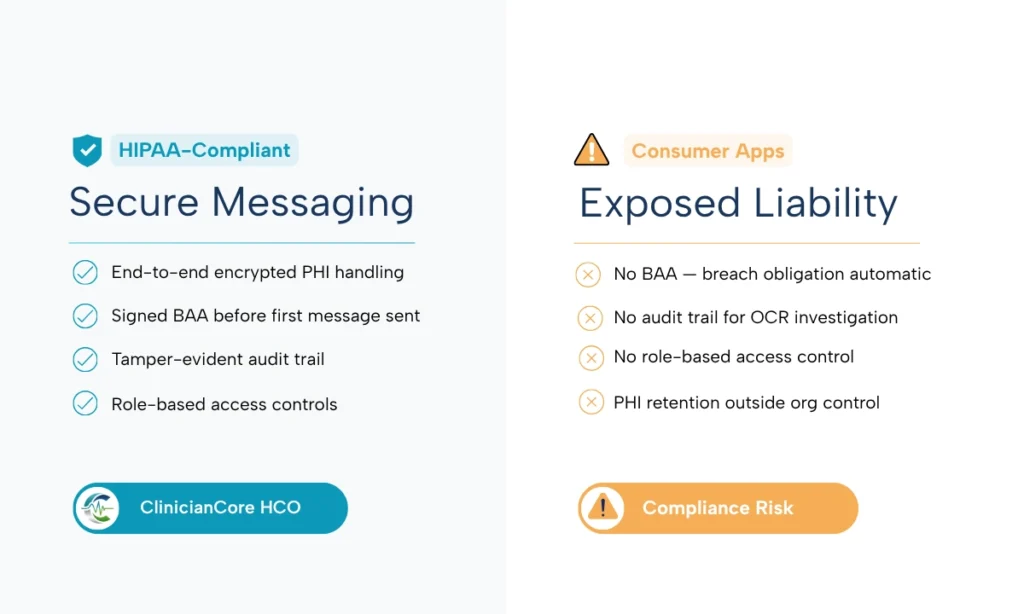
HIPAA compliant messaging vs consumer apps is not a theoretical debate. HHS OCR recorded 725 large healthcare data breaches in 2024, the third consecutive year that breach totals have exceeded 700 (HIPAA Journal, 2025). Consumer messaging applications — apps designed for social contact, not clinical governance — appear repeatedly across the underlying incident reports as undocumented channels carrying protected health information (PHI) with no Business Associate Agreement (BAA), no audit trail, and no defensible access control. For physicians, compliance officers, and practice administrators, the question is no longer whether these tools create liability.
HCO in Action: A Surgeon’s Wednesday on Call
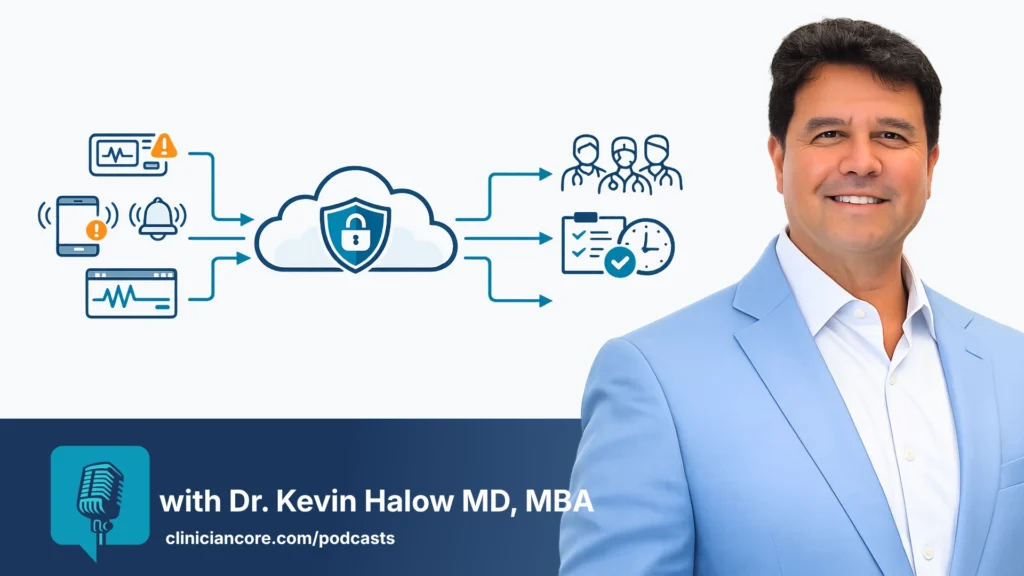
In this episode of The Connected Practice, Dr. Kevin Halow demonstrates how HCO Practice HQ can support a surgeon through a complex day on call. Using a hypothetical urgent surgical case, he shows how secure non linear video, encrypted communication, AI powered alert triage, and digital huddles can improve coordination across the care team. The episode explores how HCO can reduce phone calls, communication delays, unnecessary interruptions, and cognitive load while keeping critical patient information accessible to the right people. Dr. Halow also discusses HIPAA compliant collaboration, role based access, encryption, audit trails, and how unified clinical communication can support patient safety, physician efficiency, and coordinated care.