
The No Surprises Act’s $51M IDR Crisis: What Independent Practices Must Know

When the No Surprises Act (NSA) was enacted as part of the Consolidated Appropriations Act of 2021, its stated mission was straightforward: protect patients from unexpected medical bills and prohibit balance billing for out-of-network emergency services.
ClinicianCore Soft Launch: Early Access Now Open for Medical Practices
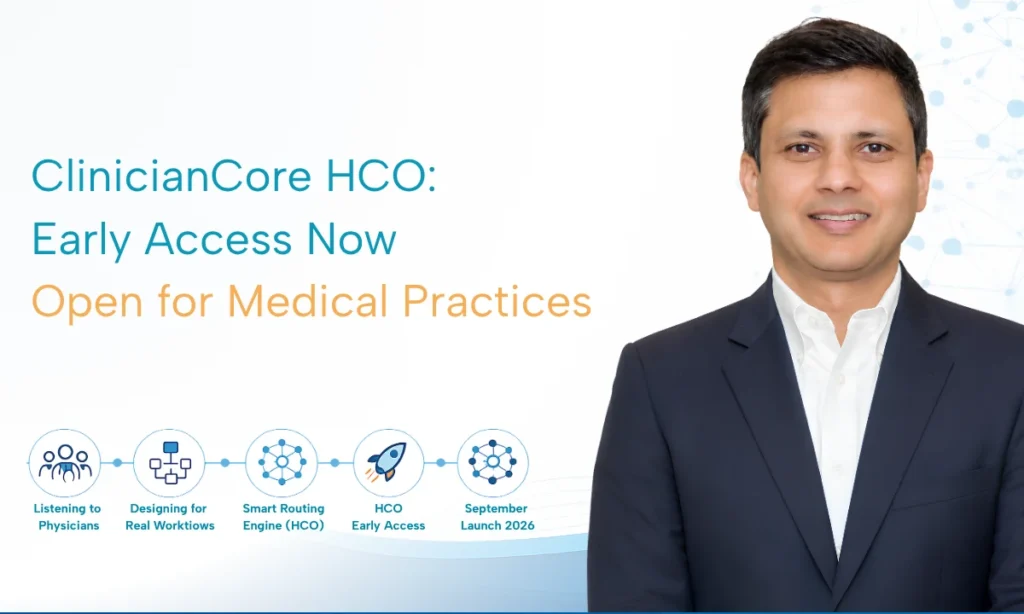
45 minutes. That is how much clinical time the average physician loses every day, not to patient care, but to the gap between an alert firing and a response arriving.
From Regulatory Burden to Clinical Efficiency: Rethinking the Physician Handoff
The sign-out is one of the highest-stakes moments in clinical practice. The Joint Commission’s own root-cause analysis found that communication failures were implicated in nearly two-thirds of all sentinel events, with at least half occurring directly during a patient handoff. Yet most group practices still manage this transition informally.
In Episode 7, Dr. Kevin Halow examines The Joint Commission’s 2026 National Patient Safety Goal NPSG.02.05.01 and makes the case that compliance should not mean more paperwork. When communication infrastructure is built correctly, the handoff record is a natural byproduct of excellent care, not a separate administrative burden. He also explores how structured handoff documentation simultaneously satisfies Joint Commission requirements and generates a compliant, billable record for the practice.
Topics include the clinical cost of fragmented handoff tools, how intra-practice and cross-organizational transitions require different communication architectures, and why reducing alert fatigue is itself a patient safety intervention.
Why Unified Clinical Communication is Essential Amid a Growing Physician Shortage

The United States is approaching a physician workforce crisis measured in decades. According to the Health Resources and Services Administration (HRSA), the country faces a projected shortage of 141,160 full-time equivalent (FTE) physicians by 2038, spanning 30 of 35 specialties evaluated. Independent group practices, already operating at the margins of administrative capacity, will absorb the greatest pressure from this deficit.
Beyond Secure Chat: The Journey to an AI-Native Clinical Communication Platform
Dr. Halow walks through four systemic failures driving physician burnout and how an AI-native platform addresses each: smart alert routing to cut cognitive overload, unified video, voice, and text channels under a single HIPAA-compliant interface, ambient AI that converts interprofessional consultations into structured documentation automatically, and physician-only community spaces that restore the peer connection medicine has lost.
Why We Built ClinicianCore: The Journey to an AI-Native Clinical Communication Platform
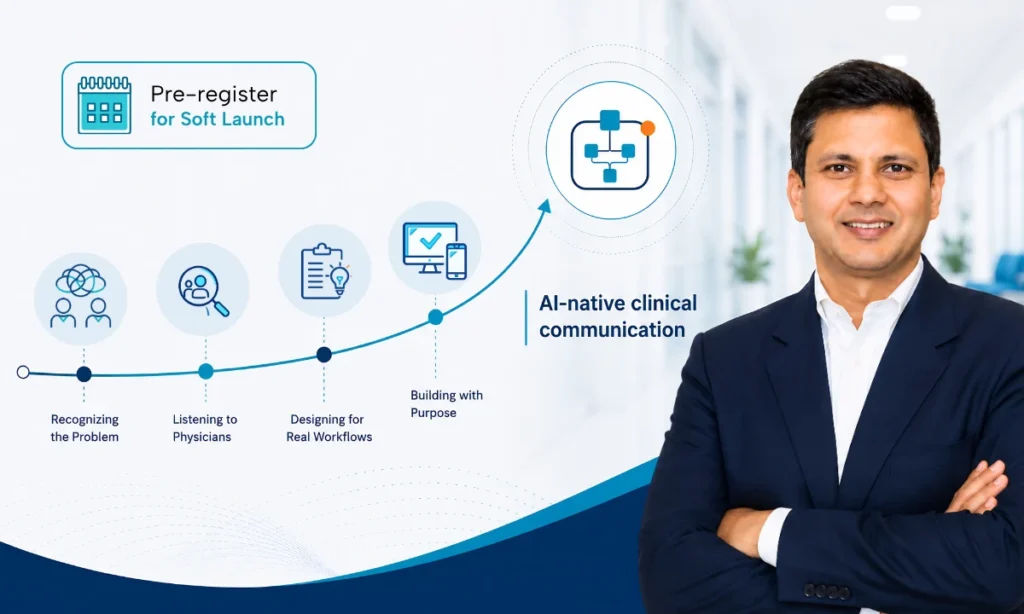
The practice of modern medicine remains an extraordinary privilege. I say that not as an abstraction, but as a belief that shaped every architectural decision we made when building ClinicianCore. For decades, healthcare systems have deployed fragmented communication tools that fail to respect the unique cognitive and workflow demands of practicing physicians. As a result, practitioners have been forced to operate inside rigid, legacy software that silos information, compounds administrative burden, and steadily erodes the satisfaction that drew people to medicine in the first place.
FHIR Clinical Communication Platform: How ClinicianCore Bridges Healthcare Interoperability in 2026

A FHIR (Fast Healthcare Interoperability Resources) clinical communication platform is no longer a future-oriented concept for physician practices; it is an operational requirement.
Physician On-Call Burnout: How Communication Design Determines After-Hours Recovery (2026)
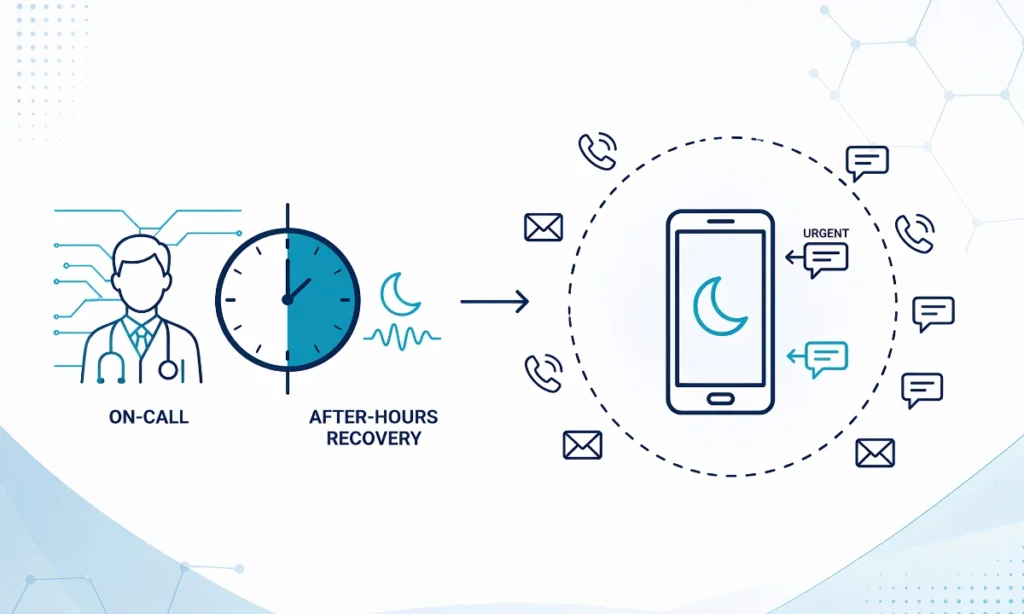
Physician on-call burnout is not an attitude problem, a resilience deficit, or an unavoidable consequence of clinical life, least of all after hours.
Predictive Routing: The Next Evolution of Clinical Communication Intelligence in 2026

Predictive routing clinical communication AI represents a meaningful step beyond static urgency scoring: instead of applying a fixed set of rules to every message, the system observes how individual physicians respond over time and adjusts routing logic accordingly.
The Physician’s Voice: Why Audio-First Clinical Communication Reduces Burnout
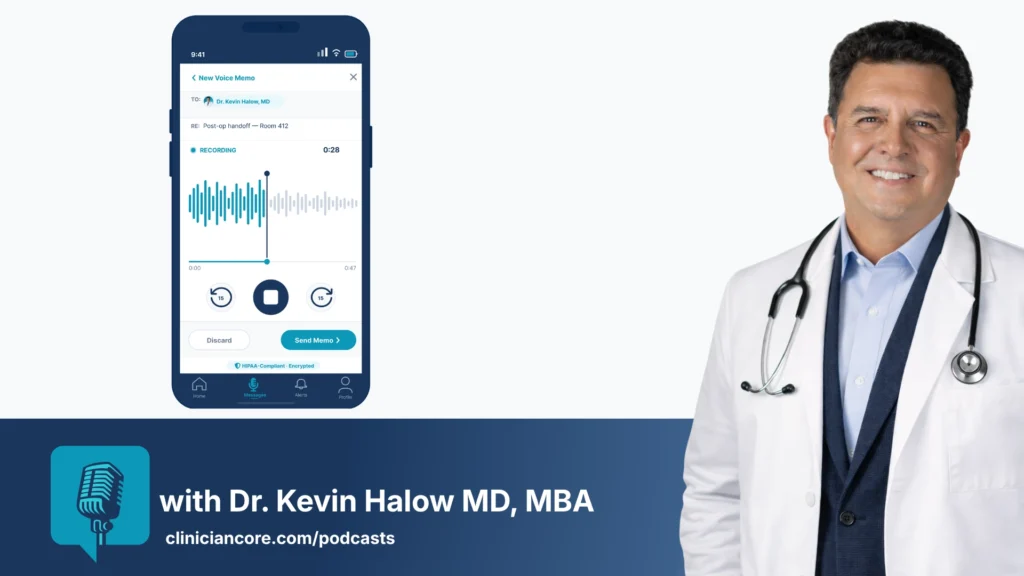
Introduction Welcome back to the Connected Practice, another in our series of podcasts. I’m Dr. Kevin Halow, co-founder and Chief Medical Officer of Clinician Core. Today we’re going to look at the intersection of clinical intuition and communication technology through the lens of a single patient encounter. Specifically, how typing and texting can lead to […]