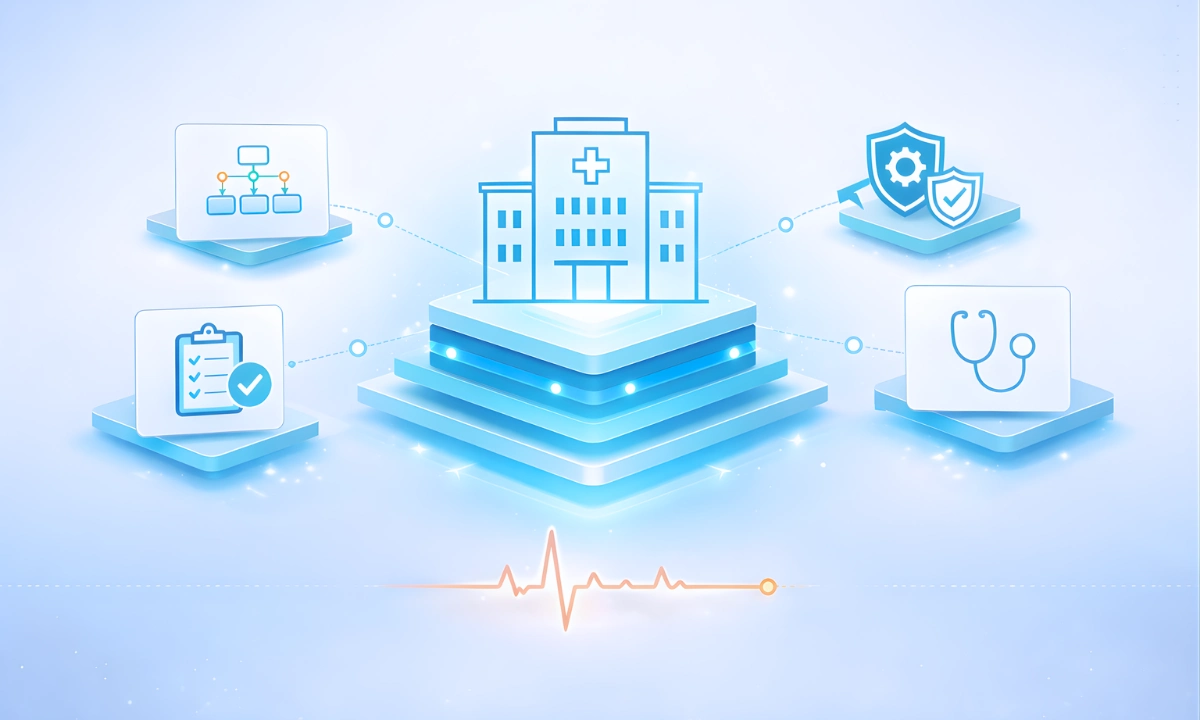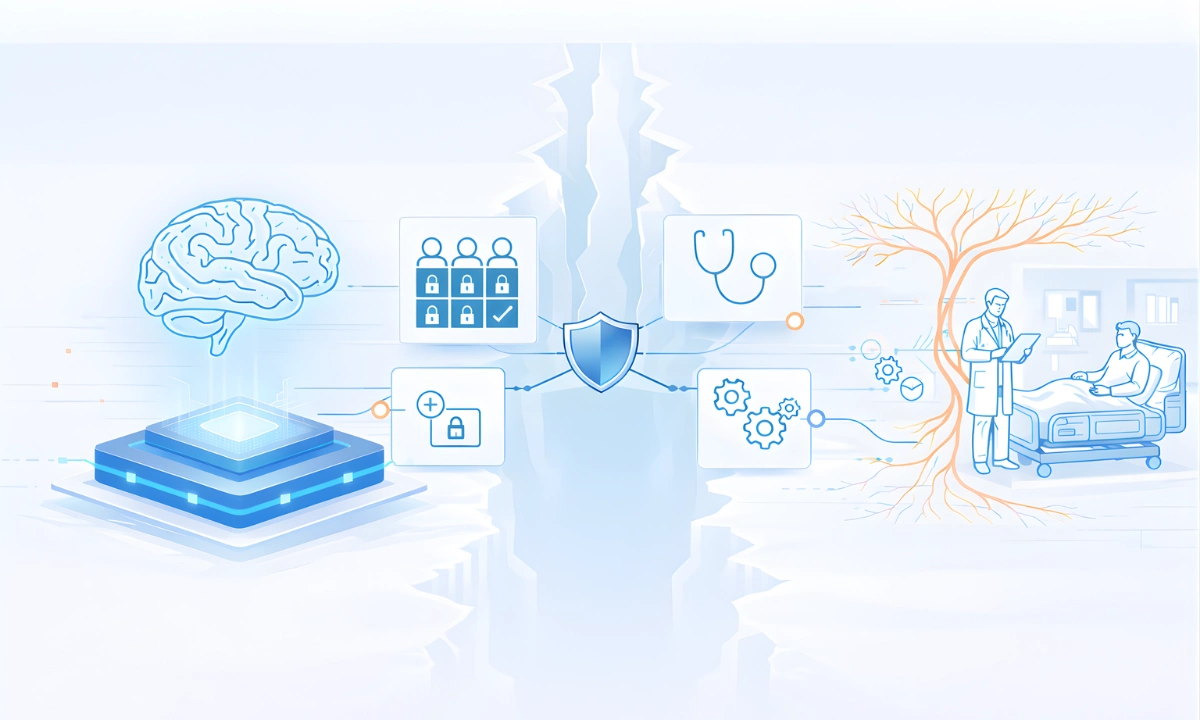
The current discourse surrounding Artificial Intelligence in medicine is split between two camps. On one side, AI theorists warn of an “Armageddon” – a rapid, disruptive automation that could displace human roles. On the other hand, IT practitioners and clinical informaticists, who manage the day-to-day operations of medical practices, argue that the “real-world” friction of healthcare will prevent such a sudden upheaval.
For those of us responsible for P&Ls (profit and loss) and patient safety, this disagreement isn’t just academic; it reflects the AI Implementation Gap in Healthcare.
– Neeraj Jain, CEO (ClinicianCore)
AI performs impressively in controlled environments. But integrating it across fragmented workflows, incompatible systems, and strict compliance frameworks is exponentially harder.
In healthcare, near-100% accuracy isn’t an ambition — it’s the baseline.
While theorists view healthcare AI and innovation through the lens of exponential growth—citing models that outperform radiologists in isolation, operators know that Medical Practice Efficiency is not determined by the “brain” of the AI. It is determined by the “nervous system” of the practice.
What is the AI Implementation Gap in Healthcare?
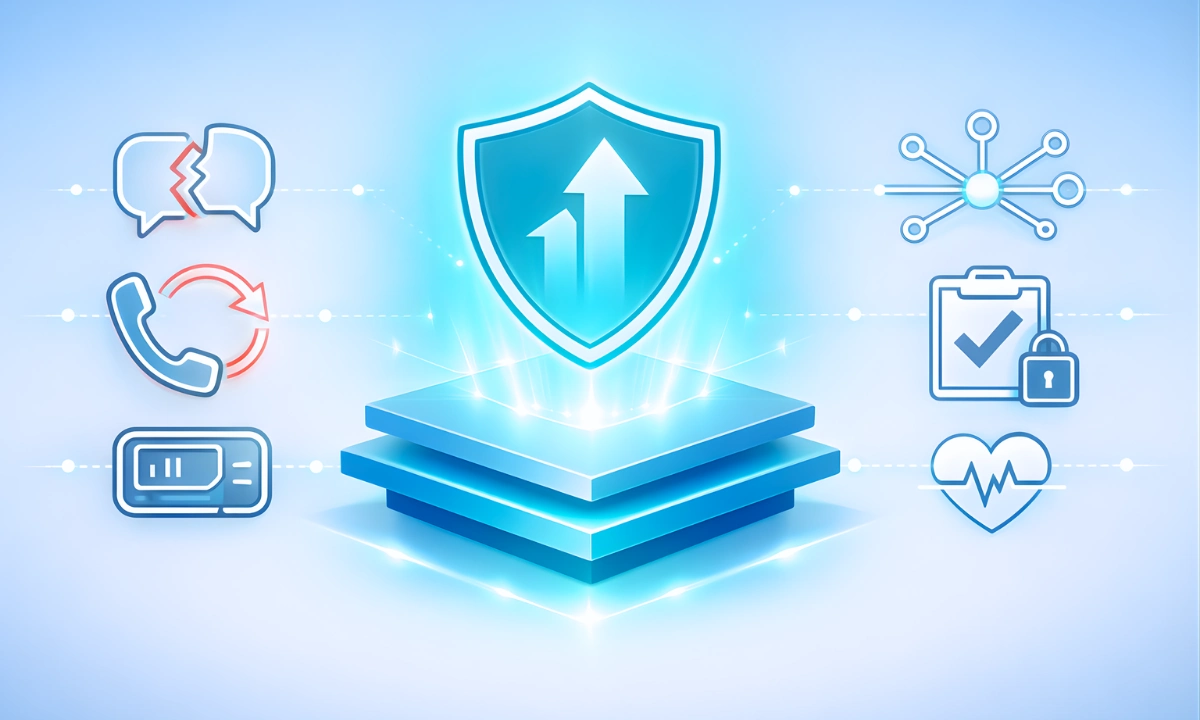
The AI Implementation Gap in Healthcare is the measurable disparity between an algorithm’s theoretical performance in a controlled environment (the lab) and its functional utility in a complex clinical workflow (the clinic). This gap is widened by fragmented data, legacy EHR technical debt, and the “click fatigue” that prevents seamless adoption.
Infrastructure Over Intelligence: The “Nervous System” Problem
The Theorist’s View is seductive: if the software is ready, the transformation should be instant. They predict a massive economic shift where administrative and even some clinical roles are automated to save costs.
The IT Practitioner’s View is grounded in the reality of fragmentation. We are operating in an environment where only 28% of physicians find it easy to exchange information across different platforms (Athenahealth, 2025).
You cannot drop a Ferrari engine into a Model T chassis and expect performance. You will simply tear the car apart. Similarly, deploying advanced predictive models into shattered workflows does not create efficiency, it creates noise. For operators, efficiency comes from incremental wins, like reducing the “copy-paste tax” and “click fatigue” that plague modern EHRs.
Unified Clinical Communication: Bridging the Gap
To close the AI Implementation Gap in Healthcare, we must stop trying to replace the clinician and start fixing the communication layer.
This is the shift toward unified clinical communication rooted in a clinician-led healthcare communication platform.
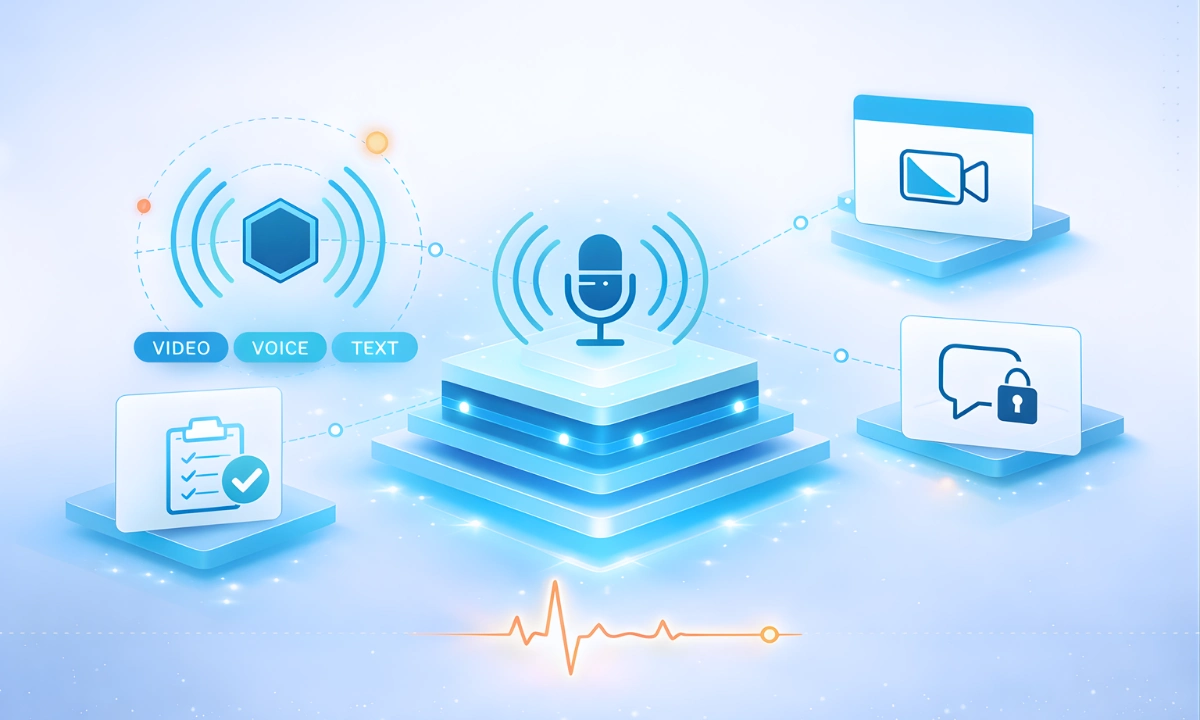
Instead of replacing the doctor, AI acts as an “intelligence layer” that summarizes video huddles, syncs asynchronous chat, and ensures the “Virtual Doctors’ Lounge” remains a productive, physician-only collaboration environment.
What is Unified Clinical Communication?
An infrastructure strategy where AI functions as middleware rather than an endpoint. It aggregates and synthesizes clinical data streams (video, text, EMR) to facilitate HIPAA Compliant Collaboration, allowing clinicians to operate at the top of their license without being burdened by data entry.
Burnout as a Metric of the Gap
Physician Burnout Reduction is the most accurate metric for measuring how well you have closed the implementation gap. When technology fights the user, burnout rises. When technology fades into the background, burnout falls.
This reinforces why preventing burnout in healthcare requires structural workflow redesign, not resilience training.
| Metric | Traditional Practice | AI-Enabled Practice (2026) |
| Note-Writing Time | 4 mins 30 secs | 3 mins 49 secs |
| Clinician Burnout Rate | 51.9% | 38.8% |
| Patient FaceTime | 30% of encounter | 70% of encounter |
| Diagnosis Capture | Baseline | +16% per visit |
Data synthesized from Yale School of Medicine (2025) and s10.ai (2026) studies.
Operational data from 2026 highlights the impact of Ambient AI in Healthcare:
- Ambient AI scribes have reduced “pajama time”—the hours clinicians spend documenting after their shifts—by 40% to 60% (s10.ai, Feb 2026).
- Burnout Rates in AI-enabled practices have dropped to 38.8%, compared to 51.9% in traditional practices. The financial implications of this delta are significant when you examine the true cost of physician turnover.
- Patient Face Time has increased from 30% of the encounter to 70%.
This is not “Armageddon.” This is restoring the patient-clinician relationship.
The HIPAA Compliance Moat: The Barrier to “Black Box” Adoption
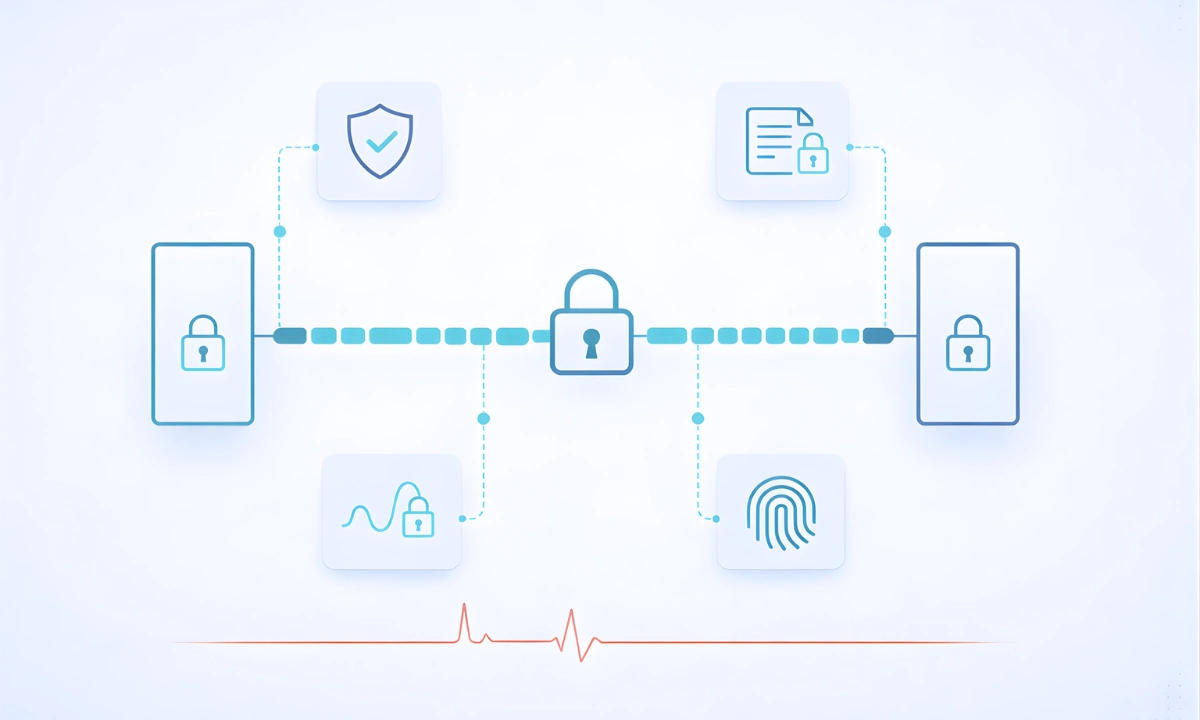
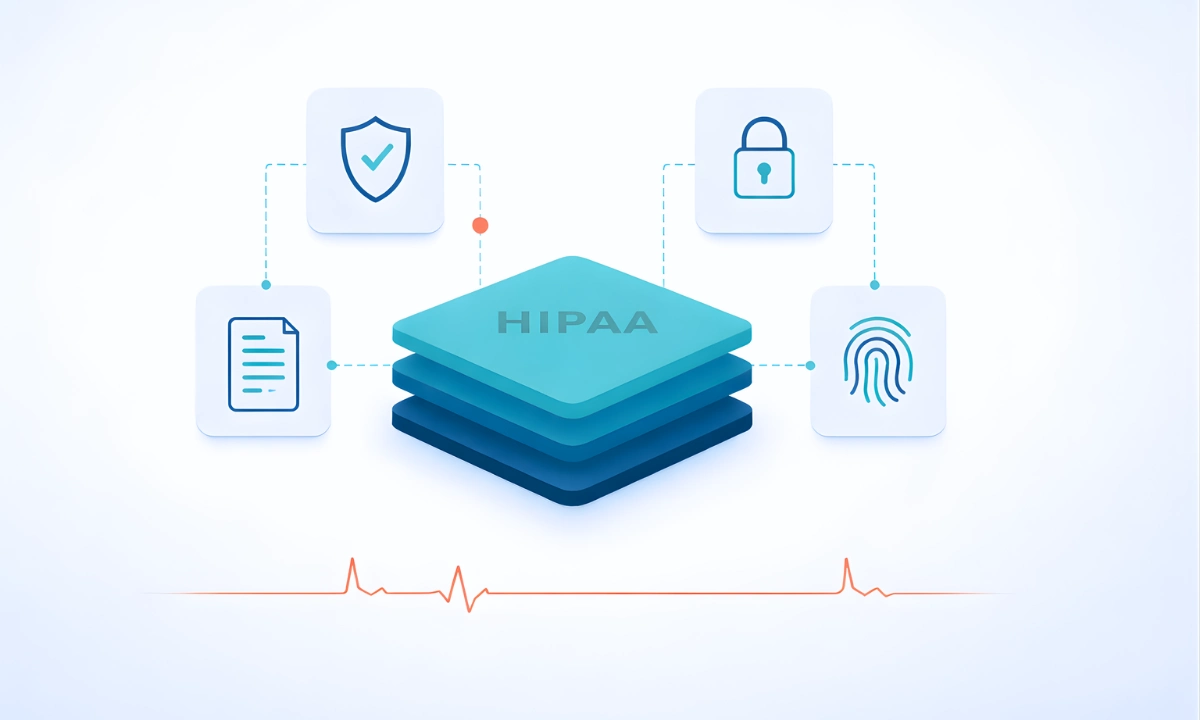
The most significant barrier to the “Armageddon” theory—and the reason the implementation gap exists—is the rigorous requirement for HIPAA Compliant Collaboration and enterprise AI governance.
In a clinical setting, “because the AI said so” is not a legal defense. Operators are acutely aware of this liability. In fact, 89% of non-users cite professional liability as a major barrier to adoption – Skills for Health, 2026
To navigate this, successful practices are adopting “Agentic AI”—systems that can draft notes and suggest codes (with 95–99% accuracy) but always require a human clinician to validate the decision trail. This “Human-in-the-Loop” approach ensures the clinician maintains essential oversight.
How to Close the AI Implementation Gap in Healthcare
Closing the gap requires a disciplined, infrastructure-first approach. Operators should focus on these four strategic priorities:
- Audit Your Communication Layer: Before deploying diagnostic AI, ensure your secure messaging and video platforms are integrated, not siloed.
- Prioritize Ambient Documentation: Deploy ambient scribing tools first. They offer the highest immediate ROI by directly reducing administrative burden.
- Enforce “Human-in-the-Loop” Protocols: Mandate that every AI output (diagnosis, code, or summary) requires clinician validation to mitigate liability risk.
- Measure “Click Reduction”: Don’t just measure model accuracy. Measure how many clicks it takes to perform a routine task before and after implementation.
Conclusion: Evolution, Not Armageddon
The economic impact of AI in healthcare is not a sudden replacement of the workforce, but a redistribution of effort.
The practices that survive the AI Implementation Gap in Healthcare will not be the ones with the flashiest algorithms. They will be the ones that embrace Unified Clinical Communication to create a seamless, secure, and human-centric care environment.
Frequently Asked Questions
What is the AI Implementation Gap in Healthcare?
The AI Implementation Gap in Healthcare is the difference between an algorithm’s theoretical potential and its practical utility in clinical settings. It is primarily driven by workflow fragmentation, legacy infrastructure, and the lack of seamless data integration that prevents AI models from functioning effectively at the point of care.
Will AI replace my medical billing staff?
No, AI will not replace expert medical billing staff, though it will shift their focus. While AI can automate up to 73% of routine billing tasks, human experts are strictly required to manage complex appeals, audits, and high-level revenue cycle strategy.
How does AI contribute to Physician Burnout Reduction in real clinical workflows?
AI reduces burnout by automating the low-value administrative tasks that cause cognitive fatigue. By handling ambient documentation and summarizing clinical huddles, AI can reclaim up to 2 hours of a physician’s day previously lost to “pajama time,” allowing them to focus on patient care.
Is AI-assisted communication secure?
Yes, but only if it is integrated into a verified secure platform. AI-assisted communication is secure provided it is built on a HIPAA Compliant Collaboration platform that utilizes end-to-end encryption and maintains a clear, immutable audit trail.