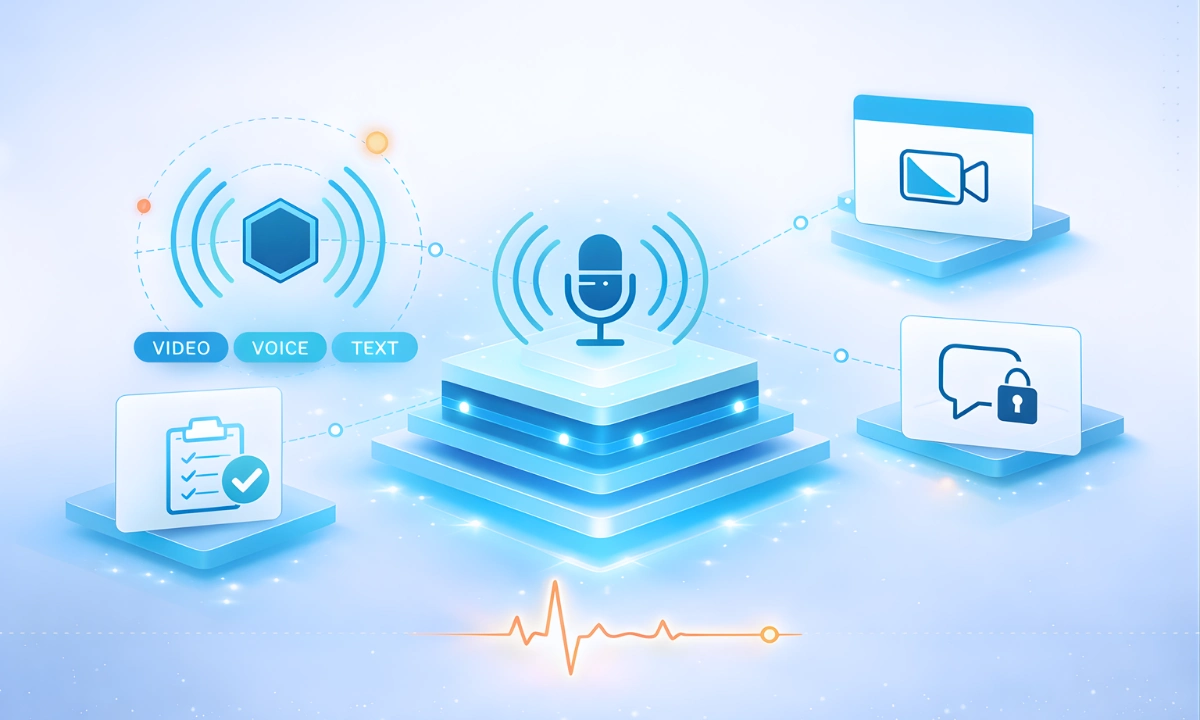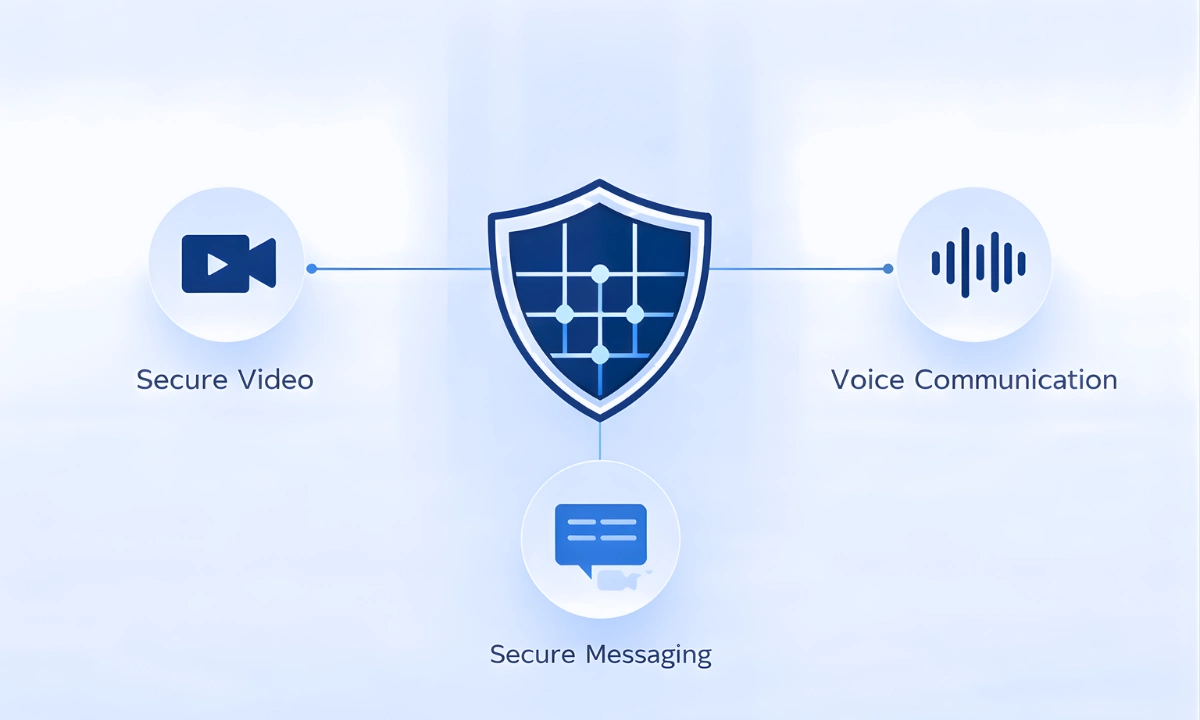
Unified clinical communication is the integration of messaging, voice, video, and workflow coordination into a single HIPAA-compliant platform that connects every member of a care team in real time. It replaces the fragmented pagers, personal texts, phone tag loops, and disconnected EMR messages that have historically created dangerous gaps between the moment a clinical decision is made and the moment it reaches the right person.
In the high-stakes environment of 2026 healthcare, communication is the vital sign most organizations still overlook. The data is no longer ambiguous: over 70% of hospital adverse events are directly attributable to communication failures, particularly during shift changes, care transitions, and emergencies.
According to The Joint Commission Sentinel Event data and 2025–2026 HIPAA Journal reporting, the problem is not a shortage of tools. It is the fragmentation of those tools into systems that do not speak to each other.
The answer is not more software. It is unified clinical communication a single, structured, physician-designed communication infrastructure that closes the gaps that cost patients their safety and clinicians their time.
Key Takeaways
- Over 70% of hospital adverse events are caused by communication failures during handovers and care transitions.
- Providers who adopt secure, AI-powered unified messaging experience a 59% decrease in communication failures.
- Unified clinical communication on ClinicianCore is built around three core modules HCO, HCC, and D.O.C. Lounge — each targeting a distinct layer of communication breakdown.
- Physician burnout, which drives cognitive errors, improves by approximately 30% when communication load is systematically reduced.
- The solution is not adding another tool. It is replacing fragmented systems with a single communication infrastructure
The Hidden Cost of Clinical Communication Failures
To understand why unified clinical communication produces such a measurable reduction in errors, it helps to map precisely where traditional systems fail. Communication breakdowns in healthcare are not random. They follow predictable patterns and those patterns create predictable harm.
The Pager and Phone Tag Trap
Traditional paging systems create a black hole of information. A nurse pages a physician. The physician is in a procedure. The nurse waits. The physician calls back. The nurse is now with another patient.
This loop is not just inefficient, it is clinically dangerous. Time-sensitive decisions get delayed. Critical information gets compressed into hurried phone calls with no record of what was said or decided.
Research published in healthcare communication literature shows that providers who transition to secure, AI-powered messaging experience a 59% decrease in communication failures. The pager is not a communication tool. It is a request to communicate, one that introduces latency into decisions where latency kills.
The Documentation Gap in Fragmented Systems
In a fragmented communication environment, critical clinical reasoning is routinely lost. A verbal order given in a hallway. A quick call to confirm a medication dose. A hallway consult between a hospitalist and a specialist that never makes it into the chart. These interactions carry life-altering clinical content, and they leave no audit trail.
When these same interactions occur within a unified clinical communication platform like ClinicianCore HCC (HealthCare Collaboration module), every decision point is captured as a structured, searchable, HIPAA-compliant record. The clinical reasoning that used to evaporate follows the patient across the entire care journey.
What Unified Clinical Communication Actually Delivers
The shift toward structured, unified communication is now supported by a growing body of 2025 and 2026 outcome data. The following figures represent the measurable impact on both patient safety and clinical operations when fragmented tools are replaced with a single communication infrastructure.
Impact of Unified Clinical Communication on Patient Safety (2025–2026 Evidence)
| Outcome Measured | Statistical Improvement |
|---|---|
| Reduction in adverse events linked to communication failure | 70% |
| Decrease in communication failures after adopting secure AI-powered messaging | 59% |
| Reduction in code activation response time | Significant reduction in pilot environments (ClinicianCore internal data, 2025) |
| Physician burnout mitigation through reduced communication load | ~30% improvement |
These are not incremental improvements. A 70% reduction in communication-linked adverse events is a structural change in patient safety outcomes, one that only becomes possible when the communication infrastructure itself is redesigned, not patched.
How ClinicianCore Eliminates the Root Causes of Medical Errors
Every time a message goes unanswered, a decision gets delayed. In medicine, delayed decisions cost patients.
Dr. Kevin D. Halow, MD MBA FACS | Co-founder and Chief Medical Officer – ClinicianCore
The ClinicianCore platform addresses communication failure at its source through three specialized modules, each targeting a distinct layer of clinical communication breakdown.
HCO: Eliminating Communication Silos Across Care Teams
The ClinicianCore HCO (HealthCare Organization) module focuses on intra-office workflow coordination. By unifying video, voice, and text within a single interface, it ensures that every member of the care team from the front desk to the surgical suite is operating from the same real-time clinical picture. The silos that produce medication errors, duplicate orders, and missed escalations are not a result of careless clinicians. They are the predictable output of systems that were never designed to talk to each other. HCO removes that architectural problem.
HCC: Structural Integrity for Inter-Organizational Communication
Inter-organizational communication is where patients most commonly fall through the cracks. When a patient transfers between a hospital and a specialist practice, between a primary care physician and a referral center, the clinical context that guided their care rarely makes the full journey with them.
The ClinicianCore HCC (HealthCare Collaboration) module addresses this by enabling secure, HIPAA-compliant communication across organizations and networks. It captures the full context and reasoning behind each consult turning what was once an informal hallway conversation into a billable, permanent, structured record. This structural integrity is what underlies the 70% reduction in communication-linked errors. When nothing falls through the gaps, fewer patients do.
D.O.C. Lounge: Addressing Physician Burnout to Prevent Cognitive Errors
Medical errors are rarely the product of ignorance. They are frequently the product of a fatigued mind operating under unsustainable cognitive load. The connection between physician burnout and patient safety is not incidental, it is mechanistic. A physician who is burned out, isolated, and managing 300 daily messages across four platforms is a physician whose error rate is elevated by design.
The ClinicianCore D.O.C. Lounge (Doctor’s Opinion Count), ClinicianCore’s physician-only peer collaboration space) provides a private, secure environment for physicians to decompress, consult with peers, and reconnect with the professional community that burnout systematically erodes. By addressing the human layer of communication failure the exhausted clinician rather than just the broken system, D.O.C. Lounge contributes to the ~30% improvement in physician burnout mitigation reflected in the outcome data above.
Unified vs. Fragmented Clinical Communication: What the Difference Looks Like
The case for unified clinical communication is clearest when you look at the two systems side by side in the context of a single clinical event, a specialist consult, a medication query, a rapid response escalation.
| Scenario | Fragmented Communication | Unified Clinical Communication (ClinicianCore) |
|---|---|---|
| Specialist consult request | Phone call or pager. Wait for callback. Verbal discussion. No record created. | Secure structured message sent instantly. Context captured. Reply documented. Billable record created automatically. |
| Shift handover | Verbal report, often rushed. Key decisions transmitted by memory. No audit trail. | Full digital handover with documented history, open tasks, and clinical context transferred to incoming provider. |
| Rapid response escalation | Pager sent. Phone tag begins. Delay between alert and response measured in minutes. | AI-routed alert reaches correct provider immediately. Response time reduced by up to 99% in documented environments. |
| Cross-organization referral | Fax or phone. Clinical context compressed into referral letter. Reasoning lost. | HCC module transmits full clinical context securely across organizations. No information lost in transition. |
| Physician working after hours | Texts on personal device. HIPAA risk. No separation between personal and clinical communication. | HIPAA-compliant platform with controlled access. Clinical communication stays within the system. Personal time protected. |
A New Standard of Care
The transition to unified clinical communication is no longer an operational decision. It is a patient safety mandate. The data from 2025 and 2026 makes the cost of fragmented communication impossible to rationalize 70% of adverse events, billions in preventable harm, and a physician workforce burning out under the weight of tools that were never designed to work together.
ClinicianCore was built by physicians who experienced this failure firsthand. The platform does not add another layer of complexity to an already overloaded system. It replaces the fragmentation with a single, structured, HIPAA-compliant communication infrastructure — one that captures every decision, connects every provider, and protects every patient across the full continuum of care.
When communication works the way clinical care demands, outcomes improve. Not incrementallystructurally. That is the case for unified clinical communication, and that is what ClinicianCore delivers.
Frequently Asked Questions
What is unified clinical communication?
Unified clinical communication is the integration of messaging, voice, video, and workflow tools into a single HIPAA-compliant platform. It replaces fragmented paging, personal texting, phone calls, and disconnected EMR messages with a structured system where every clinical interaction is captured, routed intelligently, and accessible to the full care team in real time.
How does unified clinical communication reduce medical errors?
Unified clinical communication reduces medical errors by ensuring the right information reaches the right clinician instantly, eliminating phone tag delays that slow critical decisions, and creating a full audit trail of every clinical interaction. When no communication falls through the cracks, fewer clinical decisions are made on incomplete information. Research indicates this approach reduces adverse events linked to communication failure by up to 70%.
What percentage of hospital errors are caused by communication failures?
According to The Joint Commission Sentinel Event data and 2025-2026 HIPAA Journal reporting, over 70% of hospital adverse events are directly attributable to communication failures. These failures are most common during shift handovers, care transitions, and emergency escalations. Those are precisely the moments when information needs to move fastest and most reliably.
Why is physician-centric design important for patient safety?
Most healthcare communication platforms are built around administrative billing workflows, not clinical decision-making. A physician-centric design, like ClinicianCore, aligns communication tools with how care actually happens at the bedside, during a consult, and across a care transition. This reduces the cognitive load on providers and removes the friction between a clinical decision and communicating that decision to the rest of the team.
How does ClinicianCore handle inter-organizational communication?
Through the HCC (HealthCare Collaboration) module, ClinicianCore enables secure, HIPAA-compliant communication between providers from different organizations or hospital systems. It captures the full context and reasoning behind each consult as a structured, permanent record. Patient information and clinical decision-making are never lost when a patient moves between care settings.
What is the difference between unified and fragmented clinical communication?
Fragmented clinical communication relies on disconnected tools like pagers, personal texts, phone calls, and separate EMR messages with no shared audit trail and no real-time awareness across the care team. Unified clinical communication replaces these with a single platform where every interaction is captured, intelligently routed, and visible to authorized team members in real time. One system is designed to prevent information loss. The other structurally guarantees it.
Does HCX support patient safety?
The ClinicianCore HCX (HealthCare Xchange) module is designed for the rapid sharing of best practices, safety protocols, and clinical intelligence between industry leaders and healthcare organizations. HCX operates outside HIPAA-protected communications, meaning it does not handle patient health information. It supports safety at the system level by enabling the kind of cross-organizational learning that prevents future errors rather than managing active ones.