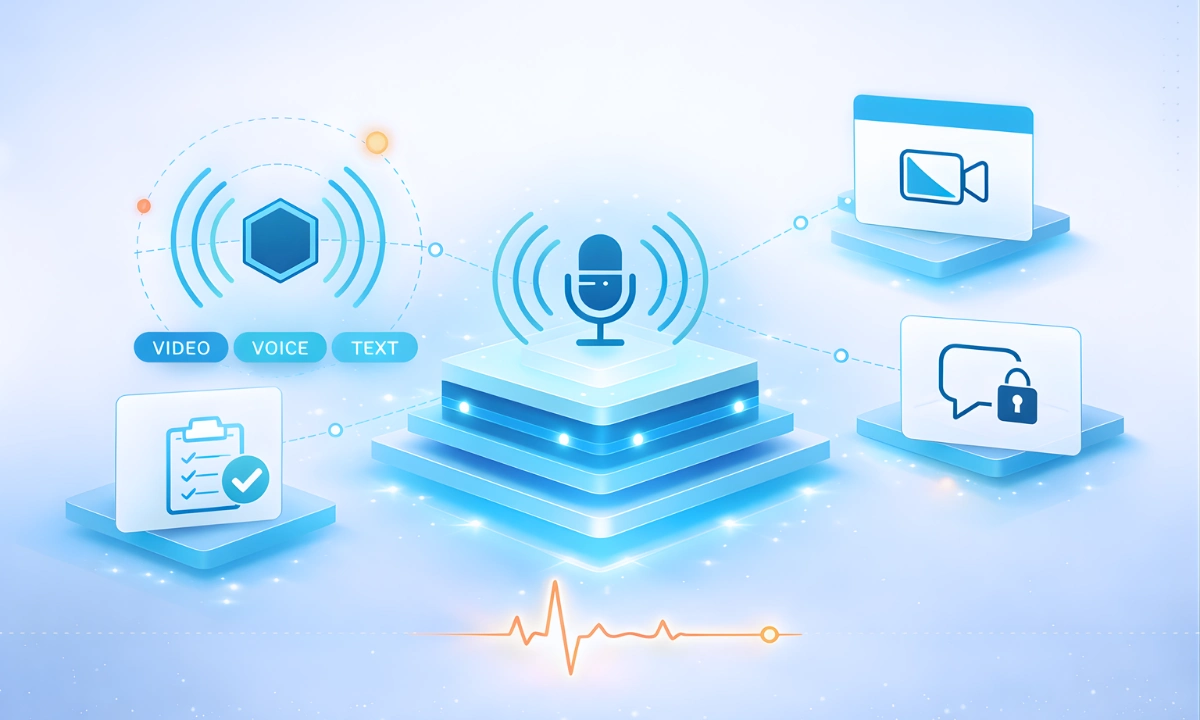
How AI improves clinical communication is no longer a theoretical discussion. Healthcare communication challenges are not caused by lack of effort, but by systems that were never designed as intelligent infrastructure.
Summary
Healthcare communication challenges are not caused by lack of effort. They stem from systems that were never designed as intelligent infrastructure. Many hospitals and practices still depend on fragmented tools, reactive alerts, and manual documentation processes that increase cognitive load instead of reducing it.
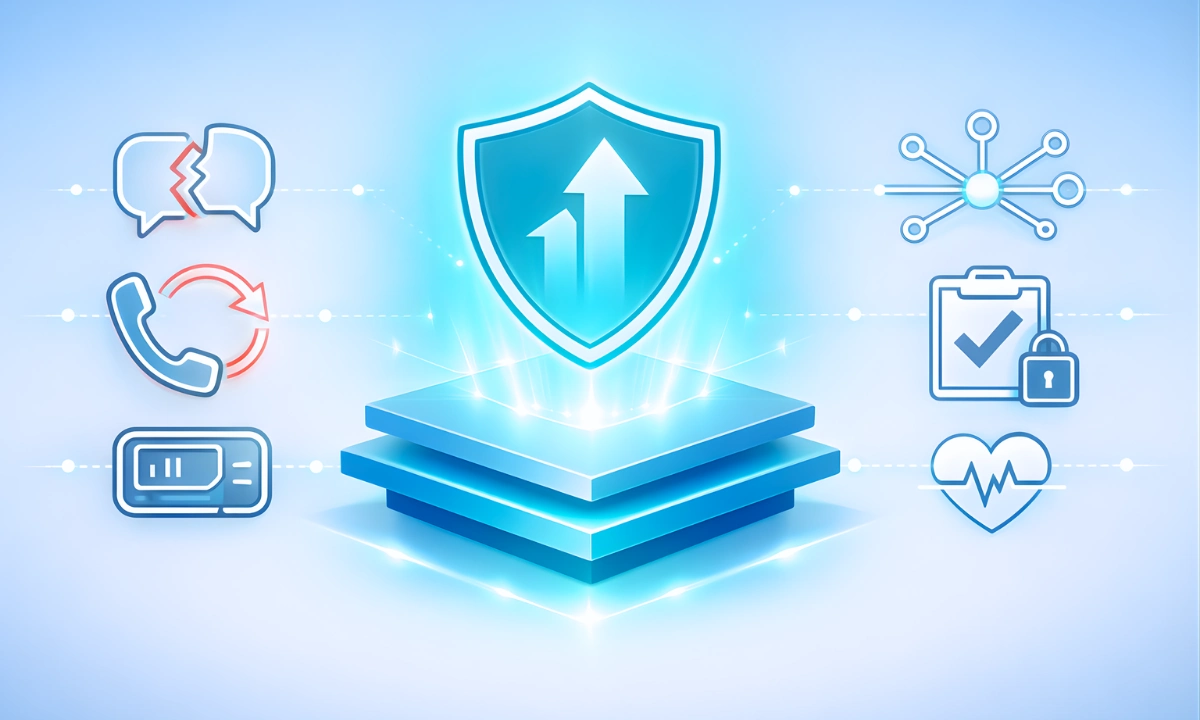
An AI clinical communication platform shifts communication from reactive messaging to coordinated orchestration. Rather than functioning as secure chat alone, it serves as a clinical coordination layer—automating documentation, prioritizing urgent communication, reducing alert fatigue, and enabling secure interoperability across teams.
When implemented strategically, this approach reduces administrative burden, improves patient safety, strengthens compliance oversight, and restores measurable time to physicians. For healthcare leaders, this represents a structural evolution in how communication supports care delivery.
Key Takeaways
| Area | Core Insight |
|---|---|
| Infrastructure Shift | AI clinical communication platforms act as intelligent coordination layers, not just secure messaging tools. |
| Operational Impact | Automation reduces administrative burden and improves response time across care teams. |
| Patient Safety | Smart routing and predictive alerting reduce communication delays and medical errors. |
| Burnout Reduction | Reducing alert fatigue and documentation overload addresses structural drivers of physician burnout. |
| Executive Value | Improved coordination, lower liability exposure, and consolidated tools translate into measurable ROI. |
What Is an AI Clinical Communication Platform?
An AI clinical communication platform is an intelligent infrastructure within a broader unified clinical communication strategy. That utilizes natural language processing and machine learning to automate clinical documentation, streamline messaging workflows, and prioritize critical alerts. It seamlessly connects disparate systems to ensure real-time, context-aware information exchange across healthcare teams.
What an AI Clinical Communication Platform Is Not
An AI clinical communication platform is not:
- A consumer messaging app with encryption added later
- A standalone alert system that increases notification noise
- A basic transcription tool disconnected from workflow
- A generic enterprise chat platform repurposed for healthcare
Instead, it is a physician-aware infrastructure layer designed specifically for clinical environments, integrating intelligent routing, documentation automation, predictive alerting, and HIPAA-compliant collaboration into a unified system.
A comprehensive platform serves multiple foundational functions:
- Automates routine administrative tasks and clinical documentation to free up clinicians’ time for direct patient care.
- Facilitates secure, real-time data exchange and seamless information flow among different healthcare professionals involved in a patient’s care.
- Analyzes patient data to proactively identify potential risks and trigger smart alerts for relevant care team members.
- Breaks down information silos between disparate Electronic Health Records (EHRs) to enable a holistic view of patient data.
Why Traditional Clinical Communication Fails at Scale
Historically, healthcare communication has relied heavily on manual processes such as phone calls, emails, faxes, and in-person meetings. While these legacy methods remain somewhat relevant, they consistently suffer from profound inefficiencies and the constant potential for miscommunication. As health systems scale, these fragmented workflows become unsustainable.
Clinicians are continuously bombarded with vast amounts of patient data, research findings, and administrative information, creating an information overload that makes it challenging to quickly extract and synthesize relevant details. Compounding this issue are severe time constraints; the demanding nature of clinical practice leaves limited time for lengthy communication exchanges, often leading to rushed or incomplete information sharing.
A 2022 analysis found that U.S. physicians spent on average 1.77 hours per day completing documentation outside office hours, significantly contributing to workload and burnout.
Communication breakdowns remain a leading contributor to preventable medical errors, with miscommunication implicated in up to 80% of serious adverse events according to industry safety reports.
As organizations scale, these inefficiencies compound—expanding operational cost, increasing compliance exposure, and accelerating physician burnout.
Understanding how AI improves clinical communication requires first recognizing the structural limitations of traditional systems.
Furthermore, traditional Electronic Health Records (EHRs), while intended to improve information flow, frequently create data silos when different systems are not interoperable. This lack of interoperability hinders seamless data exchange between providers and institutions. When combined with varying levels of technical expertise, language differences, and rigid hierarchical structures, these silos create formidable communication barriers within healthcare teams.
Managing the care of patients with multiple comorbidities requires intricate coordination among numerous specialists to ensure a cohesive treatment plan. When communication is inefficient, the risk of errors escalates dramatically, leading to misunderstandings, costly delays in diagnosis or treatment, and ultimately, medical errors. Overcoming these structural failures requires medical practice efficiency improvements supported by intelligent systems.
How AI Improves Clinical Communication in Practice
Modern AI-driven systems demonstrate how AI improves clinical communication by resolving the bottlenecks of traditional workflows.
AI-Powered Documentation & Ambient Clinical Intelligence
Documentation is a primary source of administrative strain. AI algorithms equipped with Natural Language Processing (NLP) can analyze spoken language during patient encounters or multidisciplinary team meetings to automatically generate accurate clinical notes, discharge summaries, and referral letters. These AI documentation tools for physicians drastically lighten the administrative load, allowing them to dedicate more time to meaningful patient interaction.
At the leading edge of this capability is the ambient clinical intelligence platform. Ambient Clinical Intelligence (ACI) systems utilize microphones and cameras to passively capture the context of a patient encounter, generating clinical documentation without requiring active, manual input from the clinician. This technology promises to further streamline documentation workflows and enhance the overall quality of patient-physician interactions.
Smart Routing & Intelligent Message Prioritization
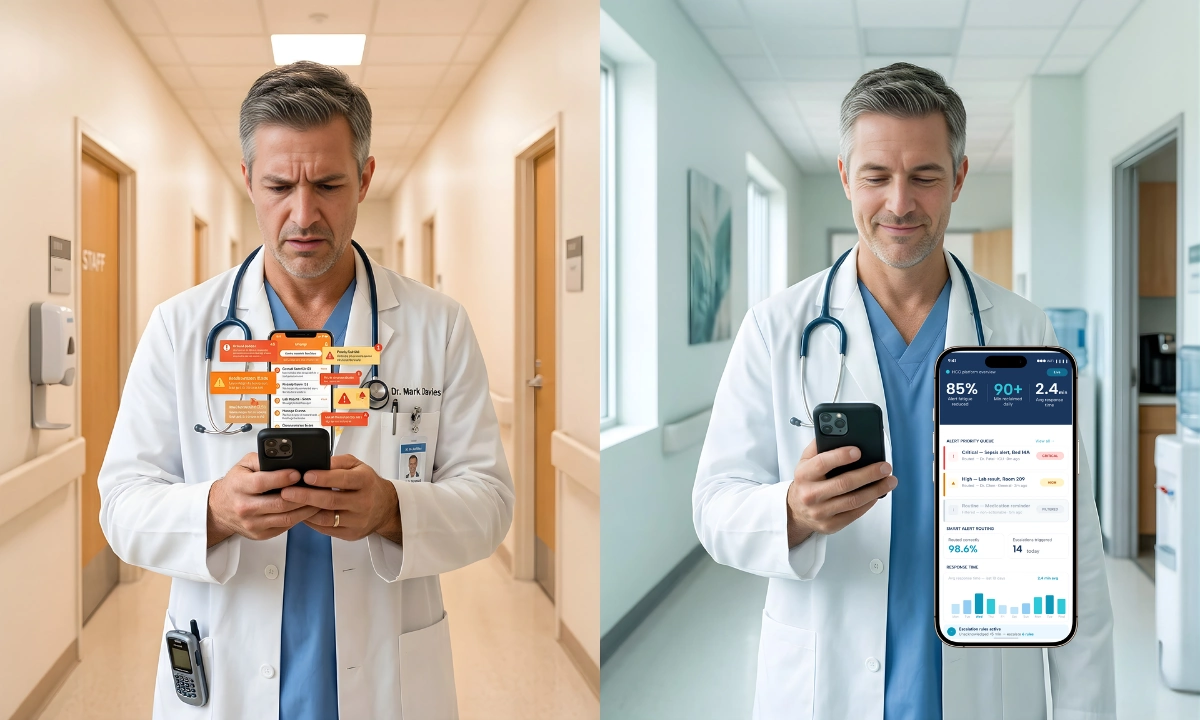
Effective collaboration requires that the right information reaches the right provider at the right time. AI-powered clinical messaging platforms offer advanced features such as automated message routing and intelligent summarization of lengthy communication threads. Through smart routing healthcare algorithms, these systems prioritize messages based on clinical urgency. This targeted routing ensures that critical information is delivered to the appropriate person promptly and efficiently, reducing alert fatigue.
Additionally, AI-powered virtual assistants can manage routine communication tasks, such as scheduling appointments and providing patients with pre- and post-visit instructions. This lowers the operational workload for clinical staff while simultaneously enhancing patient engagement.
In a hospital setting, this might mean that a critical lab result is automatically routed to the responsible physician, escalated if unread within a defined timeframe, and documented in the patient record without requiring manual duplication. The system reduces both response delay and administrative overhead simultaneously.
Predictive Analytics & Proactive Alerts
Transitioning from reactive to proactive care requires advanced foresight. Predictive analytics in healthcare communication allows AI algorithms to analyze vast amounts of patient data to identify individuals at high risk of adverse events or hospital readmissions. This enables targeted interventions and proactive communication to prevent negative clinical outcomes.
Moreover, smart alert systems can continuously monitor patient data to identify critical changes in condition, automatically alerting the relevant members of the care team. This predictive clinical alerting facilitates immediate, proactive intervention and directly improves patient safety. AI can also optimize resource allocation by predicting patient flow and resource needs, allowing organizations to proactively communicate with staff.
AI-Enabled EHR Interoperability
A unified healthcare communication infrastructure depends on data fluidity. AI plays a crucial role in facilitating data exchange between disparate EHR systems and communication platforms. AI-enabled EHR interoperability breaks down deeply entrenched information silos, providing a holistic, comprehensive view of patient information for all professionals involved in their care. However, for AI to effectively facilitate this level of collaboration, the adoption of standardized data formats and robust interoperability protocols is required.
Unlike standalone secure messaging platforms that primarily focus on encrypted chat functionality, a true AI clinical communication platform integrates intelligence directly into the workflow layer. Secure messaging is foundational, but intelligent orchestration is transformative.
The difference lies in moving from message transmission to clinical coordination.
Secure & HIPAA-Compliant Infrastructure
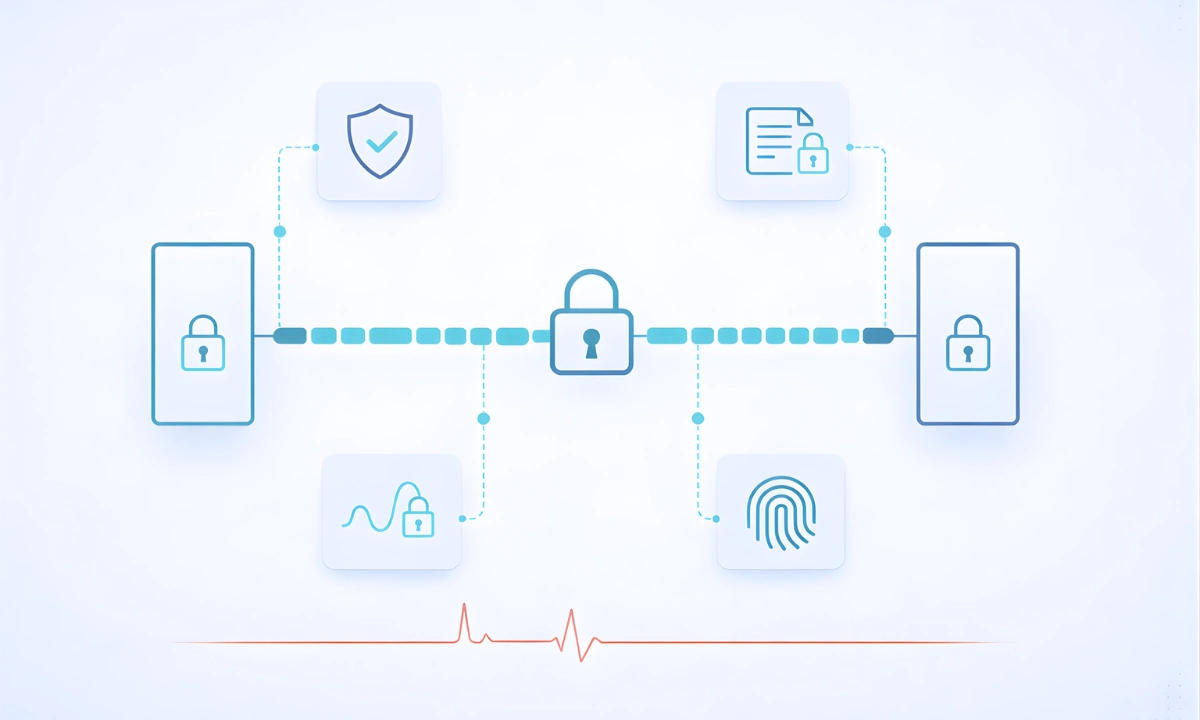
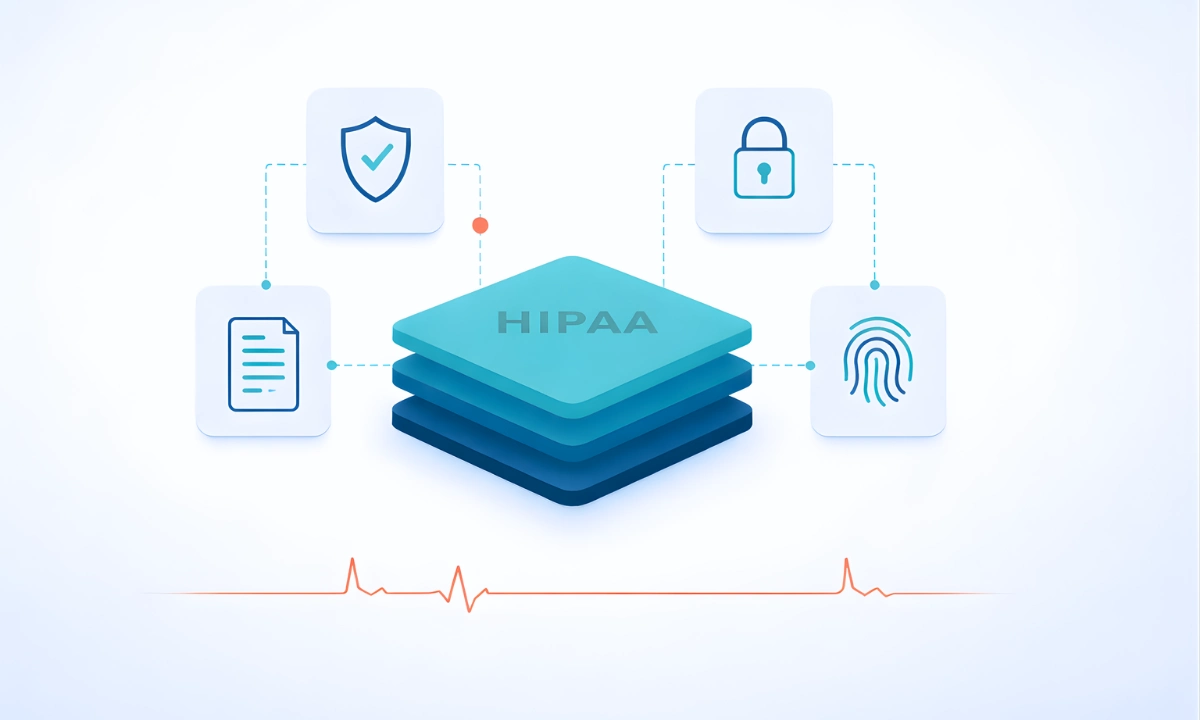
The deployment of any intelligent communication tool must be built upon a foundation of absolute security. Access to and use of sensitive patient data by AI systems must adhere to strict privacy regulations, such as HIPAA in the United States and GDPR in Europe. Organizations must ensure that robust security measures are explicitly in place to prevent data breaches when utilizing HIPAA-compliant collaboration frameworks.
Measurable Benefits of AI in Clinical Communication
The integration of AI into clinical communication workflows yields highly quantifiable benefits for patients, clinicians, and the broader healthcare system.
At a systemic level, these outcomes reflect how AI improves clinical communication across clinical, operational, and administrative domains.
- Reduced administrative burden: Automating documentation, streamlining communication workflows, and handling routine inquiries frees up clinicians’ time to focus heavily on direct patient care.
- Improved patient safety: Accurate information sharing, reduced risk of miscommunication, and timely clinical alerts contribute directly to a safer healthcare environment.
- Enhanced care coordination: AI facilitates seamless, cross-departmental information exchange and collaboration among the various healthcare professionals involved in a patient’s care journey.
- Operational efficiency gains: Improved efficiency, proactive interventions, and reduced medical errors can contribute significantly to lower healthcare costs in the long run.
- Burnout reduction potential: By reducing alert fatigue, after-hours documentation, and fragmented messaging interruptions, intelligent communication systems directly address structural contributors to physician burnout.
Strategic ROI for Healthcare Leadership
From a strategic standpoint, this is where understanding how AI improves clinical communication becomes directly tied to measurable performance outcomes.
- Reduced liability exposure through structured audit trails
- Lower turnover costs driven by physician burnout reduction
- Faster care coordination improving patient throughput
- Revenue recovery from previously undocumented consult interactions
- Consolidation of fragmented tools reducing IT complexity
When modeled across a mid-sized hospital system, even modest improvements in response time and documentation efficiency translate into measurable financial impact.
Traditional vs. AI-Powered Clinical Communication
| Feature | Traditional Clinical Communication | AI Clinical Communication Platform |
| Data Capture | Relies heavily on manual processes like phone calls, faxes, and written notes. | Utilizes Ambient Clinical Intelligence for passive context capture and automated documentation. |
| Information Flow | Often suffers from information silos, hindering seamless data exchange between providers. | Promotes AI-enabled interoperability to break down silos and enable a holistic view of patient data. |
| Alerting & Routing | Reactive communication pathways that can lead to delayed treatments and medical errors. | Features smart alert systems and automated message routing based on clinical urgency. |
| Documentation | Time-consuming processes that limit the time available for direct patient interactions. | Leverages real-time NLP transcription to accurately generate clinical notes without manual input. |
Addressing Security, Bias, and Compliance Concerns
While the capabilities of AI are transformative, successful integration requires navigating complex ethical and operational challenges.
Data privacy remains the foremost consideration; platforms must maintain rigorous adherence to regulatory frameworks to secure sensitive patient health information. Furthermore, algorithm bias presents a critical clinical risk. AI algorithms are trained on historical data; if that data reflects existing biases in healthcare, the system may perpetuate or amplify these biases, leading to disparities in care. It is crucial for developers to validate AI algorithms using diverse and representative datasets.
Trust and transparency are also mandatory for clinical adoption. Clinicians need to clearly understand how AI algorithms function and must be able to trust their outputs. Transparency in AI development, coupled with the explainability of AI-driven recommendations, is crucial for fostering this trust. Finally, implementing these tools requires careful consideration of workflow integration; poorly integrated systems can create an additional operational burden and disrupt established clinical processes.
The Strategic Role of AI in Unified Clinical Communication
The future of clinical communication will not be defined by faster messaging alone, but by smarter coordination. As AI becomes more embedded in healthcare operations, the critical question is whether communication systems can be intelligently orchestrated across departments, roles, and care settings without adding friction to workflow.
To explore how these technologies are shaping the broader operational landscape, executives can explore broader healthcare AI and innovation insights.
Conclusion: From Communication Chaos to Intelligent Collaboration
Understanding how AI improves clinical communication helps healthcare leaders evaluate infrastructure decisions more strategically.
AI clinical communication platforms hold immense potential to transform clinical collaboration, addressing chronic systemic challenges and paving the way for a highly efficient, safe, and patient-centered healthcare system.
Realizing this transformative potential, however, requires careful, strategic consideration of ethical implications, data privacy, and the absolute need for seamless workflow integration. The integration of AI is not merely a technological upgrade; it is a profound opportunity to foster a more connected, informed, and ultimately, more humanistic approach to healthcare.
For healthcare organizations evaluating long-term communication infrastructure decisions, understanding how intelligent coordination integrates into existing clinical workflows is a critical first step.
Frequently Asked Questions
How does AI improve clinical communication in healthcare settings?
At its core, how AI improves clinical communication comes down to intelligent prioritization, automation, and secure interoperability.
How does AI reduce medical communication errors?
AI improves clinical accuracy by actively analyzing patient data in real time, flagging potential health risks, and routing critical alerts to the appropriate healthcare providers. This intelligent routing ensures timely, context-rich communication and significantly reduces the chances of miscommunication or missed clinical information.
Can AI communication tools integrate with EHR systems?
Yes. Modern AI communication platforms are explicitly designed for interoperability, enabling seamless integration with Electronic Health Records (EHRs) and other clinical tools. This integration eliminates data silos, promotes continuity of care, and ensures that all care team members possess access to the same up-to-date patient information.
Is AI-powered messaging HIPAA compliant?
Access to and use of sensitive patient data by AI systems must strictly adhere to privacy regulations, including HIPAA in the United States. AI-powered messaging platforms must implement robust, enterprise-grade security measures to prevent data breaches and ensure secure clinical collaboration.
Does AI replace clinical judgment?
No. While AI can significantly augment human capabilities, healthcare remains fundamentally a human endeavor. AI is designed to enhance, not replace, the crucial role of human interaction, clinical empathy, and the final clinical judgment of medical professionals in patient care.