The Future of Collaborative Care Is Now: (Interprofessional internet consultation)
In the fast-paced world of modern medicine, a primary care provider often faces complex cases that brush up against the edges of their expertise. Imagine a family physician, Dr. Anya Sharma, treating a 68-year-old patient with well-managed diabetes who suddenly develops a perplexing skin rash. Is it a drug reaction? An atypical infection? A sign of something more systemic? In the past, the only option was a formal referral, meaning weeks or even months of waiting for the patient to see a dermatologist, causing delays in care and significant patient anxiety.
Today, there’s a better way: the interprofessional consultation (eConsult in healthcare), a modern approach that drives collaborative care in healthcare.
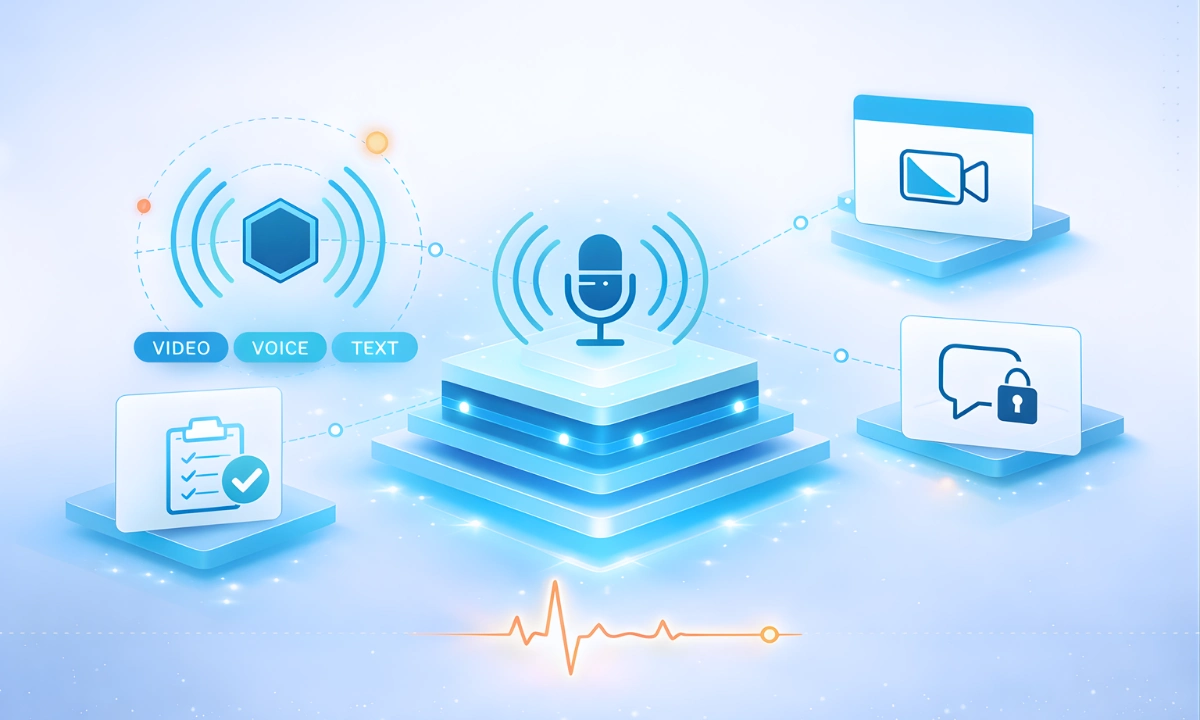
This powerful tool allows Dr. Sharma to connect electronically with a specialist to get an expert opinion quickly and efficiently. This interprofessional consultation, supported by unified communication platforms, allows secure provider-to-provider collaboration through EHR, messaging, or calls, enhancing patient care without patient presence. When facilitated by modern unified communication platforms, this process becomes even more seamless. It’s a game-changer for improving access, reducing healthcare costs, and fostering a more collaborative, integrated care model.
This deep dive will explore the nuances of these consultations, from the specific billing codes and documentation requirements to real-world examples that illustrate their profound impact on daily practice.
What Exactly Is an Interprofessional Consultation?
An interprofessional internet consultation (also known as an eConsult or E-Consult) is an asynchronous or synchronous communication between two healthcare professionals to discuss a patient’s care. It is initiated by the patient’s primary or treating clinician (the “requesting/treating provider”) who seeks the expert advice of a specialist (the “consultant”).
The key feature that distinguishes it from a traditional referral is that the consultant provides their assessment and recommendations back to the requesting provider without seeing the patient in person. The requesting provider then uses this expert advice to continue managing the patient’s care.
The process typically looks like this:
- The Request: The treating provider identifies a clinical question about a patient that requires specialist input.
- The Communication: They send a concise consult request, often through a secure EHR portal or a dedicated communication platform, including relevant history, exam findings, lab results, and images.
- The Review: The specialist consultant reviews the provided information.
- The Report: The consultant formulates their opinion and recommendations and sends a written report back to the treating provider.
- The Action: The treating provider incorporates the specialist’s advice into the patient’s treatment plan.
This model is incredibly efficient. It keeps the patient within their medical home, avoids unnecessary specialist visits, reduces patient travel time and costs, and provides timely answers to pressing clinical questions.
A Critical Distinction: Why These Are NOT Telehealth Services
One of the most common points of confusion is whether interprofessional consults are considered “telehealth.” The answer is a definitive no. This distinction is crucial for compliance and billing.
Here’s why:
- Patient Presence: The defining characteristic of a telehealth service, according to both the CMS and the CPT codebook, is a real-time, interactive audio-visual communication between the provider and the patient. In an interprofessional consultation, the communication takes place solely between healthcare providers, without the patient’s direct involvement. The discussion is exclusively between two or more healthcare professionals.
- Official Service Lists: These consultation codes are not included on either CMS’s or CPT’s official lists of approved telehealth services. Telehealth services have specific billing modifiers (like modifier 95) and place of service codes that do not apply to interprofessional consults.
Think of it like this: Telehealth is a virtual house call where you see the patient. An interprofessional consult is a secure, documented call or message to a colleague to discuss a case. Both are vital, but they are fundamentally different services with different rules and codes.
Navigating the Billing Codes: A Practical Guide
CMS recognizes the value of these provider-to-provider collaborations and provides a specific set of codes for reimbursement. Understanding these codes is essential for getting paid for the valuable time and expertise invested in these consults.
As of a 2023 update, these services can be reported by physicians as well as other qualified health care professionals (QHPs) who have Evaluation and Management (E/M) services within their scope of practice, such as Physician Assistants (PAs) and Advanced Practice Nurses (APNs).
For the Requesting/Treating Provider
CPT 99452: Interprofessional referral service delivered via phone, internet, or electronic health record by the treating or requesting physician, or another qualified healthcare professional, covering 16–30 minutes of consultative time.
Time Requirement: This code is for spending 16-30 minutes of medical consultative time.
For the Consultant (The Specialist)
- CPT 99451: Interprofessional assessment and management conducted through phone, internet, or electronic health record by a consulting physician, which includes preparing a written report for the patient’s treating or requesting provider or another qualified healthcare professional, 5 1or more minutes of medical consultative time.
The applicable codes are determined by the total amount of time the consultant devotes to the case:
- CPT 99446: For 5-10 minutes
- CPT 99447: For 11-20 minutes
- CPT 99448: For 21-30 minutes
- CPT 99449: For 31 minutes or more
Spotlight on Behavioral Health: The New “G” Codes
Recognizing the critical need for better integration of behavioral and mental health services, CMS introduced a dedicated set of HCPCS codes in 2025 for behavioral health interprofessional consultations. These “G” codes (G0546–G0551) bridge the gap for vital behavioral health professionals like LCSWs and MFTs, who cannot bill the general E/M-based CPT codes, allowing for reimbursed consultations between primary care and behavioral health teams. They are instrumental in supporting collaborative care models where a patient’s physical and mental health are managed holistically.
Putting It Into Practice: Real-World Scenarios
Let’s see how these consultations work in a tech-enabled environment.
Scenario 1: The Complex Rash (Primary Care & Dermatology)
- Patient: Emma, a 55 year old with rheumatoid arthritis on multiple medications, develops a painful rash.
- Requesting Clinician:Maria, a Physician Assistant (PA). A dermatology referral has a three-month waitlist.
- Action:Maria decides an eConsult is the best course. Using her clinic’s unified communication platform, such as HCPN’s ClinicianCore, she initiates the consult. The platform allows her to pull Sarah’s medication list directly from the EHR, attach high-resolution photos of the rash, and use a structured template to type her specific question for the dermatologist. The platform’s built-in timer logs her work. Her total time is 25 minutes.
- Billing for Maria (PA): Because she spent 25 minutes preparing and initiating the consult, the clinic can bill CPT 99452.
- Consulting Clinician: Dr. Lee, a dermatologist. He receives the eConsult notification on his mobile device via the secure platform.
- Action: In the platform, Dr. Lee reviews the structured request, Sarah’s history, and the photos. He determines it is classic shingles. He types his comprehensive written report directly into the platform, recommending an immediate antiviral prescription. The platform tracks his time, which totals 18 minutes. The entire conversation is saved as a single, time-stamped thread.
- Billing for Dr. Lee: Based on his 18 minutes of work, his practice bills CPT 99447.
Scenario 2: The Behavioral Health Integration (Primary Care & Psychiatry)
- Patient: John, 42, is being treated for hypertension and anxiety by his PCP. His anxiety is not improving with a standard SSRI.
- Requesting Clinician: Dr. Wallace, John’s PCP.
- Action:Dr. Wallace initiates an eConsult with a psychiatrist through his health system’s communication platform. The platform helps him route the request to an available psychiatrist and provides a template specifically for behavioral health consults.
- Consulting Clinician: Dr. Chen, a psychiatrist.
- Action:Dr. Chen receives the request. She uses the platform to review John’s chart and Dr. Wallace’s notes. After researching potential interactions, she formulates a detailed plan. The platform’s timer records her cumulative time on the case at 35 minutes. She sends her detailed written recommendations back to Dr. Wallace through the platform, creating a permanent, auditable record.
- Billing for Dr. Chen: As a behavioral health specialist consultant who spent 35 minutes, her practice bills HCPCS G0551.
Streamlining Collaboration: The Role of Unified Communication Platforms
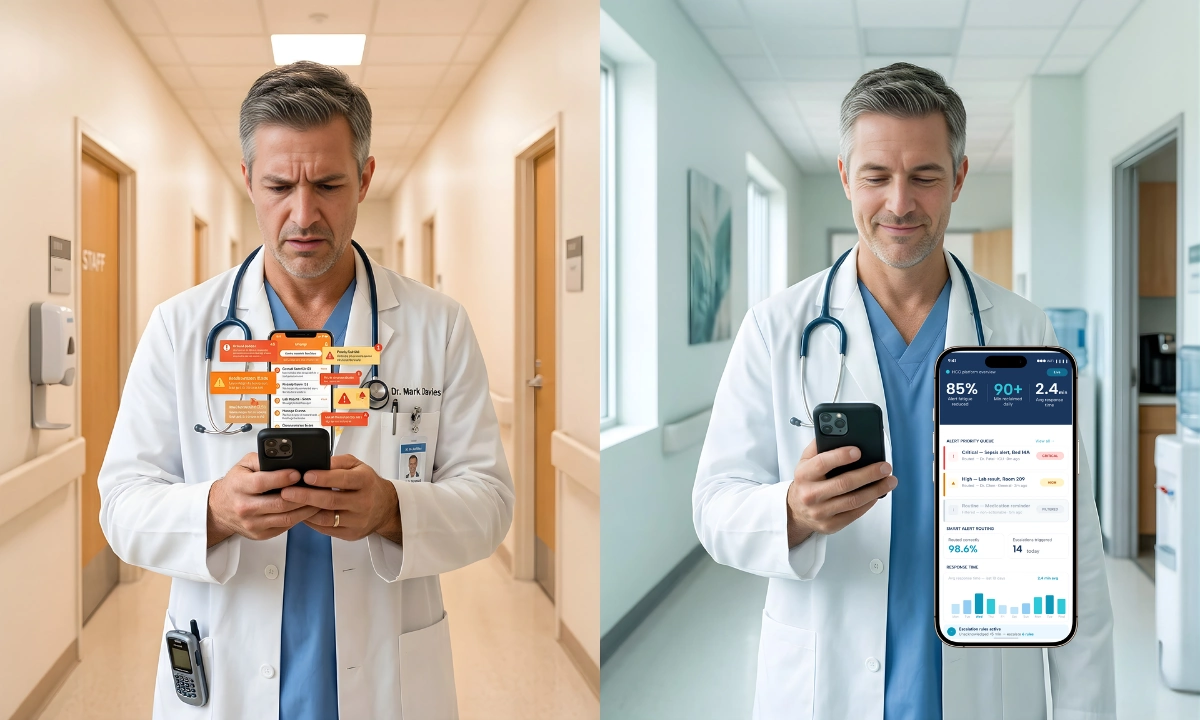
While eConsult in healthcare can be done through basic EHR messaging or phone calls, the process is often clunky and hard to document. Purpose-built unified communication platforms solve these issues seamlessly. This is where dedicated, HIPAA-compliant communication platforms, such as HCPN’s ClinicianCore, become essential enablers.
These platforms are designed specifically for the workflow of clinical collaboration and solve many of the logistical headaches associated with eConsults.
Key benefits include:
- Seamless EHR Integration: The best platforms integrate directly with the EHR. This allows the requesting provider to launch a consult from within the patient’s chart, automatically pulling in demographics, medication lists, problem lists, and recent lab results. This eliminates time-consuming manual data entry and reduces the risk of transcription errors.
- Accurate Time Tracking: Since many of the billing codes are time-based, accurate tracking is critical for compliance and proper reimbursement. Platforms like ClinicianCore can include built-in, automated timers that start when a clinician opens a consult case and stop when they are finished. This creates a defensible record of the time spent, taking the guesswork out of billing.
- Structured Consult Templates: Instead of a blank message field, these platforms provide structured templates tailored to different specialties. A dermatology template might prompt for lesion duration and include a mandatory photo attachment, while a cardiology template might ask for a recent EKG. This ensures the specialist receives all necessary information upfront, reducing back-and-forth communication and making their review more efficient.
- Centralized, Auditable Record: Perhaps the most significant advantage is the creation of a single, contained record of the entire consultation. The initial request, any follow-up questions, the specialist’s final written report, and the time logs are all captured in one chronological thread. This clean, easily accessible record can be appended to the patient’s official chart with a single click, perfectly satisfying documentation requirements for an audit.
- Secure Multimedia Sharing: Clinicians can securely share high-resolution images, videos, and documents within the platform, which is crucial for specialties like dermatology, wound care, and radiology. This avoids the compliance risks of using personal cell phones or unsecure email.
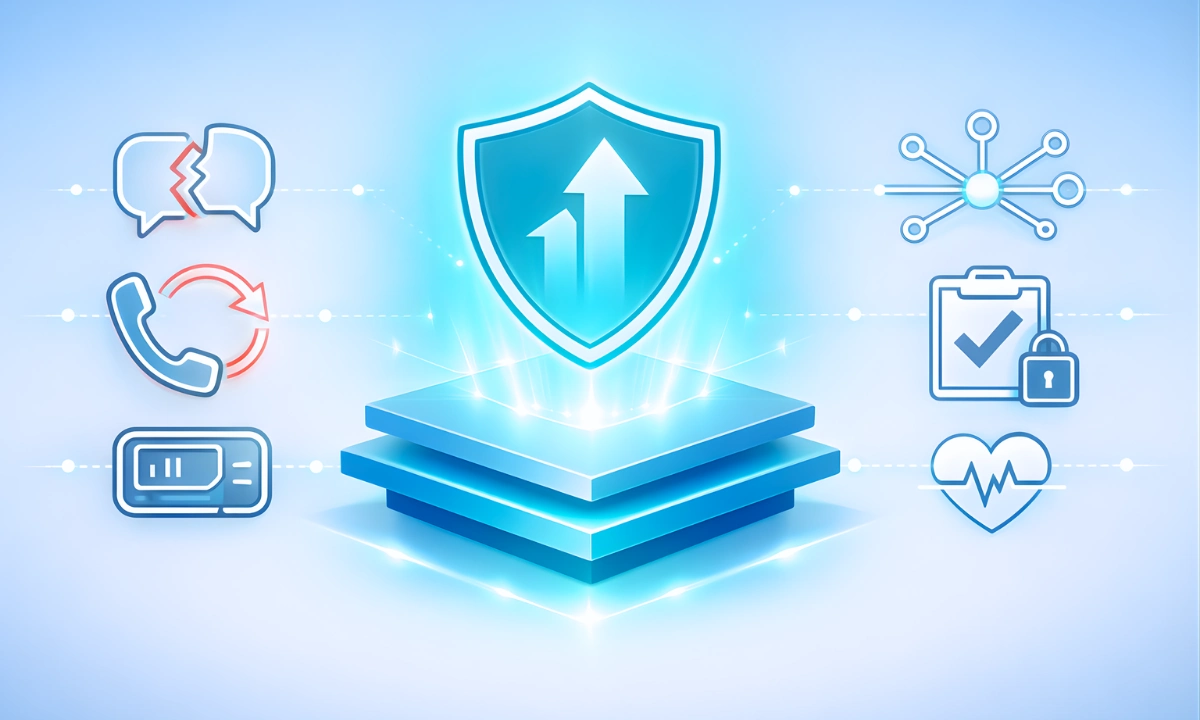
By creating a frictionless and purpose-built environment for these consultations, unified communication platforms transform them from a potentially cumbersome task into a smooth, efficient, and easily billable part of routine clinical practice.
The Golden Rules: Consent and Documentation
Properly using these codes requires strict adherence to two golden rules: informed consent and meticulous documentation.
Rule 1: Documented Patient Consent
For Medicare, the treating/requesting clinician is responsible for obtaining and documenting the patient’s verbal consent for the consultation. A simple note in the patient’s chart is sufficient.
- Example Note: “I have discussed with the patient my plan to initiate an interprofessional electronic consultation with a specialist in [e.g., Dermatology]. The patient understands their relevant medical information will be shared for this purpose and has provided verbal consent to proceed.”
Rule 2: Create an Audit-Proof Record
Think of your documentation as a checklist. Using a unified platform can automate much of this, but it’s crucial to ensure all elements are present.
For the Requesting Clinician:
- Is there a documented request to a consultant?
- Is the clinical question clearly stated?
- Is patient verbal consent documented?
- (For CPT 99452) Is the time spent (16-30 minutes) documented?
For the Consulting Clinician:
- Does the record show a request was received?
- Is the total cumulative time spent documented?
- Is there a comprehensive written report with recommendations?
- Was the report transmitted back to the requesting provider and saved in the record?
The Future is Collaborative Care in Healthcare
Interprofessional consultations represent a transformative step forward, breaking down silos and improving access to expertise. They break down the silos that have traditionally separated primary and specialty care, creating a more agile and patient-centered system. By leveraging technology like unified communication platforms, clinicians can more easily access a vast network of expertise, leading to better diagnoses and more effective treatment plans.
For healthcare organizations, embracing eConsults is not just about a few extra billing codes; it’s about investing in a value-based care model that prioritizes efficiency and quality. By understanding the rules and adopting the right tools, you can unlock the full potential of collaborative care in your practice.
Frequently Asked Questions
1. How is an interprofessional internet consultation different from a traditional referral?
Unlike traditional referrals where patients wait weeks to see a specialist in person, interprofessional consultations allow providers to connect electronically with specialists, get expert recommendations, and continue managing the patient’s care without delays.
2. Why are interprofessional consultations not considered telehealth?
Telehealth involves real-time, interactive communication between a provider and a patient. Interprofessional consultations, however, are strictly provider-to-provider communications where the patient is not directly involved.
3. What billing codes apply to interprofessional consultations?
Providers can use CPT 99452 for requesting providers (16–30 minutes) and CPT 99446–99449 or CPT 99451 for consulting providers, depending on the time spent. In behavioral health, new HCPCS “G” codes (G0546–G0551) apply.
4. What role do unified communication platforms play in interprofessional consultations?
Platforms like ClinicianCore streamline the process by integrating with EHRs, tracking time automatically, offering structured consult templates, and creating centralized, auditable consultation records.
5. What are the key compliance requirements for billing interprofessional consultations?
Clinicians must obtain and document patient consent and maintain a complete audit-proof record of the request, time spent, and written consultant report. Missing these steps can make the service non-billable.