In 2025, the average hospital CIO is juggling a digital circus. They have one vendor for secure messaging, another for on-call scheduling, a third for telehealth, and yet another for physician social networking.
This best-of-breed approach, stitching together point solutions from different vendors, was once the standard. Today, it is a liability.
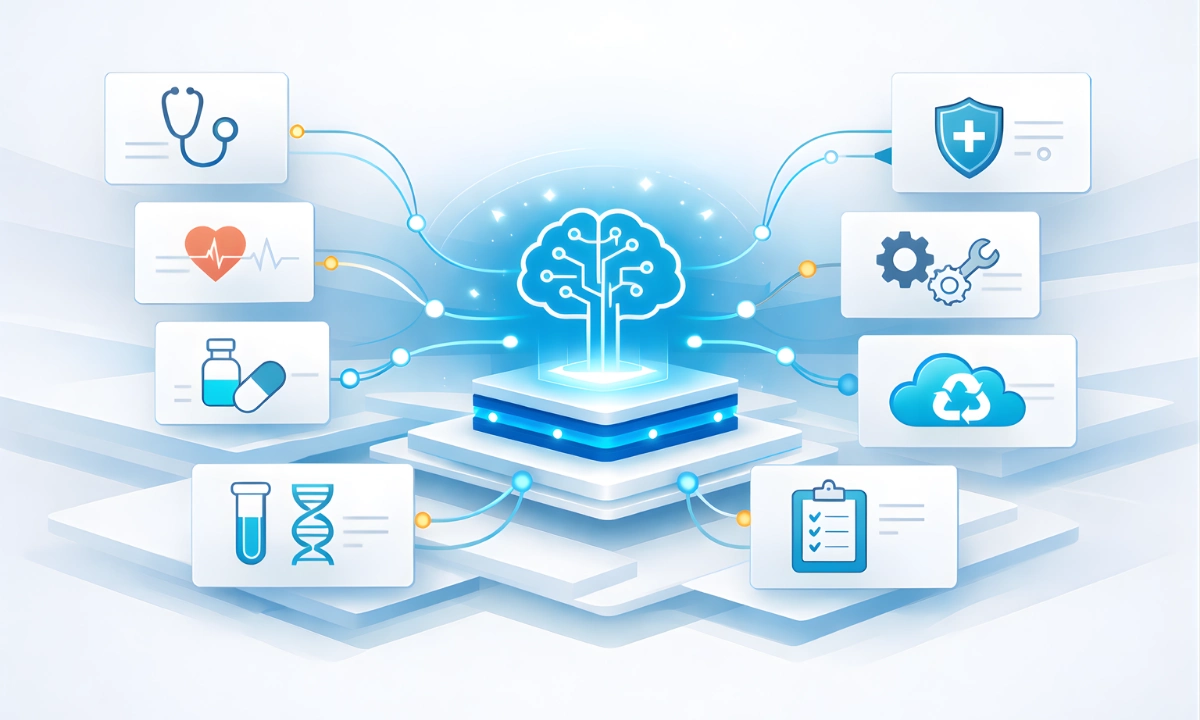
Just as Google dominates AI because it owns the entire stack of data, devices, and infrastructure, the future of healthcare communication belongs to platforms that can unify the entire medical experience. A fragmented tech stack does not just cost more money. It fractures patient care, stifles innovation, and accelerates physician burnout.
ClinicianCore was built on the premise that communication, collaboration, community, and innovation are not separate product lines. They are a single, continuous workflow.
Below is why the ClinicianCore Ecosystem HCO, HCC, D.O.C., and HCX holds a structural advantage over fragmented competitors.
1. The Vendor Tax vs the Unified Ecosystem
In a fragmented environment, data is trapped in silos. A secure message sent in one app does not inform the consult request in another.
Industry analysis from 2025 reveals that US hospitals lose approximately 12 billion dollars annually due to communication inefficiencies alone.
ClinicianCore eliminates this friction through four distinct but interconnected pillars.
ClinicianCore HCO HealthCare Organization
The Office
Handles intra-office logistics, acting as the secure operating system for the practice by unifying video, voice, and text.
ClinicianCore HCC HealthCare Collaboration
The Network
Handles inter-office connectivity, allowing practices to consult seamlessly with external specialists and hospitals, converting conversations into billable revenue.
D.O.C. Doctors Opinion Count
The Lounge
A private, HIPAA-compliant sanctuary for verified physicians to unwind, debrief, and support one another away from administrative prying eyes.
HealthCare Xchange HCX
The Lab
A secure, non-HIPAA forum for innovation. This is where clinicians and industry leaders collaborate on trends and future tech without the heavy regulatory brakes required for patient data.
The Advantage
Competitors typically excel at one of these layers. TigerConnect does messaging. Doximity does networking. ClinicianCore builds the entire city.
2. The Strategic Value of the Non-HIPAA Space HCX
One of the biggest bottlenecks in medicine is that everything is treated like a medical record. This stifles innovation.
You do not need HIPAA compliance to discuss a new surgical robot or a trend in AI diagnostics. You need speed and openness.
Healthcare Xchange HCX is the ecosystem’s Moonshot Factory. By intentionally designating this space as non-HIPAA with strict No PHI guardrails, ClinicianCore creates a frictionless environment for industry collaboration and trend spotting.
Just as Google uses open web data to train its smartest models, ClinicianCore uses the open dialogue in HCX to keep the rest of the platform on the cutting edge.
3. The Data Flywheel Effect
In a fragmented world, data is a dead end. In the ClinicianCore ecosystem, every interaction feeds a Clinical Intelligence loop.
Contextual Awareness HCC to HCO
Because the system understands the clinical context of an external consult, it can intelligently route that information to the right internal team member.
Burnout Reduction D.O.C. to Practice
With physician burnout rates hovering around 45 percent in 2025, largely driven by administrative burden, the need for a third place is critical.
By providing a sanctuary for mental rest in D.O.C., the platform returns a more engaged clinician to the HCO workspace.
4. The Economic Argument for CIOs
For hospital administrators, the math is simple.
Managing ten vendor contracts, ten security audits, and ten integration points is expensive. Recent 2025 market reports indicate that administrative costs now account for over 40 percent of total hospital expenses.
Consolidation Is Priority Number One
According to ADAPTs 2025 CIO Edge research, 68 percent of technology leaders are planning to consolidate their vendor landscape to reduce complexity.
Cost Savings
Hospitals that consolidate their communication stack can see administrative cost reductions of up to 14 to 18 percent by eliminating overlapping license fees and maintenance overhead.
Source HFMA and Clarify Health
Conclusion
The era of there is an app for that is over in healthcare. We are entering the era of there is a platform for that.
ClinicianCore is not just a collection of features. It is a cohesive ecosystem designed to mirror the way the medical world actually works.
We need a secure place to work, HCO, a bridge to connect with others, HCC, a quiet room to rest D.O.C., and a whiteboard to invent the future HCX.
By unifying these four worlds, we are not just building better software. We are building the infrastructure for the future of medicine.
Frequently Asked Questions (FAQs)
1. Why is HCX intentionally not HIPAA-compliant?
HIPAA restrictions can slow down general innovation and trend discussions. By keeping HCX a non-PHI space, we foster faster, open collaboration between clinicians and industry innovators (pharma/medtech) regarding trends and products, not patients.
2. What are the potential cost savings of using ClinicianCore?
By consolidating multiple point solutions (messaging, scheduling, consults) into one platform, organizations can reduce administrative IT costs by up to 14-18% while eliminating the “communication waste” that costs U.S. hospitals billions annually.
3. Is patient data safe if one part of the platform is not HIPAA-compliant?
Yes. The platform is architected with strict “firewalls.” Patient data never leaves the secure HCO/HCC environments. HCX is a separate module with clear “No PHI” warnings and AI-assisted moderation to prevent accidental sharing.
4. How does the ecosystem help with billing?
The HCC module features “Structured Consults” that automatically capture the decision trails and time stamps of inter-office consults, turning informal conversations into billable events.