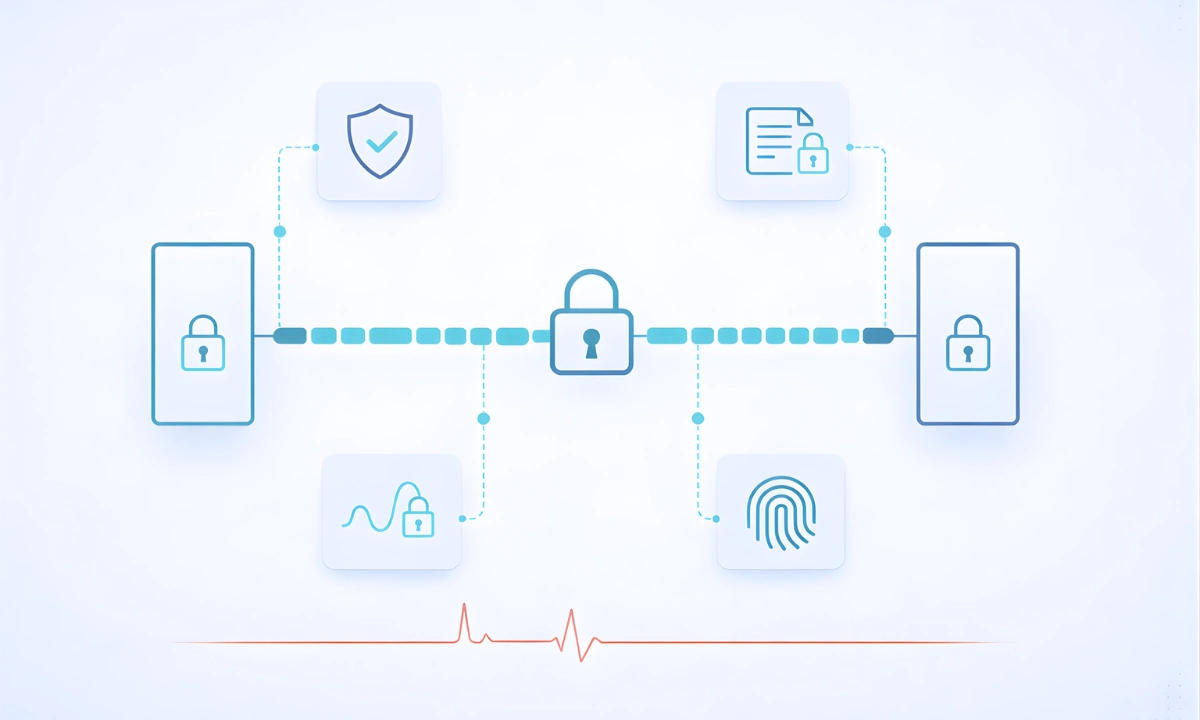
Healthcare communication fragmentation is the reliance on a disjointed ecosystem of tools – EHRs, different APPs, SMS, and email that prevents seamless information flow between clinicians and health systems. This systemic issue creates delays, errors, and significant cognitive overload, directly fueling high rates of physician burnout as described by the American Medical Association (AMA) and hindering efficient remote care coordination. In an era of staffing shortages and increasing regulatory pressure, the failure to unify clinical communication poses a critical threat to patient safety and operational integrity.
For over two decades, my professional journey has been defined by the immediacy and high-touch nature of healthcare services. Following the successful exit of a Revenue Cycle Management (RCM) service company I built and led for many years, I carried with me a mastery of operational triage. In the service sector, success is linear: you solve a client’s problem, earn their trust, and move on to the next challenge. It is a world built on relationships, responsiveness, and human capital. However, as we moved into 2024, I recognized a significant opportunity to evolve. I realized that service alone was no longer sufficient to resolve the systemic fragmentation plaguing our industry.
This insight coincided with a pivotal moment when Dr. Kevin D. Halow approached me with a transformative vision. He saw a solution where I had only observed symptoms. He envisioned a unified platform that would dismantle the silos of medical communication, built by physicians for physicians.
Recognizing the immense potential of his concept, I decided not just to support it but to invest in it and partner in the mission. This marked the start of an exhilarating professional evolution as I transitioned from leading a service organization to driving the execution of a sophisticated AI product.
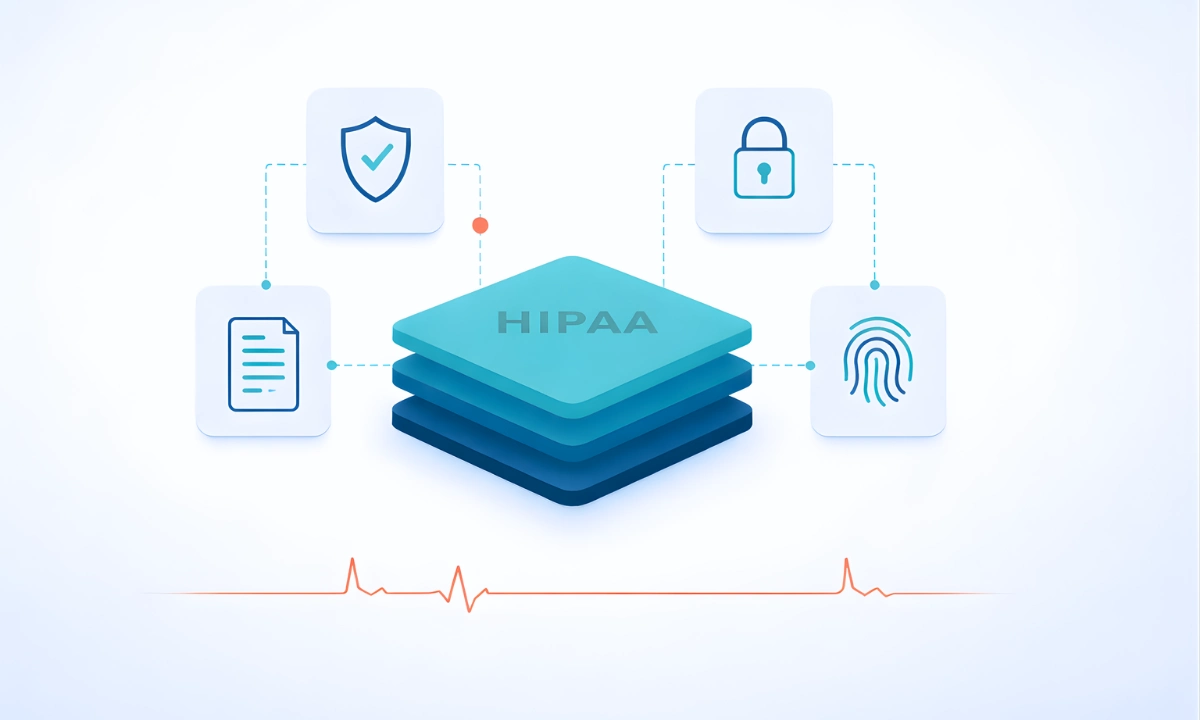
This article details that transition, including investing in a partner’s vision, and the architectural challenges of building a HIPAA-compliant healthcare platform. A HIPAA-compliant healthcare platform is a digital ecosystem designed with architectural and policy safeguards to strictly protect Protected Health Information (PHI) in accordance with federal regulations issued by the Department of Health and Human Services (HHS). It also details the product development best practices we employed to turn an idea into an industry-grade solution.
The Catalyst: Identifying Communication Failures in Healthcare SaaS
The “Founder’s Dilemma” is usually a trap: building a shiny solution and praying for a problem to solve. We didn’t play that game.
I spent nearly two decades wrestling with operational chaos, but it was Dr. Kevin Halow who engineered the cure. He didn’t just observe the industry; he diagnosed its silent killer: Communication Fatigue.
Dr. Halow saw that modern practices were fractured. Physicians were juggling SMS for speed, EMRs for data, and email for administration, a disjointed mess where systems refused to speak to one another. Healthcare communication fragmentation occurs when clinicians are forced to use multiple disconnected tools, such as EHRs, SMS, email, and paging, creating delays, errors, and cognitive overload. When he pitched the concept of ClinicianCore, I didn’t just see a missing puzzle piece; I saw the blueprint for the industry’s survival.
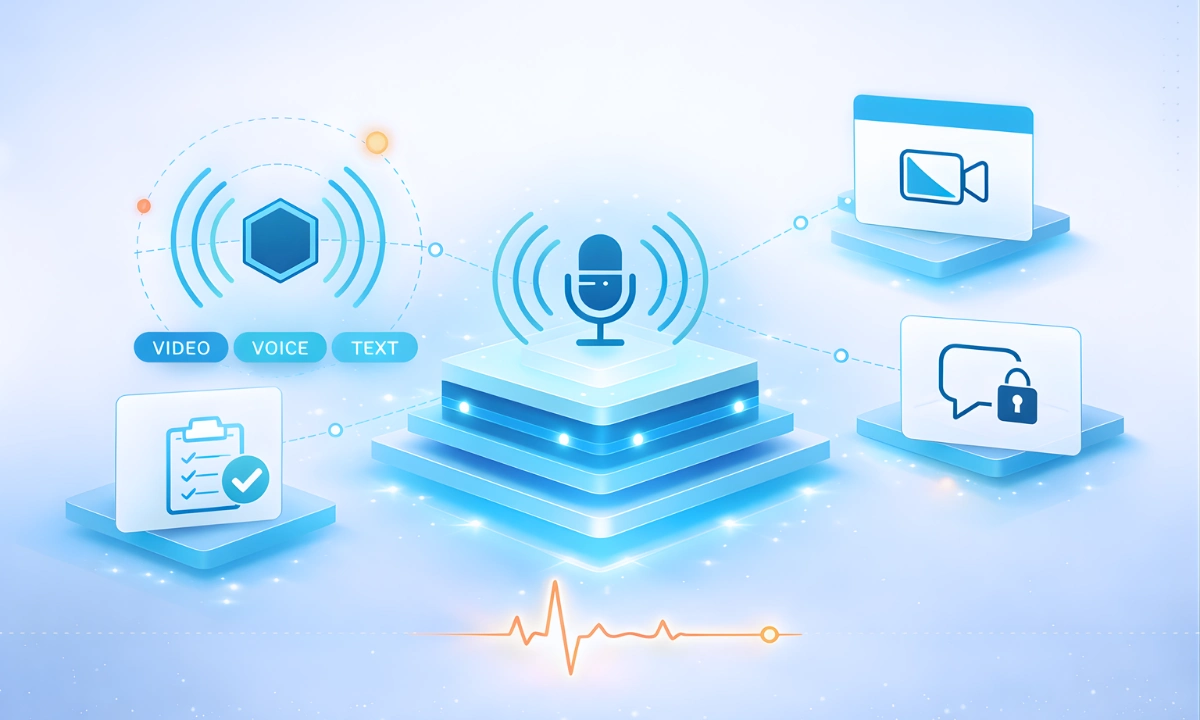
The Vision: A cloud-based powerhouse. Total unification of live (linear) and asynchronous (non-linear) video, voice, and text.
The Execution: A vision without a chassis is just a dream. I stepped in to provide the rigor. I built the operational spine, secured the capital, and deployed the scalable strategy required to turn that vision into a market standard.
I backed Dr. Halow because ClinicianCore wasn’t just a “tech idea”; it was a clinical imperative. Together, we forged a platform that offers the best of both worlds: the fortress-secure, HIPAA-compliant HCO module, and the open, dynamic HCX social forum. Unlike generic messaging tools, ClinicianCore separates HIPAA-compliant clinical coordination from open professional discussion through distinct architectural layers.
What are the Three Hard Lessons in Moving from Service to Product Leadership?
Moving from a service mindset to a product leadership role, specifically as an investor and operator, required a rewiring of my leadership philosophy.
1. The Shift from “Yes” to “No”
In the service industry, the customer is king. If a client asks for a custom report, you build it. In product development, customization is the enemy of scalability. As we operationalized Dr. Halow’s vision, we were tempted to build bespoke features for early beta testers. I learned that product leadership is the art of saying “no.” To build a scalable platform, we had to ruthlessly prioritize the features that served the majority. We focused on the core: secure encryption, reliable video latency, and the D.O.C. Lounge (a dedicated space for physician-only communication).
2. The Patience Gap
Service revenue is immediate. Product development is a game of delayed gratification. We spent months in the “Installation Phase”, investing heavily in secure cloud architecture and specialized IT talent without a dollar of immediate revenue. Maintaining morale during this “build phase,” especially when accustomed to the quick wins of service operations, required significant strategic patience.
3. Navigating the “Compliance Tax”
Building a chat app is easy. Building Dr. Halow’s vision of a fully HIPAA-compliant ecosystem is exponentially harder. Every feature had to be vetted for compliance with PHI (Protected Health Information) security requirements. We had to strictly segregate our healthcare multitenant SaaS architecture: ensuring that our D.O.C. Lounge (Physician-only) remained a fortress of privacy, while HCX clearly signaled its non-compliant status.
What Defines Best Practices in Healthcare Product Development?
One of the most valuable outcomes of our partnership has been the formalization of our development lifecycle. We took Dr. Halow’s clinical requirements and applied my operational rigor to build a repeatable process.
Below are the best practices we codified at HCPN to bridge the gap between concept and code.
Phase 1: Discovery and Validation (The “Why”)
Before writing code, we validated Dr. Halow’s hypotheses.
-
- User Personas: We defined specific avatars: The Overworked Hospitalist, The Private Practice Specialist, The Nurse Manager.
-
- Pain Point Mapping: We mapped the exact friction points in their day to ensure ClinicianCore solved real problems, not theoretical ones.
Phase 2: Architecture and Compliance (The Foundation)
In healthcare, you cannot “move fast and break things.” You must “move deliberately and secure things.”
-
- Security by Design: We decided early on that the HCO module would be a closed loop, completely walled off from the open HCX forum.
-
- Tech Stack Selection: We scrutinized every third-party API to ensure they offered a Business Associate Agreement (BAA).
Phase 3: The Design Sprint (The Interface)
We wanted ClinicianCore to feel like a modern consumer app, not clunky medical software.
-
- Prototyping: We created clickable mockups to test how a doctor would transition from a text chat to a video call.
-
- The “Thumb Zone” Test: Can a provider perform critical actions with one hand while walking down a hallway?
Phase 4: Agile Development (The Build)
We adopted an Agile methodology, breaking the massive vision into two-week “sprints.”
-
- MVP (Minimum Viable Product): We prioritized the D.O.C. Lounge—getting physicians a safe space to talk—and core encrypted messaging.
-
- Code Reviews: Ensuring no single developer can push code to production without a peer review.
Phase 5: Quality Assurance and “Red Teaming”
-
- Functional Testing: Does it work?
-
- Security “Red Teaming”: We actively tried to break our own system, simulating attacks to ensure PHI could not leak from the secure HCO side to the public HCX side.
Phase 6: The Feedback Loop (The Evolution)
-
- AI-Driven Analytics: We utilize our platform’s AI to analyze usage patterns.
-
- Iterative Updates: We learned that physicians wanted “Smart Summaries” of their text threads, leading to the integration of our Agentic AI features.
How Does AI Reduce Cognitive Load in a Healthcare Communication Platform?
A critical differentiator for ClinicianCore is the integration of Artificial Intelligence. We aligned on a philosophy: use AI to reduce cognitive load, not replace judgment. AI to reduce cognitive load is a design philosophy focused on deploying artificial intelligence to augment clinical judgment rather than replace it, such as generating Smart Summaries.
-
- Intelligent Trend Analysis: In the HCX forum, our AI scans non-compliant conversations to identify emerging healthcare trends and serves them as personalized content.
-
- Moderation: In the D.O.C. Lounge, AI assists moderators in ensuring a professional environment remains toxic-free without being intrusive.
Why Healthcare Needs Clinician-Built Platforms Now
Healthcare systems are actively seeking unified communication platforms that solve the current fragmentation and mitigate risk. The rise of clinician-led healthcare technology is a direct response to this market demand.
Clinician-centered multitenant SaaS design is a product development philosophy that prioritizes solving real workflow friction and reducing cognitive load for medical providers. Solutions like ClinicianCore are built with an operational and clinical imperative, ensuring that the technology is not surveillance-based but workflow-centric.
This foundation, along with a commitment to strict HIPAA compliance, builds the trust and efficiency needed for real progress in healthcare interoperability, offering a clear solution for buyers evaluating their options.
Key Takeaways: Building a Healthcare SaaS Platform
-
- Effective healthcare multitenant SaaS must resolve real-world clinician workflow friction.
-
- HIPAA compliance is an architectural requirement, not simply a policy document.
-
- AI must reduce cognitive load to augment clinical judgment, not replace it.
-
- Achieving platform scalability demands strictly refusing requests for customization.
Conclusion: The Power of Partnership
Transitioning from nineteen years of service leadership to co-owning a product innovation has been a journey of adaptation. It required me to unlearn the habits of customization and relearn the disciplines of scale.
But the greatest lesson has been the power of complementary strengths. Dr. Halow provided the clinical “North Star”—the vision of what medicine should look like. I provided the operational engine and investment to build the vehicle that gets us there.
The future of healthcare belongs to these types of partnerships: clinical visionaries paired with operational leaders who have the courage to build the platforms that will supersede the status quo. With ClinicianCore, we are not just building software; we are digitizing the trust and efficiency we have spent decades cultivating.
The ultimate goal of this work is to move beyond the limitations of legacy tools and realize the promise of truly clinician-centered systems. By prioritizing the provider’s workflow and reducing cognitive load, we can finally make the unified communication platform the logical, efficient standard of care. This commitment to clinical integrity and operational rigor is the foundation of ClinicianCore’s design.