The United States healthcare ecosystem is facing a critical paradox. We possess more patient data than any civilization in history, yet the clinical workflows used to manage that data remain dangerously fragmented. For Hospital CIOs, CMIOs, and Directors of Clinical Operations, the challenge is no longer about acquiring data; it is about mobilizing it.
Hospitals are currently struggling with a trifecta of systemic failures: chronic staffing shortages projected to reach a deficit of 124,000 physicians by 2034, unprecedented levels of clinician burnout, and communication silos that delay patient care. The “digital transformation” of the last decade largely centered on Electronic Health Record (EHR) adoption digitized the chart but did not digitize the workflow. In many cases, it simply added to the administrative burden.
Today, we are entering a new era. Healthcare AI and innovation are no longer experimental concepts reserved for academic research centers; they are operational imperatives essential for the financial and clinical survival of health systems.
True innovation in this space is not about replacing the human element of care. It is about restoring it. By leveraging artificial intelligence to handle the cognitive load of logistics, data entry, and routing, we free clinicians to do what they do best: care for patients.
Key Takeaways
- Defining Healthcare AI: Beyond the buzzwords to operational reality.
- The Burnout Crisis: How AI addresses the root cause (cognitive load).
- Clinical Collaboration: Moving from pagers to unified intelligence.
- Workflow Optimization: Automating the “invisible work” of the hospital.
- Security & Trust: Navigating HIPAA, SOC 2, and AI governance.
How Healthcare AI and Innovation Are Transforming Modern Hospitals
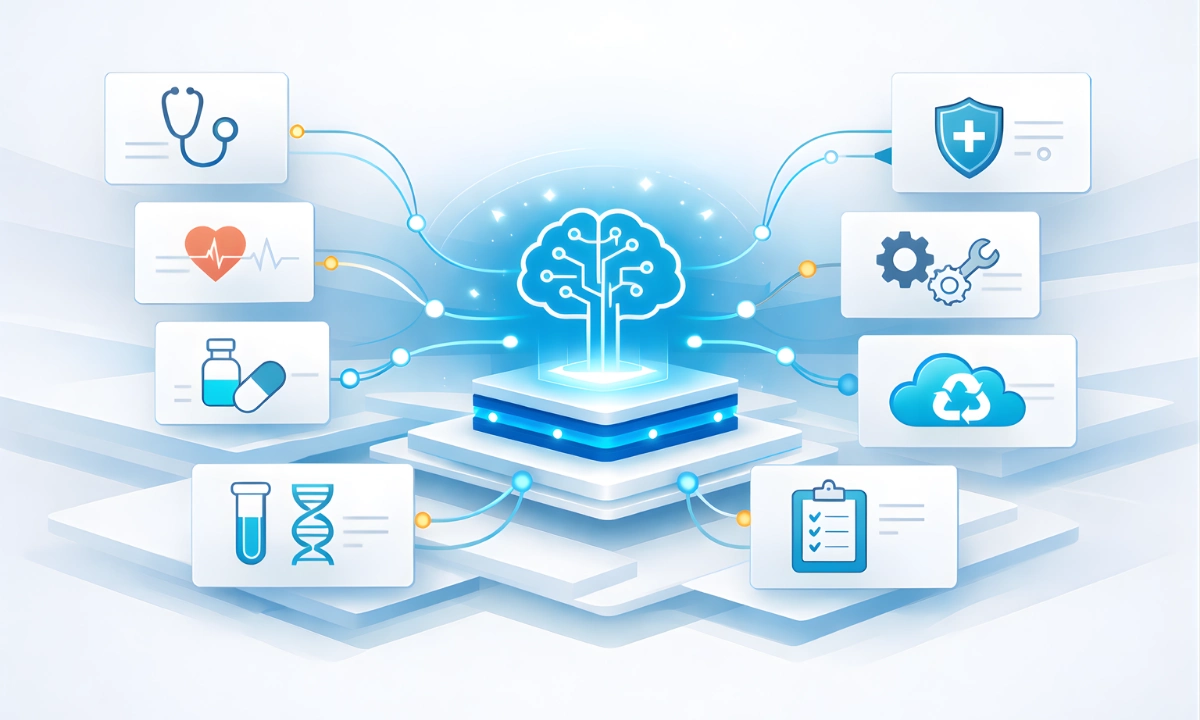
Before diving into workflows, we must recognize that healthcare AI and innovation represent a fundamental shift in how hospitals operate moving from “Systems of Record” (like the EHR) to “Systems of Intelligence.”
Modern hospitals are data-rich but insight-poor. While EHRs successfully digitized the patient chart, they created a passive repository of information. AI transforms this static data into active, real-time intelligence that “thinks” alongside the care team.
This transformation is happening across three critical layers:
- Predictive Analytics: Moving from reactive care (treating a stroke) to proactive care (predicting stroke risk 4 hours in advance).
- Computer Vision: acting as a second set of eyes in radiology and safety monitoring, detecting falls or anomalies that human eyes might miss during a busy shift.
- Natural Language Processing (NLP): structuring the unstructured. AI can now “read” and “listen” to clinical notes, extracting vital context that checkboxes miss.
By embedding these technologies, we aren’t just speeding up the hospital; we are making it smarter.
What Is Healthcare AI and Innovation?
Healthcare AI and innovation refer to the application of artificial intelligence technologies; such as machine learning, natural language processing (NLP), and predictive analytics to improve clinical collaboration, streamline workflows, reduce administrative burden, and enhance patient outcomes across healthcare organizations.
To understand where the industry is heading, we must first define the scope of the technology beyond the hype cycle. In the context of a US health system, Healthcare AI is the application of complex algorithms and software to emulate human cognition in the analysis, interpretation, and comprehension of complicated medical and healthcare data.
However, “Innovation” is the critical differentiator. Automation is simply doing the same old things faster. Innovation is rethinking the workflow entirely. For example, automation might digitize a fax from a Skilled Nursing Facility (SNF); innovation uses AI to read that document, extract the clinical context, and route it instantly to the correct specialist’s mobile device.
The Distinction Between Automation and AI Innovation
- Automation (RPA): Rules-based. “If X happens, do Y.” Useful for billing and claims.
- AI Innovation: Probabilistic and adaptive. “Based on X, Y is likely to happen; alert Dr. Z immediately.” Useful for clinical decision support.
The Unique Nature of Healthcare AI
Unlike AI in retail or finance, healthcare AI operates under strictly regulated environments (HIPAA, HITECH) where the stakes are life and death. It requires:
- Explainability: Clinicians must understand why an AI model made a suggestion (“White Box” vs. “Black Box” AI).
- Interoperability: It must speak the language of HL7 and FHIR to connect disparate systems like Epic, Cerner, and PACS.
- Empathy: It must be designed with the user, the exhausted nurse or the busy surgeon in mind.
For a deeper dive into how algorithms are specifically aiding doctors in identifying conditions, read our guide on AI in medical diagnosis.
Why Healthcare Needs AI-Driven Innovation Now
The call for innovation is not driven by a desire for shiny new technology, but by a desperate need to fix a broken system. The “burnout crisis” is well-documented, but few solutions address its root cause: the cognitive friction of daily tasks.
The Cost of Fragmented Clinical Communication
In many US hospitals, communication is still stuck in the 1990s. Physicians rely on alphanumeric pagers, nurses wait by landlines for callbacks, and unit clerks manually input data. This fragmentation creates “information lag” which directly impacts Length of Stay (LOS) and patient safety.
- Paging Systems: These offer no context. A pager beeps, breaking a physician’s focus, often for a non-urgent matter. This “context switching” is a primary driver of cognitive fatigue.
- EHR Silos: Vital patient data is trapped inside the EHR, inaccessible to the care team when they are mobile or at the bedside.
- Manual Handoffs: Patient transfers between shifts or departments are prone to error. The Joint Commission estimates that 80% of serious medical errors involve miscommunication during handoffs.
To solve this, we must look toward AI-driven collaboration between healthcare providers, which unifies these disparate channels into a single, intelligent stream.
Clinician Burnout Is a System Problem, Not a People Problem
We cannot “wellness module” our way out of the crisis. Achieving meaningful physician burnout reduction requires admitting that the issue is not a lack of resilience; it is an abundance of administrative friction. Studies show that for every hour of direct patient care, US clinicians spend nearly two hours on paperwork and data entry.
- Cognitive Fatigue: Constantly switching context between patients, screens, and devices depletes the cognitive resources needed for clinical decision-making.
- After-Hours Charting: Known as “pajama time,” this encroachment on personal time is a primary driver of attrition.
- Moral Injury: Clinicians know what patients need but are prevented from providing it by systemic barriers.
By implementing AI tools designed for clinicians, hospitals can offload the “robot work” to the robots, preserving human energy for human care.
How does AI reduce burnout?
AI is a cornerstone of physician burnout reduction because it automates repetitive administrative tasks; such as documentation, coding, and scheduling that contribute to cognitive fatigue. By offloading this “busy work,” AI allows clinicians to focus on patient care and finish their shifts on time.
How Healthcare AI Improves Clinical Collaboration
At ClinicianCore, we believe communication is the hospital nervous system. When it is severed or slow, the entire body fails. AI is the connective tissue that repairs these breaks.
Unified Communication Across Care Teams
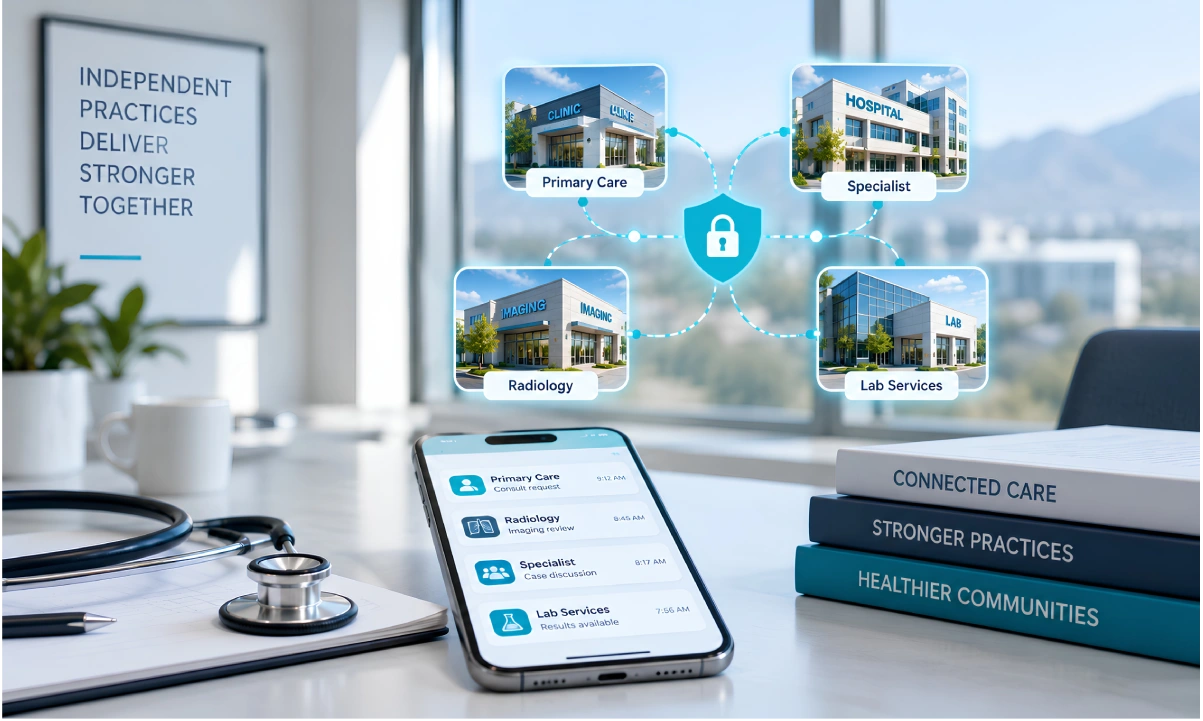
Effective care is a relay race involving Primary Care Physicians (PCPs), specialists, nurses, case managers, and administrators. Without a unified platform, the baton gets dropped.
AI-driven platforms act as a central hub a “Single Source of Truth.” Instead of a nurse calling a directory to find the on-call cardiologist, AI looks at the schedule, determines who is available, and routes a secure text directly to that provider’s app. This seamless connection is the hallmark of how AI improves collaboration between healthcare providers.
Real-Time Intelligence, Not Delayed Updates
Static schedules are rarely accurate in a dynamic hospital environment.
- Smart Routing: AI analyzes shift changes in real-time. If Dr. Smith signs off, the system automatically routes messages to Dr. Jones.
- Context-Aware Alerts: Instead of a generic buzz, an AI-enabled alert can read: “Room 302, Sepsis Risk Alert, Vitals Degrading.” This allows the clinician to triage immediately.
- Escalation Management: If a critical lab result is not acknowledged within 15 minutes, the AI can automatically escalate the alert to the charge nurse or covering physician.
AI-Powered Clinical Workflow Optimization
Moving from education to application, how does this actually look on the floor? It looks like the transition from manual, linear workflows to intelligent, parallel workflows.
From Manual Workflows to Intelligent Workflows
Traditional workflows are reactive. A patient deteriorates, a nurse notices, a call is made, a doctor responds. Intelligent workflows are proactive.
- Task Automation: Routine tasks, such as admission notifications or discharge planning checklists, can be triggered automatically based on EHR data.
- Workflow Orchestration: AI can predict bottlenecks. For example, if the OR is running 20 minutes late, the system can automatically notify the pre-op team and the next patient, adjusting the schedule dynamically without human intervention.
- Discharge Optimization: AI can identify patients ready for discharge hours before rounds, allowing case management to arrange transport and SNF placement early, reducing “bed blocking.”
This is the essence of clinical workflow automation removing the friction of logistics.
Where AI Saves the Most Time for Care Teams
- Documentation: Ambient listening tools can transcribe patient encounters and draft SOAP notes, requiring only a physician’s sign-off.
- Care Coordination: AI can flag patients at high risk for readmission and automatically schedule follow-up appointments or alert case managers.
- Prior Authorization: Generative AI can draft letters of medical necessity, citing specific clinical guidelines, to speed up payer approval.
For administrators looking for tools to implement this, exploring workflow automation software for healthcare is the next logical step.
Healthcare AI Solutions Hospitals Are Adopting Today
While “AI” is the buzzword, hospital leaders are investing in specific healthcare AI solutions that solve immediate operational pain points. The adoption curve has shifted from experimental pilots to enterprise-wide integration across four key domains.
1. Clinical Communication and Collaboration (CC&C)
The pager is a relic of the 1980s that survives only in hospitals. Modern AI solutions replace linear paging with dynamic, context-aware messaging.
- Smart Routing: Instead of blasting a message to a “On-Call Cardiology” group, AI analyzes the live schedule in the EHR to route the text specifically to the attending physician currently clocked in.
- Escalation Logic: If a critical lab result isn’t acknowledged within 5 minutes, the system automatically escalates the alert to the charge nurse or covering resident, ensuring no patient falls through the cracks.
2. Workflow Automation and Revenue Cycle
Hospitals are deploying clinical workflow automation to handle the high-volume, repetitive tasks that bog down administrative staff.
- Process Efficiency: By implementing broader healthcare process automation strategies, systems can tackle insurance pre-authorizations and claims processing.
- Prior Authorization: Generative AI can now draft letters of medical necessity by pulling specific clinical evidence from the patient’s chart, significantly reducing payer denial rates.
- Discharge Planning: AI algorithms predict which patients are likely to be discharged 24 hours in advance, allowing case managers to arrange SNF placement or transport early.
3. Predictive Analytics and Clinical Decision Support
We are moving from “detecting” sepsis to “predicting” it.
- Diagnostic Support: While workflow is critical, the role of AI in medical diagnosis is equally transformative. Algorithms acting as a “second set of eyes” in radiology are now standard for detecting anomalies faster than human review alone.
- Early Warning Systems: Tools like the Epic Sepsis Model or Bayesian Health analyze hundreds of variables in real-time to flag deteriorating patients hours before a human observer might notice subtle changes.
- Census Forecasting: Operational AI predicts ED surge volumes days in advance, allowing nursing leadership to adjust staffing ratios proactively. Preventing these understaffing crises is a critical strategy for managing the cost of physician turnover, which spikes when care teams are chronically overwhelmed.
4. Ambient Documentation (The “Invisible” Scribe)
Perhaps the most impactful of the organizational solutions for physician burnout is ambient intelligence. Tools like Nuance DAX or Abridge listen to the patient encounter (with consent) and automatically generate a structured SOAP note in the EHR. This technology decouples “care” from “keyboarding,” allowing physicians to maintain eye contact with their patients.
Security, Compliance, and Trust in Healthcare AI
For US-based healthcare buyers (CIOs, CISOs), security is not a feature; it is the baseline. Implementing AI requires navigating a minefield of regulations, including HIPAA, HITECH, and SOC 2 compliance.
Trust Through Compliance
- HIPAA Compliance: Any AI platform handling Protected Health Information (PHI) must ensure encryption, both in transit and at rest.
- Business Associate Agreements (BAA): Vendors must be willing to sign a BAA, assuming liability for data protection.
- Role-Based Access Control (RBAC): AI systems must respect hospital hierarchy. A billing specialist should not have access to clinical notes they don’t need; an AI system ensures these rigorous access controls are maintained automatically.
- Audit Trails: In the event of a breach or inquiry, the system must provide an immutable log of who accessed what data and when.
Technical Interoperability Standards
To ensure seamless adoption, healthcare AI platforms must integrate with major EHRs such as Epic, Cerner, and Meditech using HL7 and FHIR standards while maintaining SOC 2 Type II compliance. This guarantees that data flows securely between systems without creating new silos or vulnerabilities.
Is Healthcare AI secure?
Healthcare AI platforms must comply with HIPAA by ensuring encrypted data storage, role-based access, and strict controls over patient information. Vendors must sign Business Associate Agreements (BAAs) to assume liability for data protection and adhere to SOC 2 security standards.
When selecting HIPAA-compliant healthcare automation platforms, verify their certification and data governance policies explicitly.
The Future of Healthcare AI and Innovation
We are currently in the “Assisted Intelligence” phase. The future lies in “Augmented” and eventually “Autonomous” intelligence in specific low-risk areas.
Physician-First AI
The future of innovation will be led by those who understand the bedside. Leaders like our Co-founder and Chief Medical Officer, Dr. Kevin D. Halow, MD, MBA, advocate for technology that adapts to the physician, not the other way around. The goal is “Ambient Intelligence”, technology that exists in the background, invisible but supportive, capturing data without requiring a keyboard.
Predictive Collaboration
Imagine a system that doesn’t just tell you a patient is crashing, but predicts it four hours in advance based on subtle changes in lab values and vitals, automatically assembling the rapid response team before the code blue happens.
For a broader look at where the industry is heading, explore our insights on future healthcare technology trends.
How Healthcare Leaders Can Start with AI Innovation
Adopting AI can feel overwhelming. The key is to start small and scale.
- Identify Friction: Survey your clinicians. Where are they wasting the most time? Is it finding phone numbers? Charting? Scheduling?
- Prioritize Clinician Experience: Choose tools that reduce clicks, not add them. If a tool requires training, it’s probably too complex.
- Choose Interoperable Platforms: Ensure your chosen healthcare process automation strategies integrate with your existing EHR.
- Establish Governance: Create an AI Governance Committee to oversee ethics, safety, and ROI.
Strategic Insight for Leaders: For hospital leaders evaluating healthcare AI platforms, the next step is understanding how AI integrates into real clinical workflows without adding complexity. Success isn’t about buying the most tools; it’s about buying the right tools that your clinicians will actually trust and use.
Frequently Asked Questions
What is healthcare AI innovation?
Healthcare AI innovation is the use of artificial intelligence to automate and improve clinical workflows, communication, and decision-making—going beyond digitization to deliver smarter, faster, and more efficient patient care.
What are the best healthcare AI solutions for hospitals?
The highest-ROI solutions focus on clinical communication (replacing pagers with smart routing), workflow automation (streamlining discharge and billing), and predictive analytics (forecasting staffing needs). The “best” platforms are those that offer deep EHR interoperability (Epic/Cerner) and strict HIPAA compliance to ensure security.
How do hospitals implement AI without disrupting clinicians?
To avoid disruption, hospitals must prioritize “invisible” technology that runs in the background of existing workflows rather than adding new login screens. Implementation should start with low-risk pilot programs, involve clinician-led governance committees, and focus on tools that require zero to minimal training to reduce change fatigue.
How does AI improve clinical collaboration?
AI improves clinical collaboration by routing messages intelligently to the right clinician in real time and attaching clinical context, such as patient vitals, so care teams can make faster, more informed decisions.
Is AI in healthcare secure and HIPAA compliant?
Yes, reputable healthcare AI solutions are built with strict HIPAA compliance. They utilize encryption for data, enforce role-based access controls (RBAC), and maintain detailed audit trails to ensure patient data (PHI) remains secure and private at all times.
How does AI reduce clinician burnout?
AI reduces clinician burnout by automating administrative tasks like documentation, scheduling, and coding, allowing clinicians to spend more time on patient care and less time on paperwork.
What is AI’s future in healthcare workflows?
The future of AI in healthcare is ambient intelligence, where AI automatically documents care, predicts patient risks early, and coordinates teams in the background without disrupting clinical workflows.