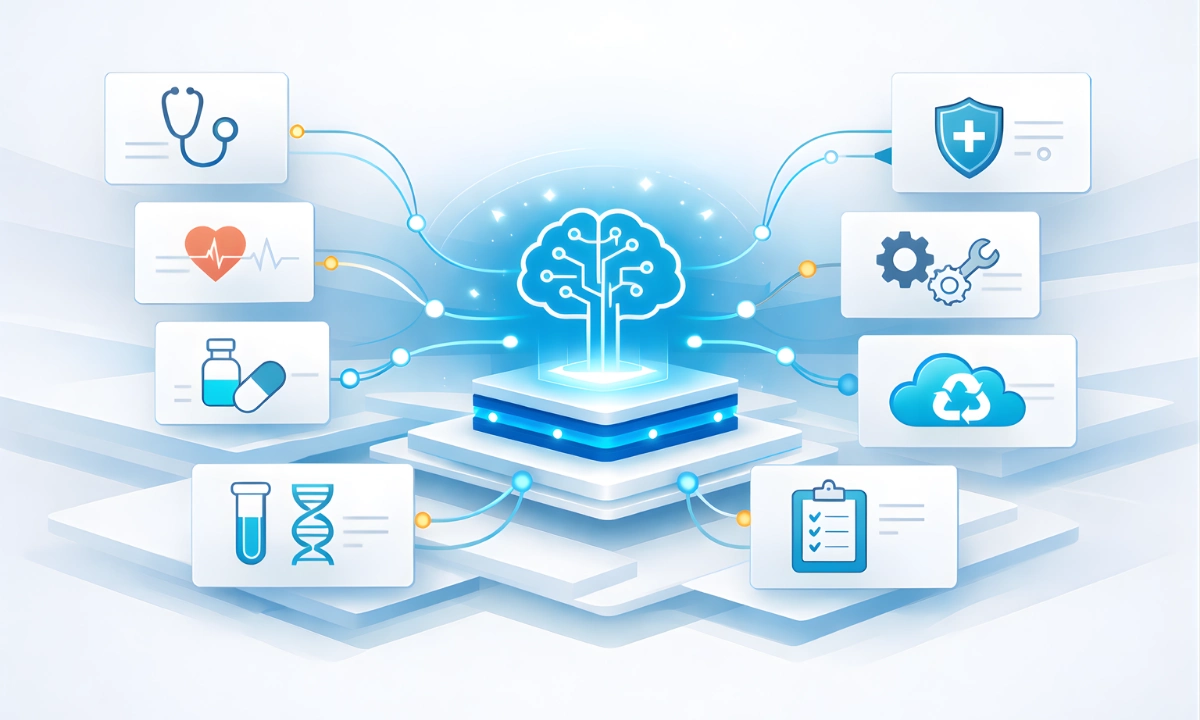
In today’s fast-paced healthcare environment, clinicians are still too often tethered to a chaotic patchwork of outdated communication tools. Pagers, endless phone tag, and insecure text messages create friction, delay critical decisions, and contribute to provider burnout. For any practice leader or administrator, the central question is simple: “What’s in it for my practice to change?”
The answer is a Unified Communications (UC) platform, a solution that brings voice, video, secure messaging, and file sharing into a single, HIPAA-compliant interface. This isn’t just another piece of technology; it’s a strategic investment that delivers tangible returns by transforming how care teams collaborate.
Here are five key benefits of making the switch.
1. Streamline Care Coordination and Accelerate Decisions
Effective patient care depends on seamless collaboration. However, information silos between departments, clinics, and specialists create significant gaps. A UC platform breaks down these barriers by creating one source of truth for all communication. Instead of waiting for a returned call, a physician can instantly consult a specialist through secure video or messaging to review lab results or discuss a diagnosis in real time.
This enhanced connectivity makes patient handoffs and shift changes smoother and safer. Nurses and support staff can leave digital notes, chat updates, or voice messages within a centralized platform, drastically reducing the risk of critical information being lost during transitions.
2. Reclaim Wasted Time and Boost Productivity
Clinicians and administrative staff lose precious hours every day to “application toggling,” switching between the EHR, a messaging app, a phone, and an email client. A UC platform eliminates this inefficiency by consolidating all communication tools into a single, intuitive interface.
This integration significantly reduces administrative work. Less time is spent checking voicemails, documenting call attempts, or searching for information, freeing up staff to focus on high-value tasks and direct patient care. Studies have shown that organizations implementing UC solutions report an average productivity gain of 20%, which can be reinvested in improving patient outcomes.
3. Strengthen Security and Ensure HIPAA Compliance
In an era of increasing cyber threats, using non-secure, consumer-grade tools like standard SMS for clinical communication is a significant compliance risk. A purpose-built UC platform designed for healthcare provides the robust security necessary to protect sensitive patient data and ensure HIPAA compliance.
Key security features are built in, not bolted on. These include end-to-end encryption for all calls and messages, strict role-based access controls, and detailed audit logs for every interaction. By centralizing all communication on a secure platform, organizations can diminish the chance of data breaches and maintain a clear, auditable record for any compliance reviews.
4. Reduce Operational Costs and Deliver Clear ROI
Maintaining a dozen different communication systems from legacy phone lines and pagers to multiple messaging apps is both inefficient and expensive. A UC platform delivers a strong return on investment by consolidating these disparate point solutions, enabling healthcare organizations to eliminate inefficient vendor relationships and significantly reduce technology costs.
By moving to a cloud-based UC system, practices can also eliminate the high capital expenses and ongoing maintenance costs associated with on-premises hardware. Research shows that businesses implementing UC solutions can save an average of 35% annually in communication costs, creating a clear financial case for making the switch.
5. Enable Modern, Flexible Care Delivery
The healthcare landscape is evolving, with a growing emphasis on telehealth and remote care models. A UC platform is a future-proof investment that equips organizations with the tools needed to adapt and thrive.
Integrated, HIPAA-compliant video conferencing enables secure telehealth sessions, remote consultations, and virtual family meetings without relying on third-party apps. Furthermore, with mobile apps and cloud-based access, a UC platform empowers an increasingly mobile workforce. On-the-go clinicians, field nurses, and home health staff can stay connected, receive urgent alerts, and document interactions from any device, ensuring continuity of care no matter their location.
The Future is Connected
Moving beyond the pager to a unified communication platform is more than a simple technology upgrade. It is a fundamental shift toward a more efficient, secure, and collaborative model of care. By connecting people, processes, and platforms, UC enables a more agile and resilient healthcare system, ultimately leading to better outcomes for patients and a less stressful environment for the clinicians who care for them.
Frequently Asked Questions (FAQs)
1.What is a unified communications (UC) platform?
A unified communication platform integrates multiple communication channels such as voice, video, secure messaging, and file sharing into a single, cohesive interface. In a healthcare setting, this means that everyone, from the front desk to clinical staff and remote providers, uses the same secure tools in the same place, in real-time, eliminating the need to switch between different applications
2. How does a UC platform differ from just using secure messaging apps?
While secure messaging is a core component, a true UC platform goes much further. It combines real-time (voice/video calls) and asynchronous (messaging) communication, integrates with clinical workflows, and often includes advanced features such as smart routing and AI-powered assistance. This creates a comprehensive collaboration hub, whereas a standalone messaging app only solves one piece of the communication puzzle.
3. Is it difficult to integrate a UC platform with our existing EHR?
Integrating any new technology requires careful planning; however, modern UC platforms are designed to seamlessly connect with existing systems. Using standardized protocols like FHIR and robust APIs, a UC platform can integrate with major EHRs to retrieve patient data, streamline workflows, and ensure clinicians have access to real-time information without needing to log into multiple systems. This breaks down data silos and embeds communication directly into the clinical workflow.
5. How can our practice get started with a UC platform?
The first step is to assess the current communication workflows in the practice. Identify the primary bottlenecks, such as delays in getting critical lab results, inefficiencies in coordinating with specialists, or time wasted on phone tag. Once these pain points are clear, you can explore UC solutions that directly address those challenges. To learn more about how ClinicianCore can help, contact our team for a consultation.