
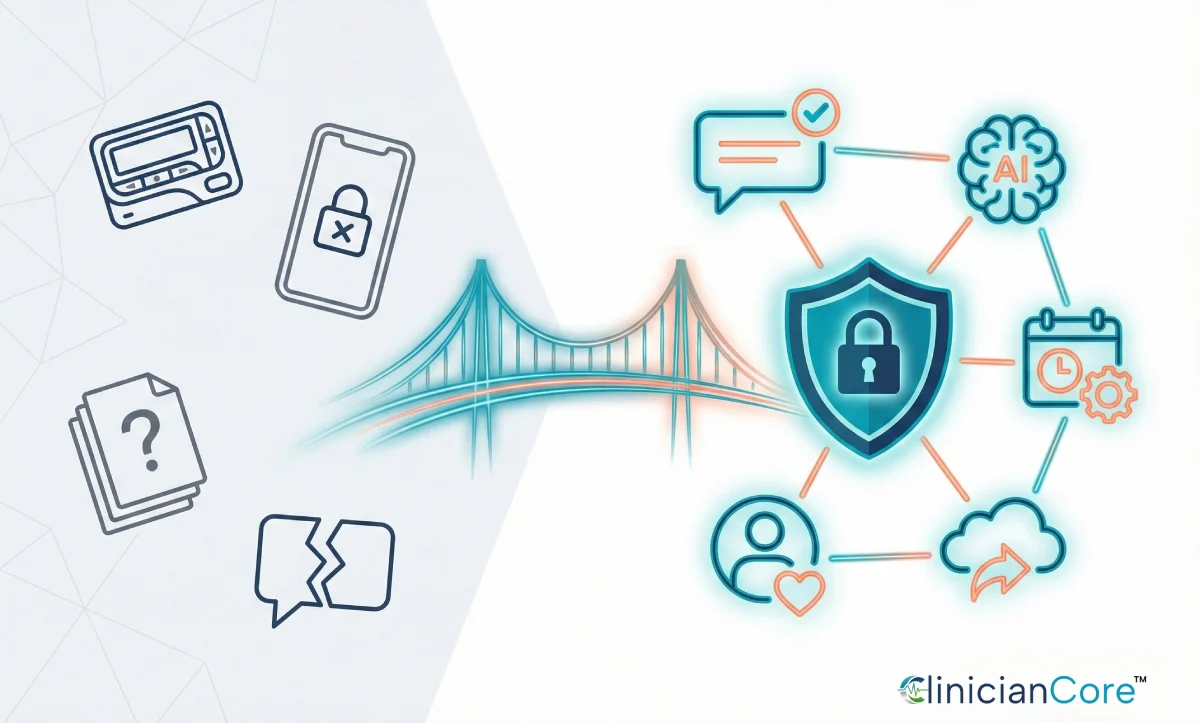
Host: Okay, let’s unpack this. Today we are diving into a really foundational shift in healthcare, something that moves patient privacy from, you know, being just a mandatory legal checkbox to becoming the absolute foundation of trust between a clinician and a patient. And the sources we have today are, well, they’re pretty compelling. They really explore how these things called Unified Communication and Collaboration tools—or UCC tools—are letting physicians reclaim the narrative on privacy.
Guest: It’s a crucial evolution really. For decades, I mean, privacy was mostly just viewed through the lens of compliance. It was all dictated by regulations like HIPAA. But if you look at what was actually happening on the ground, clinical communication became just dangerously fragmented.
Host: Fragmented how?
Guest: Well, you had unsecured personal texts flying around, outdated pagers, consumer apps being used to exchange Protected Health Information (PHI). That’s any health info that can, you know, identify a specific patient.
Host: And that fragmentation is the root of so much of the anxiety and risk, right? It meant clinicians were constantly worried about accidental leaks. So I guess our mission today is to look at the five key pillars the sources lay out. The pillars that let healthcare systems embed privacy into every single interaction. Basically turning physicians from these passive, worried participants into proactive guardians of patient data.
Guest: Exactly. And these pillars are the roadmap for that whole transformation. They cover everything from eliminating those hidden communication risks and upgrading the technical security standards, to using this powerful documentation this source actually calls a “Trust Ledger,” and then leveraging Artificial Intelligence, and finally, really building a secure culture of collaboration.
Host: Okay, so let’s start right where the problem begins—that chaos of fragmented communication. This is Pillar 1: Closing communication blind spots / Privacy by Design. The source material is so clear on this. When sensitive data leaks onto personal devices or, say, consumer messaging apps, you create what they call “communication blind spots.” And they’re completely invisible to the hospital or the clinic.
Guest: And those blind spots are so much more than just some theoretical risk. I mean, they’re operational nightmares. Think about it. When a nurse uses her personal phone to take a quick photo of a wound, or a surgeon texts a consult on an unsecured app…
Host: That PHI, that patient data, has completely left the secure hospital perimeter.
Guest: It’s out there. Floating in this totally uncontrolled environment, exposed to risks the organization can’t monitor, can’t audit, can’t do anything about. And I imagine that creates massive bottlenecks too. If I’m a clinician, I’m probably thinking twice before sending anything sensitive. Which means patient care gets held up while I… what? Try to find a secure fax machine? Or track down somebody on a pager?
Host: You’re exactly right. So what’s the UCC answer to all this systemic chaos? Well, it’s consolidation. And integration. A UCC platform brings video, voice, and text into a single, encrypted, HIPAA-compliant ecosystem. You’re basically creating a secure digital home for all clinical communication.
Guest: Okay, so give me a practical example. How does that look day-to-day?
Host: Sure. So say a physician needs to share some lab results with the attending specialist. Instead of just defaulting to a personal text message, they use the platform’s secure messaging feature. That data is immediately encrypted—you know, scrambled so only authorized people can read it. It’s logged. And it’s only accessible within that specific clinical team.
Guest: So this is really about changing the path of least resistance. You’re not just offering a secure method; you’re making the secure method the easiest method. That feels like it fundamentally shifts the physician’s role.
Host: It does. They go from constantly reacting to potential leaks—that sort of damage control mode—to being proactive guardians. Because privacy is just… it’s the built-in default of the system they’re using. It changes everything. It reframes privacy not as some cumbersome admin task that slows down care, but as an integrated, fluid part of the care process itself. That’s what “Privacy by Design” really means. The protection is inherent in the tool.
Guest: But that seamless integration… it must require some serious technical muscle behind it. Which brings us to Pillar Number 2: Encryption as the new standard of care. Our sources make a really critical point here. Just saying a tool is “encrypted” is… well, it’s not enough.
Host: Not even close. A lot of consumer apps, they might secure messages while they’re moving in transit, but they completely fail to secure files at rest. You know, when they’re just sitting on a server or a device.
Guest: And that’s the real difference between consumer-grade and healthcare-grade security. Healthcare-specific UCC platforms, they demand much more. They provide true end-to-end encryption, protecting data both when it’s moving and when it’s stored. But then they add these crucial extra layers—things like Multi-Factor Authentication (MFA).
Host: That’s that second security check when you log in, right?
Guest: Exactly. And the other big one is Role-Based Access Control, or RBAC.
Host: Okay, let’s break that one down. RBAC sounds a little technical. What does it actually mean for a busy clinician on the floor?
Guest: It’s actually pretty simple in practice. RBAC just means that access to information is strictly controlled by your role on the care team. So, for example, the orthopedic team only sees the orthopedic files they’re actively involved with. A radiologist uploading sensitive imaging files to share with a surgeon uses the platform, and those files aren’t just encrypted, they’re also secured by RBAC. So only the designated surgeon and their immediate care team can even open them.
Host: That technical certainty has to be invaluable. I mean, when clinicians can actually trust the security architecture, they can collaborate faster, share richer data, and they can do it without that constant fear of violating HIPAA.
Guest: It moves from fear-based compliance to confidence-based care. Which is a huge shift. It is. Encryption, MFA, and RBAC all working together. They reinforce the physician’s core ethical role: protecting the dignity and the data of their patient.
Host: And speaking of protection and ethics, that really brings us right to the Third Pillar: The power of the Trust Ledger. Accountability and confidence through documentation. Because privacy is about prevention, yes, but it’s also about being able to prove, after the fact, that everything was handled correctly.
Guest: And this is where that Trust Ledger concept comes in. And it’s something that dramatically simplifies a really complex regulatory world. The ledger is, essentially, a tamper-proof, time-stamped record. Every single communication event. Every message, every file share, every video consult, every access attempt. It’s all logged. This gives you just indisputable transparency about how data was handled.
Host: But hold on, why is that so necessary? Don’t hospitals already track things?
Guest: They do, but the data is often scattered all over the place—in the EHRs, in old pager logs, buried in emails. When regulators or internal review boards come to investigate, they have to struggle to stitch together a coherent, auditable timeline. Especially for any communication that happened outside the official channels. The Trust Ledger just centralizes all of it.
Host: Okay, so it pulls it all together.
Guest: Right. The sources mentioned an example where a hospital faces an internal review. They can use these centralized records to show, definitively, that say… only three authorized clinicians accessed a patient’s oncology records. And they can show the precise moment of access and the full activity log. This kind of documentation turns privacy into an ethical commitment that’s backed by verifiable proof.
Host: Which builds trust. With everyone.
Guest: With patients, with regulators, with insurers. It’s proof that the system is working exactly as it’s intended to.
Host: Okay, so that’s a solid system. But even the most secure system can be tripped up by… well, by us. By human factors, which are notoriously unpredictable. And this leads us to the Fourth Pillar, and maybe the most fascinating one: AI-Enabled Compliance. Guardrails for collisions.
Guest: Yeah, this addresses the core weakness in any system: human error. Even on the most secure platform, a busy physician might accidentally copy-paste identifiable data into a non-secure chat or misdirect a file. And that constant need for vigilance… it imposes this exhausting mental burden. That’s that compliance anxiety we hear so much about.
Host: Okay, here’s where it gets really interesting. How does AI actually help reduce that burden without just taking over clinical judgment?
Guest: Well, modern UCC platforms are using intelligent monitoring, mostly with Natural Language Processing or NLP. The AI acts like a subtle, real-time co-pilot. It flags risks by detecting high-risk language—you know, common patient identifiers or phrases that suggest someone is accidentally sharing PHI in a context that isn’t properly secured.
Host: Can you walk me through a scenario?
Guest: Of course. So imagine a physician is typing a quick message asking about “Patient Smith’s CT scan.” But they inadvertently include the patient’s full date of birth, which makes it identifiable PHI. So before that message is even sent, the AI recognizes that string of identifiers. It flags the message, and it prompts the physician to either remove the data or switch to a high-security designated field.
Host: That sounds incredibly helpful. I have a question. Does making compliance too easy—through automated monitoring—does that risk making clinicians overly reliant on the technology? I mean, could it actually reduce their personal vigilance over time, maybe leading to new vulnerabilities?
Guest: That’s a really thoughtful and important question. The goal isn’t to replace personal vigilance; it’s to provide a safety net. Especially during those high-stress, high-volume periods. The AI is really designed to catch inadvertent mistakes, not willful violations. By managing that low-level cognitive load of checking every single message for compliance, it frees up the physician’s mind to focus on the high-level, complex decisions of patient care. It shifts privacy from being this nagging administrative burden to a seamless partnership with technology.
Host: That seamless experience, that lack of friction—that has to be the key to the Final Pillar: Building a culture of secure collaboration. Because if the secure system is clunky, people will always go back to the easy, insecure alternatives. Like those consumer texting apps.
Guest: Absolutely. The secure platform has to be smarter and faster than the insecure one. And UCC platforms do this by streamlining these essential workflows. Think about automated features like smart on-call routing, which can instantly connect a consulting specialist with the right physician in the ER without ten phone calls.
Host: That makes so much sense.
Guest: And the sources paint this fantastic picture of this secure culture in action. You have a cardiologist consulting with an ER doc over a secure video link, reviewing live diagnostics. At the same time, the nursing team is sharing real-time vital sign updates through encrypted text. And it’s all happening inside the same unified, compliant platform. Everyone just knows, instinctively, where the secure conversation is supposed to happen.
Host: It really sounds like the cumulative effect of all five of these pillars is… it’s the creation of a fundamentally new digital environment for clinicians. It’s an environment that respects their time, supports their decision-making, and automatically enforces these high ethical standards.
Guest: It really is transformative when you look at all five of those elements together: closing the blind spots, robust encryption, that auditable Trust Ledger, the AI guardrails, and the cultural alignment. Physicians are finally equipped to be the leaders of the privacy movement. They’re no longer hiding from compliance; they are owning it.
Host: Okay, so let’s tie it all together. So what does this all mean? I think this movement signals a deep transformation in identity for physicians. They’re reclaiming that privacy narrative by showing that security isn’t just about avoiding regulatory penalties. It’s fundamentally about honoring patient dignity and elevating the actual quality of care. They move from being passive players to proactive guardians of privacy, leading the charge toward a more transparent, human-centered healthcare.
Guest: And that focus on human-centered care… that brings us back to something the sources mentioned about the author of some of this material, a Dr. Kevin Halo. It said he specifically focused his post-MBA efforts on revolutionizing healthcare through an all-encompassing communication platform, really to re-engage physicians.
Host: So considering all the benefits we’ve talked about today—less compliance anxiety, a smoother workflow, more efficiency, a secure culture… I have a final thought for you to consider. How fundamentally might this new generation of technology combat these broader, really serious issues, like physician burnout? I mean, if secure communication is made easier and faster, does it help restore that professional connection? And reduce the administrative stress that drives so many clinicians away from the bedside?
Guest: That is a critical thought to end on. If the technology can remove the friction points and remove that constant fear of a HIPAA violation… if it lets them practice medicine fluidly rather than constantly battling these outdated systems… then it potentially addresses one of the primary drivers of burnout. The technology that was designed for compliance may, ironically, end up being the best tool we have for clinician restoration.
Host: It’s a really compelling idea to chew on—that better compliance tools ultimately lead to better clinician well-being. We’d encourage you to explore this topic further and stay informed on the advancements in this really critical field. And to learn more about how this unified communication and collaboration platform can revolutionize internal communication and boost efficiency, you should follow ClinicianCore for more future updates and some really exciting content.